

Hire .NET developers expertly trained on AI and product thinking
Hire dedicated .NET developers from a staffing partner founded by a 20-year .NET developer. We have placed senior C#, ASP.NET, and Azure engineers in the Philippines, including the team behind enterprise systems at AMC Theatres. Every engineer on the bench is pre-vetted, full-time, and ready to start in as little as 7 days.
[ApiController]
[Route("api/[controller]")]
public class OrdersController : ControllerBase
{
  private readonly IMediator _mediator;

  [HttpPost]
  public async Task<IActionResult> Create(
    CreateOrderCommand cmd)
  => Ok(await _mediator.Send(cmd));
}.NET teams trusted by enterprises, scale-ups, and Fortune 500s

Previously founded VinSolutions ($150M+ exit) and Stackify
I hired my own .NET teams for 20 years before I staffed anyone else's
I've interviewed thousands of .NET developers over my career. I've made great hires that built the products we sold, and bad hires that cost us quarters. My last company, Stackify, ran .NET APIs ingesting billions of data points a day on Azure, so by the time I built Full Scale I had a very clear picture of what separates a senior .NET engineer who can own a production codebase from one who can pass a certification exam.
We screen out more than 97% of .NET applicants. We test for the things that matter in production: Clean Architecture judgment, EF Core performance patterns, Azure operational skills, debugging under real load. Not syntax quizzes. Every engineer on our bench has cleared that bar, and you interview them yourself before anyone starts. If you've been burned by offshore .NET hiring before, that's the difference.
AI-powered .NET engineers, trained on Product Driven principles
AI coding tools are at their most dangerous inside a mature .NET codebase. Copilot will happily generate a query that ignores your EF Core conventions, a controller that bypasses your middleware, or a migration that locks a production table. It compiles, it passes review on a busy day, and it fails at 2 a.m.
Full Scale .NET developers are trained to use AI with judgment: the Product Driven approach from Matt's book, applied to systems that have been in production for a decade. They reason about the system first and reach for the AI toolkit second. If your roadmap leans toward AI features rather than .NET infrastructure, you can also hire dedicated AI developers from the same bench.
Product Driven engineering
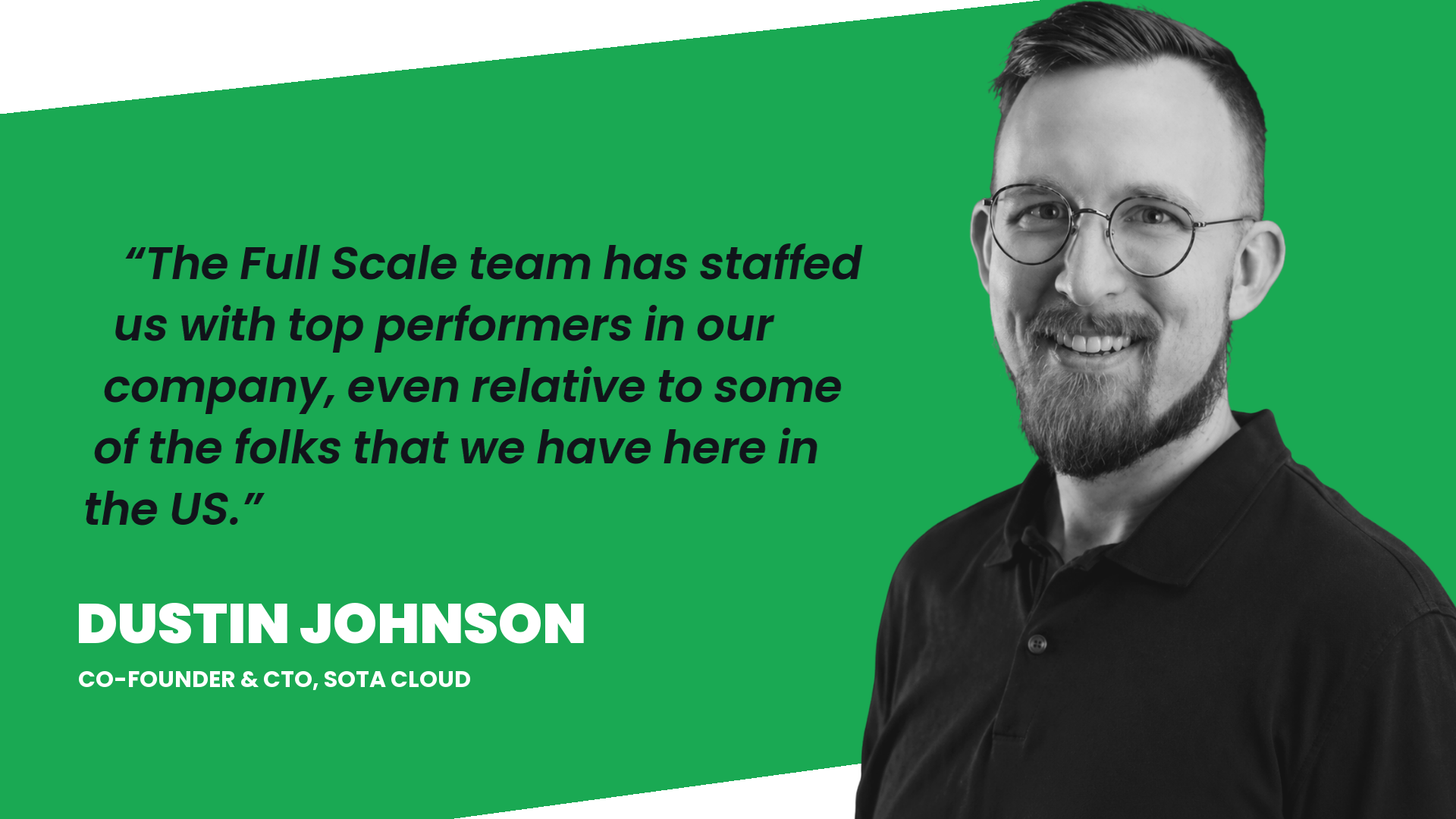
Enterprise .NET work is mostly brownfield work: production systems with real users, real data, and real consequences. Our engineers are trained on the Product Driven framework from Matt's book, so they treat that context as the job. They question tickets that would hurt the system and own what they ship into it. It's why SOTA Cloud's CTO ranks his dedicated Full Scale .NET team among the top performers in his whole company.
Read Product Driven, the bookAI as a thinking partner
Every .NET engineer on our bench uses GitHub Copilot, Claude, and Cursor daily, with one rule: the engineer owns the architecture, AI does the typing. Scaffolding endpoints, generating test suites, and drafting EF Core migrations go to the machine for the engineer to review. The judgment about what belongs in an enterprise codebase stays human.
AI without product thinking is just a slop machine, and the .NET engineers I want on my team don't get caught by that. They reason about the system before they reach for Copilot, and they use AI for the parts where judgment doesn't matter. That's who we hire and train at Full Scale.
The dedicated .NET team behind SOTA Cloud
SOTA Cloud runs dental imaging software in 1,000+ locations on a dedicated Full Scale .NET team. Their CTO ranks those engineers among the top performers in the whole company, US team included.

Six situations where .NET staff augmentation is the right call
Staff augmentation isn't the right answer for every situation. But for certain types of .NET problems, it's the fastest and most cost-effective path forward. If any of these sounds like your current situation, that's when to call us.
Your backlog is 8 developers deep and you have 4
You have a roadmap that's clearly under-resourced, and you can't wait 4 months to hire a US engineer. You need two senior .NET developers added to your team in the next 2 weeks. That's the scenario we exist for.
You need Azure expertise you don't have in-house
Your team writes good C# but nobody has deep Azure experience. You need someone who has actually run Service Bus in production, written Bicep, and diagnosed Azure Monitor alerts at 3am. Hiring a US Azure specialist is a 3-month process. We can have one on your team in as little as 7 days.
You need to ship something real before your runway runs out
You have a seed round, a product vision, and 6 months to build something worth showing to a Series A investor. A US engineering team is too expensive. A fixed-bid agency is too slow and too risky. Two dedicated senior .NET engineers embedded in your team is what you actually need.
Your release is in 90 days and the team can't handle the scope
You have a hard launch date, a committed sprint plan, and a backlog that's grown beyond what the current team can deliver. Adding two engineers to your team for 90 days changes the math without the overhead of a full hiring cycle.
You need to migrate off .NET Framework without breaking production
Your .NET Framework 4.x codebase is costing you every time a dependency drops support or a junior dev inherits a WCF service they've never seen. You need engineers who have done this migration before and know where the landmines are, not ones who will discover them in your production environment.
Your current offshore team isn't delivering and you need a transition
You have an offshore .NET team that consistently misses estimates, ships code that doesn't work in staging, and has no institutional knowledge of your domain. Transitioning off that relationship requires engineers who can ramp on an existing codebase fast and don't need hand-holding to become productive.
Dedicated .NET developers, starting at $35 an hour
That rate is fully loaded. It covers a dedicated senior .NET developer in the Philippines who works full-time on your project, and we handle the payroll, benefits, HR, and equipment. The same role hired locally in the US costs $150K to $195K a year, which is the math that drives most of our clients to call.
- Full-time, dedicated .NET engineer
- Pre-vetted by senior .NET reviewers
- Works your hours, your tools, your codebase
- Payroll, HR, equipment, benefits handled by us
- US-based account manager you can escalate to
- Two-week money-back guarantee if it isn't a fit
Full Scale has made the Inc. 5000 five years in a row and is Great Place to Work certified. We have been hiring .NET developers in the Philippines since 2018. The rate is the easiest reason clients call us first, but retention and engineering quality are why they keep their engineers with us.
Why hiring .NET developers in the Philippines works
You can also hire dedicated developers in the Philippines across every other stack we staff, with the same vetting bar, retention numbers, and engagement model that .NET clients get.
English-fluent by default
The Philippines is the third-largest English-speaking country in the world. Standups, code reviews, and customer calls work the way they do with any US team member.
Real time-zone overlap
Most of our .NET engineers shift their hours toward the US business day, giving 3-4 hours of real-time overlap with East and West Coast teams, so decisions happen live during shared hours rather than crawling through 24-hour async handoffs.
Deep engineering talent pool
Cebu and Manila produce tens of thousands of CS and IT graduates a year, which is why the bench you hire from is genuinely deep. The country has been the Microsoft stack's offshore home for two decades.
Cultural alignment with US teams
Filipino engineers grow up on US business norms, US TV, and US tech culture, so agile rituals, direct feedback, and collaborative workflows feel familiar from day one. These teams integrate fast rather than needing constant management.
Writing C# is not the same as knowing .NET
Anyone who passed a Microsoft certification can write C#. Building an enterprise .NET system that holds up in production requires a different bench entirely. When you outsource .NET development or hire C# developers offshore, this is the gap that decides whether the project ships. Here is what we test for, and what most offshore staffing companies skip.
Architecture knowledge beyond syntax
Junior developers ship features. Senior .NET engineers reason about Clean Architecture, dependency injection, CQRS, and when a pattern actually earns its complexity.
EF Core that doesn't melt your database
We test for the N+1 query problem, change tracking gotchas, and when to drop into Dapper or raw SQL. Bad EF code is the single most common cause of .NET performance issues we see.
Azure beyond "deploy to App Service"
Real Azure expertise covers Service Bus, Functions, managed identity, Key Vault, App Insights, and AKS. The bench is also stocked with engineers who can read a deployment failure and know where to look in Azure Monitor when production breaks.
Legacy migration without the breakage
Moving .NET Framework 4.x to .NET 9 is more than a project file edit. We have run full migrations for major production systems, which means we know where the landmines are before we start, not while your business is mid-cutover.
Security and identity done right
Real security work in .NET covers ASP.NET Core auth, OAuth flows, JWT validation, OWASP basics, and secrets management. It isn't a checklist exercise, and we test for engineers who understand the actual attack surface of a production .NET application.
Production debugging skills
A senior .NET engineer should be able to read a memory dump, profile a hot path, and walk through a thread block diagram. Most offshore developers have never touched these tools.
The six types of .NET work our dedicated developers get hired for most often
Before you hire a .NET developer, it's worth being specific about the work. A senior C# engineer who owns a greenfield API build is different from one who runs an Azure migration. Tell us which type of work fits your roadmap and we'll match you with the engineer who has done it in production, not one who lists it on a resume.
Custom .NET application development
Custom .NET development means greenfield builds on modern .NET 8 or .NET 10 using Clean Architecture, MediatR, EF Core, and FluentValidation. We start with a real domain model rather than a CRUD scaffold, so the resulting codebase survives the first 18 months without a rewrite.
Read our .NET outsourcing guideEnterprise .NET development
Enterprise .NET work is multi-tenant SaaS, role-based access, audit logging, and regulatory reporting: the unglamorous stuff that enterprise software lives or dies on. We staffed the team behind enterprise systems at AMC Theatres, and we know what production load looks like.
.NET API development & system integration
We build REST APIs with OpenAPI contracts, gRPC for internal services, and contract testing in CI. Third-party integrations get circuit breakers (Polly), proper retry logic, and idempotency keys, which gives you an API layer your downstream consumers don't curse at.
Hire dedicated API engineersAzure cloud application development
We build cloud-native .NET on App Service, Functions, AKS, Service Bus, and Cosmos DB, using Bicep for infrastructure, managed identity for auth, and App Insights for observability. That's the full Azure stack, with no "we deployed it to App Service" shortcuts.
Legacy .NET modernization and .NET migration
We run production .NET migration projects from .NET Framework 4.x to .NET 8 or .NET 10 without downtime. We know which third-party libraries break in a .NET migration, where WCF and System.Web sneak in, and how to stage the cutover so business doesn't stop. This is .NET modernization work we've done for systems with millions of users.
Read about .NET Core vs .NET Framework.NET performance & debugging
Our .NET performance work covers BenchmarkDotNet for hot-path profiling, dotMemory for leaks, dotTrace for CPU bottlenecks, and production memory dump analysis when things get weird. These are skills most offshore .NET shops have never developed, so hire us when your application is slow and nobody knows why.
Eight .NET specializations, one staffing partner
Most .NET teams need more than one role. Hire dedicated C# developers, senior ASP.NET engineers, Azure cloud specialists, and .NET DevOps from a single vetted bench. The same bench staffs senior backend developers across Node, Python, Java, PHP, Ruby, and Go when a project spans more than one stack. When SQL Server is the heart of the .NET stack and needs its own attention, you can also hire dedicated database engineers with deep T-SQL and query tuning experience. Mix and match seniorities as the project requires.
Backend .NET Engineers
Senior backend devs handle the API layer, business logic, and data access for your application. They work fluently in ASP.NET Core, minimal APIs, MediatR, EF Core, and Dapper.
Full-Stack .NET Developers
End-to-end engineers pair .NET on the backend with React, Angular, or Blazor on the front. They ship features from the database to the UI without handoffs to a separate team.
ASP.NET API Engineers
Engineers in this specialization design REST and gRPC APIs, document them with OpenAPI, and ship versioned, well-tested endpoints. They're used to working inside hexagonal or clean architecture from day one.
Azure Cloud Engineers
Microsoft-certified Azure developers own App Service, Functions, Service Bus, AKS, Key Vault, and App Insights end-to-end. They write the Bicep too.
.NET DevOps Engineers
DevOps work on these teams covers CI/CD on Azure DevOps or GitHub Actions, containerization, infrastructure as code, and observability. They make .NET releases boring in the good way.
Performance & Security Engineers
When production gets weird, these are the engineers you call. They run BenchmarkDotNet, dotMemory, and dotTrace investigations alongside threading audits, OWASP reviews, and identity and secrets hardening.
Xamarin / .NET MAUI Developers
MAUI developers ship cross-platform mobile builds and maintain the legacy Xamarin codebases that came before them. One codebase covers iOS, Android, and Windows.
.NET QA & SDET
Our automation engineers write tests in xUnit, NUnit, SpecFlow, Playwright, and Selenium against ASP.NET Core services. They build the test pyramid you wish you had.
We handle everything except the actual engineering work
When you hire a .NET developer through Full Scale, they are a full-time employee of our entity in the Philippines. We handle all the employer-of-record logistics so you get the benefits of a dedicated team member without the overhead of an overseas employment relationship. Here is exactly how the split works.
Full Scale handles
- Employment contract and Philippine labor law compliance
- Monthly payroll and tax withholding in the Philippines
- 13th month pay and mandatory government contributions (SSS, PhilHealth, Pag-IBIG)
- Hardware and home office equipment setup
- HR support, disciplinary process, and performance documentation
- Time tracking and attendance monitoring
- Background verification and reference checks
- Equipment insurance and asset tracking
- Onboarding to Full Scale systems and processes
- US-based account management and escalation point
You handle
- Technical onboarding to your codebase and systems
- Day-to-day work direction and sprint priorities
- Code review and architectural decisions
- 1-on-1s and performance feedback
- Access provisioning (GitHub, Jira, Slack, etc.)
- Inclusion in your team rituals (standups, retrospectives, planning)
You sign one contract with Full Scale and never deal with Philippine employment law, payroll tax, or labor compliance directly. The engineer is yours to direct; the employer relationship is ours to manage.
.NET expertise tuned to your industry
We have placed dedicated .NET developers from the Philippines into nearly every industry that runs on Microsoft for over a decade. Domain knowledge cuts onboarding time in half, so we match engineers to projects where they have already shipped real code.
Media & Entertainment
We staffed the .NET team behind AMC Theatres, where the surface area is huge: ticketing, payments, loyalty, queueing, mobile. Media and entertainment .NET work is high-traffic, customer-facing, and unforgiving of bad releases.
From .NET 10 minimal APIs to .NET Framework 4.8 migrations
Whether you want to hire ASP.NET Core developers for a greenfield build, hire Azure .NET developers for a cloud migration, or outsource .NET development on a legacy .NET Framework system, the bench covers every layer of the Microsoft developer stack. Pick what you need. We will match a .NET programmer fluent in it.
Hire dedicated .NET developers, two ways
Most clients start with a single dedicated .NET developer and grow into a full team. Either way, you get full-time engineers who sit on your standups, work your hours, and ship code against your roadmap. Both options are our staff augmentation model at the core: dedicated, long-term engineers embedded in your team rather than freelancers, shared resources, or a project shop on the side. See the full breakdown of how we Hire dedicated .NET developers across every engagement we staff. When a project needs the same engineer on both the API and the UI, you can hire a dedicated full stack developer from the same bench. For new services that need to run cheaply at high concurrency, you can also hire offshore Golang developers under the same model.
Dedicated developer
Full-time, exclusive, sits on your standups.
- Full-time .NET engineer assigned only to your project
- Works your hours, your tools, your codebase
- Joins your standups, reports to your tech lead
- We handle payroll, HR, equipment, retention
- Two-week money-back guarantee
Dedicated team
Multiple engineers, embedded as a pod.
- 2-10 .NET engineers staffed together as one pod
- Optional QA, DevOps, and tech lead included
- Operates as a team inside your engineering org
- Scale up or down by a head with 30 days notice
- Account manager you can escalate to in the US
How to hire a dedicated .NET developer from Full Scale
We skip the 3-6 week recruitment cycle and the cold sourcing entirely. Our bench of remote .NET developers and C# programmers in the Philippines is already built and vetted (here's how we hire), and every step below has a named owner on our side.
Discovery call
30 minutes with our team. We learn your stack, your roadmap, the seniority level you need, and the version of .NET you're working in. We don't pitch on the call, we walk through what you actually need from a hire.
Engineer match
We pull 1-3 pre-vetted .NET engineers from the bench whose skills, seniority, and prior project experience line up with what you described. You see their full profile and their actual project history.
Technical interview
You interview the candidates the way you would interview any senior hire: live coding, system design, EF Core gotchas, and architectural reviews. Pass anyone you don't believe in.
Contract & onboarding
Sign once. We handle every contract, payroll, equipment, and HR detail in the Philippines so you don't have an offshore entity to manage. You just get a developer.
First commit
Your developer joins your standups, gets repo access, and ships code in their first week. Our delivery managers stay involved to make sure ramp-up doesn't stall.
Full Scale vs the other ways to hire a .NET developer
Every hiring path has trade-offs. Here is how a dedicated .NET engineer hired from Full Scale in the Philippines compares against the alternatives most teams consider first when they want to hire .NET developers.
| Feature | Full Scale | Freelancer / Upwork | Traditional offshore agency | US recruiter / FTE hire |
|---|---|---|---|---|
| Pre-vetted senior .NET bench | ||||
| Time to first hire | 7 days | 1-3 days | 3-6 weeks | 6-12 weeks |
| Dedicated full-time, not shared | ||||
| Founder-led .NET expertise | ||||
| Sits on your standups, your tools | ||||
| Long-term engineer retention | Strong | Low | Varies | Varies |
| Two-week money-back guarantee | ||||
| Handles payroll, HR, equipment | ||||
| US-based account management | n/a | |||
| Typical fully-loaded cost vs US | ~40-50% | varies | ~50-65% | 100% |
Real .NET engineers, named and vetted
A sample of engineers on our team who build in .NET and C#. These are real Full Scale developers working remotely from across the Philippines, and you'll meet candidates like them during your interview round.

A versatile engineer who builds retail software across multiple platforms. Works best in Java, C++, and C#, and adapts quickly to changing project demands.

C# is his strongest discipline, with hands-on experience across SQL Server, Azure, and Xamarin. A former team lead who brings ownership to the codebase.

Senior developer out of Oracle Retail, analytics, SaaS, and iPaaS work. Strong across the Java stack, C#, ASP.NET, Python, Angular, and AWS.

A web developer specializing in .NET. Builds with C# on ASP.NET MVC and front-end JavaScript frameworks, backed by T-SQL.

A senior .NET and Azure engineer with Vue and React front ends. Strong on Docker, DevOps, and OOP and design patterns.

A full-stack developer in C#, Blazor, ASP.NET, and MSSQL, with React, Next.js, and OpenAI integration work.
The numbers behind a .NET staffing partner that actually works
From the people we actually staff teams for
Full Scale's development team was pivotal in elevating our facility management software. Their expertise turned complex challenges into seamless functionalities, enhancing user experience and operational efficiency.
The team at Full Scale brought our vision to life with their development skills. They helped us navigate technical requirements with ease, resulting in a robust platform our users trust.
Deeper guides to .NET hiring and development
Offshore .NET development
When offshoring .NET work is the right move, and how to do it well.
Outsource .NET development
How to outsource .NET development without losing control or quality.
Nearshore vs offshore
When each model wins, from a CEO who has run both.
Outsourcing vs offshoring
The distinction most CTOs get wrong, and why it matters.
What offshore development really costs
The real numbers behind offshore rates and total cost.
The ROI of offshore development
The math behind 50-70% development cost reductions.
Everything you wanted to know about hiring .NET developers
Hire a dedicated .NET developer who has actually built .NET systems before
30-minute discovery call to hire dedicated .NET developers in the Philippines: senior C# programmers, ASP.NET engineers, and Azure specialists from a single pre-vetted bench. We'll learn what you're building, walk you through which engineers fit your roadmap, and you'll meet candidates within a week. You won't get pressure or a sales pitch on the call.