

.NET development services that ship real software, not slide decks
Full Scale is a .NET development company that delivers custom .NET builds, Azure migrations, and legacy modernization through senior Filipino engineers who join your team. Founded by a 20-year .NET developer, we have placed C#, ASP.NET, and Azure engineers, including the team behind enterprise systems at AMC Theatres. You direct the work; we handle hiring, payroll, and HR. First sprint in as little as 7 days.
[ApiController]
[Route("api/[controller]")]
public class OrdersController : ControllerBase
{
  private readonly IMediator _mediator;

  [HttpPost]
  public async Task<IActionResult> Create(
    CreateOrderCommand cmd)
  => Ok(await _mediator.Send(cmd));
}.NET teams trusted by enterprises, scale-ups, and Fortune 500s

Previously founded VinSolutions ($150M+ exit) and Stackify
I've shipped .NET products for 20 years. I know what they take.
I built VinSolutions, an automotive CRM on the Microsoft stack that sold for over $150M. I built Stackify, a .NET monitoring platform that instrumented production applications for thousands of engineering teams. And I helped build the enterprise infrastructure at AMC Theatres through the engineers we placed there. In each case, the job was the same: deliver a .NET system that works in production under real load, and doesn't become a legacy problem 18 months after launch.
Full Scale is the .NET development company I built to deliver that kind of work for other teams. Senior Filipino engineers embedded in your team, working under your direction, shipping software you own from day one. That's the opposite of a fixed-bid agency that hands off a zip file, or a consultancy that sells a methodology. These are engineers who build things. If you need .NET development services from people who have actually shipped production .NET at scale, you are in the right place.
Five reasons .NET is the right stack for enterprise-grade software
If you've already committed to .NET, you don't need to read this. If you're still evaluating whether .NET is the right call for your project, or whether to migrate an existing system toward it, these are the technical arguments that hold up in production, not in a vendor slide deck.
Performance that competes with native runtimes
Modern .NET (8+) consistently ranks in the top tier of TechEmpower benchmark results, faster than Java Spring, Node.js, and Python for typical API workload patterns. For systems that need to handle real throughput without throwing more compute at the problem, the runtime performance is a genuine advantage, not a marketing claim.
First-class Azure integration
If your infrastructure runs on Azure, .NET is not a neutral choice. It's the best-supported runtime on the platform. App Service, Functions, AKS, Service Bus, Cosmos DB, and the rest of the Azure platform have first-class .NET SDKs maintained by Microsoft. That means fewer third-party integration layers, faster support cycles, and tooling that works the way the documentation says it does.
A support cadence you can actually plan for
.NET 8 is LTS with support through November 2026. .NET 9 is the current standard release. .NET 10 follows as the next LTS in November 2025. Microsoft's even-numbered-year LTS cadence means your team has a predictable upgrade path rather than chasing releases or getting stranded on an EOL runtime.
True cross-platform: same code, every target
Modern .NET runs on Windows, Linux, macOS, and in containers without a rewrite. The same C# codebase deploys to a Windows VM, an AKS pod, or a Linux App Service instance without conditional compilation. For teams moving from on-premise Windows servers to cloud-native Linux containers, this removes the biggest migration risk.
Full-stack in one language: backend, frontend, mobile
ASP.NET Core for backend APIs, Blazor for interactive browser UI, .NET MAUI for iOS and Android, all in C#, all in the same solution. For teams that want to minimize context-switching and share domain models across layers, the single-language stack is a real architectural advantage over mixing .NET with TypeScript frontends and separate mobile projects.
The software we deliver is built to survive 18 months without a rewrite
Most offshore .NET codebases degrade fast, not because the engineers can't code, but because they code for tickets rather than outcomes. An AI generator paired with a process that rewards velocity produces more lines, not better software. The technical debt compounds until a rewrite is cheaper than the maintenance.
Full Scale engineers are trained on the Product Driven framework and the full AI toolkit. The combination produces code that's intentional, tested, and owned, not code that passes CI on Friday and fails in production on Monday. If your project leans toward AI features rather than .NET infrastructure, you can also scope an AI development engagement through the same team.
Product Driven engineering: in the code you receive
Our engineers are trained on the five Product Driven pillars: Vision, Focus, Clarity, Ownership, and Courage. In practice, this means they push back on features that shouldn't exist, question scope before writing a line, and own what ships after launch. The code this produces is leaner, more intentional, and cheaper to maintain than code written by engineers completing tickets without questioning them.
Read Product Driven, the bookAI-augmented delivery, not AI-generated slop
Every engineer uses GitHub Copilot, Claude, and Cursor daily, not to replace judgment but to scaffold repetitive code, generate test suites, and review their own pull requests before a human sees them. AI accelerates delivery without introducing the hallucinated APIs and mismatched abstractions that unguided generation produces. The test is simple: every engineer can explain every decision in the code they ship.
The test for a Product Driven codebase isn't whether it passes CI. It's whether the engineer who wrote it can explain every decision in it. That's what we train for, and what you get in the software we deliver.

.NET development services across the full build lifecycle
Greenfield builds, Azure migrations, legacy modernizations, system integrations, performance fixes: our engineers deliver across all of it. Every engagement runs through staff augmentation: senior .NET engineers in the Philippines embedded in your team, billed for engineering hours rather than a fixed scope you'll renegotiate through change orders. You direct the work; you own the outcome. Here are the six types of .NET development we get hired for most often.
Custom .NET application development
You describe the product you need. We staff the engineers, you direct the work, and what gets delivered is a modern .NET 8 or .NET 10 codebase on Clean Architecture that survives the first 18 months without a rewrite. Not a prototype, but a production-ready application with a real domain model, not a CRUD scaffold.
Read our .NET outsourcing guideEnterprise .NET development
Multi-tenant SaaS, role-based access, audit logging, and regulatory reporting: the unglamorous work enterprise software lives or dies on. We staffed the team that built enterprise infrastructure at AMC Theatres. What you get is production .NET that runs under real load, not a demo that falls over in staging.
.NET API development & system integration
What gets delivered is an API layer built to OpenAPI contracts, with circuit breakers (Polly), proper retry logic, and idempotency keys throughout. Third-party integrations don't get wired with happy-path assumptions. gRPC for internal services. Contract tests in CI so breakages surface before the downstream team files a bug.
Hire dedicated API engineersAzure cloud application development
Cloud-native .NET delivered on App Service, Functions, AKS, Service Bus, and Cosmos DB. Infrastructure as Bicep, managed identity for auth, App Insights wired from day one. The full Azure stack, not 'we deployed it to App Service and called it cloud-native.' Many of our engineers are Microsoft-certified Azure Developers or Solutions Architects.
Legacy .NET modernization & migration
We take .NET Framework 4.x systems to .NET 8 or .NET 10 without downtime. We know which third-party libraries break, where WCF and System.Web hide, and how to stage the cutover so business doesn't stop. This is migration work done for production systems with millions of users, not a side project we'll figure out as we go.
Read about .NET Core vs .NET Framework.NET performance & production debugging
When your application is slow and nobody can explain why, we profile it: BenchmarkDotNet on hot paths, dotMemory for leaks, dotTrace for CPU bottlenecks, production memory dump analysis when things get weird. We find the root cause and fix it, rather than deploying more instances and calling it solved.
Architecture patterns our .NET engineers apply in production
Most offshore .NET shops deliver a working application at handoff. What determines whether it's still working and maintainable 18 months later is the architecture decisions made in the first sprint. These are the patterns our engineers reach for, and the reasoning behind when each one earns its complexity.
Clean Architecture
Domain model at the center, infrastructure at the edge. Use cases stay independent of frameworks, databases, and delivery mechanisms. The codebase survives a database swap or a UI rewrite without a rewrite of the business logic.
Domain-Driven Design (DDD)
Bounded contexts, aggregates, value objects, and domain events. We use DDD when the domain is complex enough to justify it, not as a default but as a deliberate choice for systems where the business logic is the hard part.
CQRS + Event Sourcing
Read models and write models split so each can be optimized independently. Event sourcing for audit trails, temporal queries, and event-driven projections. We implement this with MediatR, MassTransit, or Azure Service Bus depending on the scale.
Cloud-Native on Azure
Applications built for Azure from the start: containerized on AKS, event-driven with Service Bus, serverless where it fits (Functions), and observable via App Insights. Infrastructure as Bicep. Managed identity, no credentials in config.
Minimal API + Vertical Slices
Each feature is a self-contained slice: one handler, one request, one response, one test file. No horizontal layering that forces you to touch five files for a one-field change. Works well for ASP.NET Core APIs that need to grow without becoming a maze.
Microservices & Distributed Systems
Service decomposition, inter-service communication patterns (sync vs async), distributed transaction handling via saga orchestration, and observability across service boundaries. We don't recommend microservices when a modular monolith is the right call.
Opinionated takes on .NET from engineers who ship it
Most vendors tell you .NET is the right choice for everything. We'll tell you when it isn't. These are the actual opinions we hold based on building and maintaining .NET systems in production, not talking points from a sales deck.
Enterprise systems with complex domain logic, anything in the Microsoft stack (Azure, Active Directory, SQL Server), teams that will own the codebase long-term and care about maintainability, applications that need to run at scale on Azure without a custom container orchestration layer, and any team that already has .NET expertise and doesn't want to introduce a second runtime.
Pure machine learning and data science workloads where the Python libraries are genuinely ahead. Simple brochure sites or content-heavy pages where a CMS like WordPress or a static site generator eliminates the need for a custom backend. Real-time game servers where Go or Rust has a meaningful latency advantage. Tiny single-purpose microservices where the startup cost of a .NET runtime is material. For those, Go's binary size and startup time win.
We ship Clean Architecture, CQRS where the read/write split earns its complexity, and Vertical Slice Architecture for APIs that need to scale team-wise. We refuse God classes, anemic domain models where all behavior lives in service classes, lazy loading left on by default in EF Core (the N+1 query problem is a bug, not a style choice), and magic string configuration that should be typed. We also don't ship microservices when a well-modularized monolith is the right call, and we'll say so.
Big-bang rewrites that try to move an entire .NET Framework codebase to .NET in one release. Underestimating the WCF surface area. WCF has no direct .NET equivalent, and the CoreWCF project covers maybe 60% of the scenarios. Running .NET Framework and .NET side by side indefinitely because 'we'll finish the migration later.' That later never comes and the two runtimes diverge. And migrations that don't address the EF Core upgrade simultaneously, because EDMX-based Entity Framework has no clean path to EF Core and must be rewritten anyway.
From first call to production: how a .NET project runs at Full Scale
Staff augmentation without a delivery framework is just headcount. Here is what the engagement actually looks like from the first conversation to a deployed production system and the ongoing work that comes after.
We scope the engagement together: what to build first, what specializations to staff, what the first sprint should deliver. You walk away with a staffing plan and a candidate shortlist, not a 40-page requirements document.
You interview our pre-vetted candidates and select who starts. We handle employment, payroll, and equipment setup on the Philippines side. Your engineer gets access to your repo, your tools, and your standups. First commit typically happens within the first week.
Your engineer works in your sprint cadence, under your tech lead, committing to your repo. You see the work in progress, not at a scheduled demo. Architecture decisions happen in your standups, not behind a project management wall. The sprint velocity is yours to direct.
Our engineers write tests as part of delivery, not as a post-sprint cleanup task. Unit tests in xUnit or NUnit, integration tests against real dependencies, E2E coverage for critical paths. AI-assisted PR review (Copilot, Cursor) before human review. Code that ships is code that's been tested.
Your engineers own the production deployment: infrastructure as code, observability from day one (App Insights or equivalent), and runbook documentation for the most likely failure modes. They stay on after launch. Post-launch bugs go into your backlog like any other work, not into a 'warranty period' clause in a contract.
How a .NET development project starts at Full Scale
No discovery phase you pay for before a line is written. No 6-week RFP process. We scope in a single call, assemble pre-vetted engineers (see how we vet engineers), and have code shipping in the first week.
Scoping call
30 minutes. We learn what needs to be built, what's already in the codebase (if anything), what the first sprint should deliver, and what specializations the project needs. We don't pitch on this call. We scope.
Team assembly
We pull 1–3 pre-vetted .NET engineers whose skills, seniority, and prior project experience match what the project requires. You see their full profiles and actual project history before the interview.
Technical interview
You interview candidates the way you would any senior hire: live system design, architecture questions, .NET-specific technical depth. Pass on anyone you don't believe in. We keep looking.
Contracts & setup
One contract with Full Scale. We handle all employment, payroll, equipment, and HR logistics in the Philippines. Your engineer gets repo access, tool access, and sprint 1 is planned.
First delivery
Your engineer joins your standups, commits to your repo, and ships code in the first week. Our delivery team stays in the loop through ramp-up to make sure velocity doesn't stall. They own the work through launch and beyond.
Signing a contract is not the same as shipping software
Most .NET outsourcing failures aren't engineering failures. They are delivery model failures. The fixed-bid agency model creates incentives that work against you: speed over quality, handoffs over ownership, scope control over outcomes. Staff augmentation realigns those incentives. Here are the six ways the agency model breaks down on real .NET projects.
Fixed-bid scope creep destroys budgets
Agencies win the bid with an optimistic estimate, then recover their margin through change orders. Every requirement that wasn't in the original spec becomes a billable revision. By go-live, the 'fixed' price has doubled and the relationship is adversarial.
The agency disappears after handoff
Fixed-bid projects end at deployment. The engineers who built your system move to the next bid. You own every production bug and architectural decision without the institutional knowledge of the people who made them. Post-launch support becomes a new contract negotiation.
No visibility until it's too late to change
Black-box delivery means you see the product at the end of a sprint cycle or, worse, at handoff. By the time you learn the architecture doesn't fit your use case, the codebase is already built around it. Staff aug keeps engineers in your repo and your standups from day one.
Speed incentives drive wrong architecture
Fixed-bid agencies are paid to ship fast, not right. That means monoliths where microservices should be, raw SQL where an ORM should be, and application-layer logic that belongs in the database. You inherit a codebase optimized for handoff velocity, not long-term maintainability.
Engineer rotation breaks continuity
Agencies staff projects with whoever is available, not whoever is best-matched. Project managers cycle. The developer who built your core auth module gets rotated to another engagement. New engineers read code they didn't write for onboarding, and the velocity cliff arrives around sprint 8.
Production failures become "out of scope"
Performance issues that surface under real load, security gaps that weren't in the spec, edge cases nobody documented. Agencies classify these as new work. With staff augmentation, your engineers own what they shipped and have incentive to build it right the first time.
.NET delivered across the industries that run Microsoft
We've shipped .NET software across nearly every industry that runs on the Microsoft stack. Domain knowledge cuts the time to useful software. An engineer who has already built a HIPAA-compliant patient portal ships faster than one reading HIPAA for the first time. We match engineers to projects where they have shipped real production code in the same domain.
Media & Entertainment
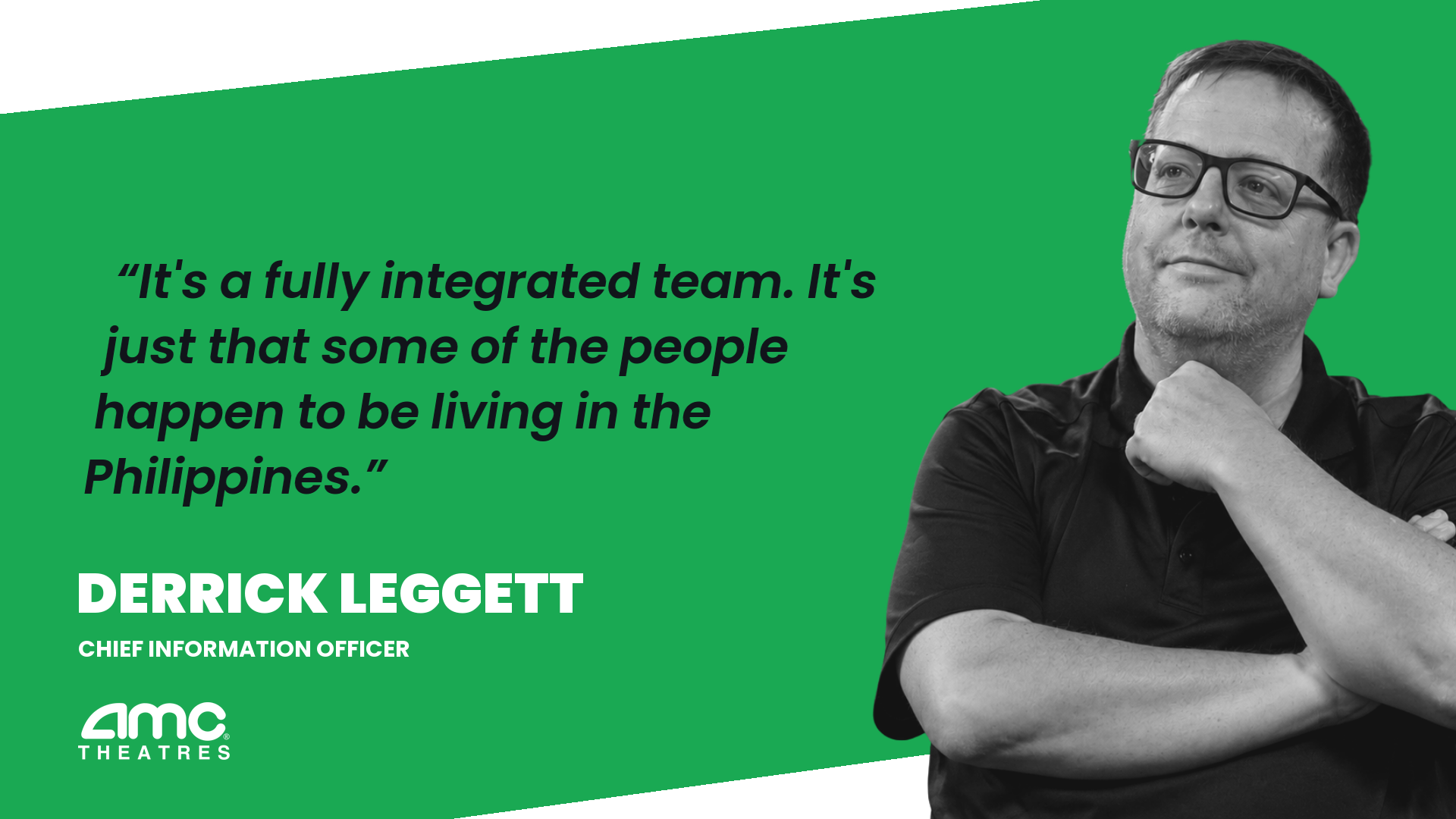
We staffed the .NET team behind AMC Theatres, where the surface area is huge: ticketing, payments, loyalty, queueing, mobile. Media and entertainment .NET work is high-traffic, customer-facing, and unforgiving of bad releases.
From .NET 9 minimal APIs to .NET Framework 4.8 modernizations
Every engagement covers the full Microsoft stack. Whether the project is a greenfield .NET 9 build, an Azure migration, or a legacy .NET Framework modernization, we staff for the specific layers your project needs and deliver in the technologies your team is committed to, not the ones that are easiest for us to staff.
.NET development, two ways to engage
Every Full Scale engagement is staff augmentation: senior engineers embedded in your team, billed for engineering hours, not a fixed-bid project shop. The structure depends on the scope of what you're building and whether you have an existing team to augment or need to build one from scratch.
Embedded engineer
One specialist embedded in your existing team.
- One full-time .NET engineer, dedicated to your project only
- Works your hours, your tools, your repo, your standups
- Reports to your tech lead, no agency management layer
- We handle employment, payroll, and HR in the Philippines
- Scale to a second engineer with 30 days notice
Full project team
2–10 engineers building your product end-to-end.
- 2–10 .NET engineers staffed as a coordinated pod
- Optional QA automation, DevOps, and tech lead roles
- Operates inside your engineering org, not alongside it
- Scale the team up or down by one head per month
- US-based account manager you can escalate to directly
Dedicated .NET developers, starting at $35 an hour
That rate is fully loaded. Every engineer we staff on your .NET project is a senior developer in the Philippines working full-time under your direction, and we cover the payroll, benefits, HR, and equipment. The same role hired locally in the US runs $150K to $195K a year, which is the delivery math that brings most teams to the table.
- Full-time, dedicated .NET engineer
- Pre-vetted by senior .NET reviewers
- Works your hours, your tools, your codebase
- Payroll, HR, equipment, benefits handled by us
- US-based account manager you can escalate to
- Two-week money-back guarantee if it isn't a fit
Full Scale has made the Inc. 5000 five years in a row and is Great Place to Work certified. We have been doing this since 2018, and pricing isn't the only reason clients stay with our .NET development company, it's the easiest reason to call.
Why we deliver .NET projects from the Philippines
Every .NET project we deliver is staffed from the Philippines. You can also hire dedicated developers in the Philippines across every other stack we work in, with the same vetting bar, retention, and engagement model that .NET clients get.
English-fluent by default
The Philippines is the third-largest English-speaking country in the world. Standups, code reviews, and customer calls work the way they do with any US team member.
Real time-zone overlap
Most of our .NET engineers shift their hours toward the US business day, giving 3-4 hours of real-time overlap with East and West Coast teams, so decisions happen live during shared hours rather than crawling through 24-hour async handoffs.
Deep engineering talent pool
Cebu and Manila produce tens of thousands of CS and IT graduates a year, deep enough to staff a full .NET project team without compromising on seniority. The country has been the Microsoft stack's offshore home for two decades.
Cultural alignment with US teams
Filipino engineers grow up on US business norms, US TV, and US tech culture, so agile rituals, direct feedback, and collaborative workflows feel familiar from day one. These teams integrate fast rather than needing constant management.
Staff augmentation vs the other ways to get .NET software built
Every .NET delivery model has a different set of trade-offs. Fixed-bid agencies offer a contract; consultancies offer a proposal. Staff augmentation offers engineers who embed in your team and work under your direction from day one. Here is how those models compare on the things that actually determine whether a .NET project succeeds.
| Factor | Full Scale (staff aug) | Fixed-bid agency | Consultancy / SI | Build in-house |
|---|---|---|---|---|
| Time to first sprint | 7 days | 4-8 weeks | 6-12 weeks | 3-6 months |
| You control architecture decisions | ||||
| Visibility into work in progress | ||||
| Engineers dedicated full-time to your project | ||||
| Scope flexibility when requirements change | ||||
| Budget predictability | ||||
| Engineers own what they ship post-launch | ||||
| You own all IP from day one | ||||
| Engineer continuity across the project | 93%+ retention | varies | low | varies |
| Fully-loaded cost vs US in-house team | ~40-50% | ~60-80% | ~100-150% | 100% |
The numbers behind a .NET development company that actually ships
From the people we actually staff teams for
Full Scale's development team was pivotal in elevating our facility management software. Their expertise turned complex challenges into seamless functionalities, enhancing user experience and operational efficiency.
The team at Full Scale brought our vision to life with their development skills. They helped us navigate technical requirements with ease, resulting in a robust platform our users trust.
Deeper guides to .NET development and delivery
Offshore .NET development
When offshoring .NET work is the right move, and how to do it well.
Outsource .NET development
How to outsource .NET development without losing control or quality.
Nearshore vs offshore
When each model wins, from a CEO who has run both.
Outsourcing vs offshoring
The distinction most CTOs get wrong, and why it matters.
What offshore development really costs
The real numbers behind offshore rates and total cost.
The ROI of offshore development
The math behind 50-70% development cost reductions.
Everything you wanted to know about .NET development services
Get .NET development services from a team that has actually built .NET systems before
30-minute discovery call with the .NET development company that delivers custom builds, Azure migrations, and modernization through dedicated developers from the Philippines. We'll learn what you're building, walk you through which .NET, C#, ASP.NET, or Azure engineers are on the bench, and you'll meet candidates within a week. You won't get pressure or a sales pitch on the call.