

Senior engineers on demand with affordable staff augmentation services
No recruiting cycle, no bench-building from scratch. Full Scale keeps a pre-vetted bench of senior engineers ready to join your standups, your codebase, and your roadmap in as little as 7 days, at a fully-loaded rate that starts at $35 an hour. We've placed 700+ developers into U.S. SaaS, fintech, healthcare, and enterprise teams since 2018.
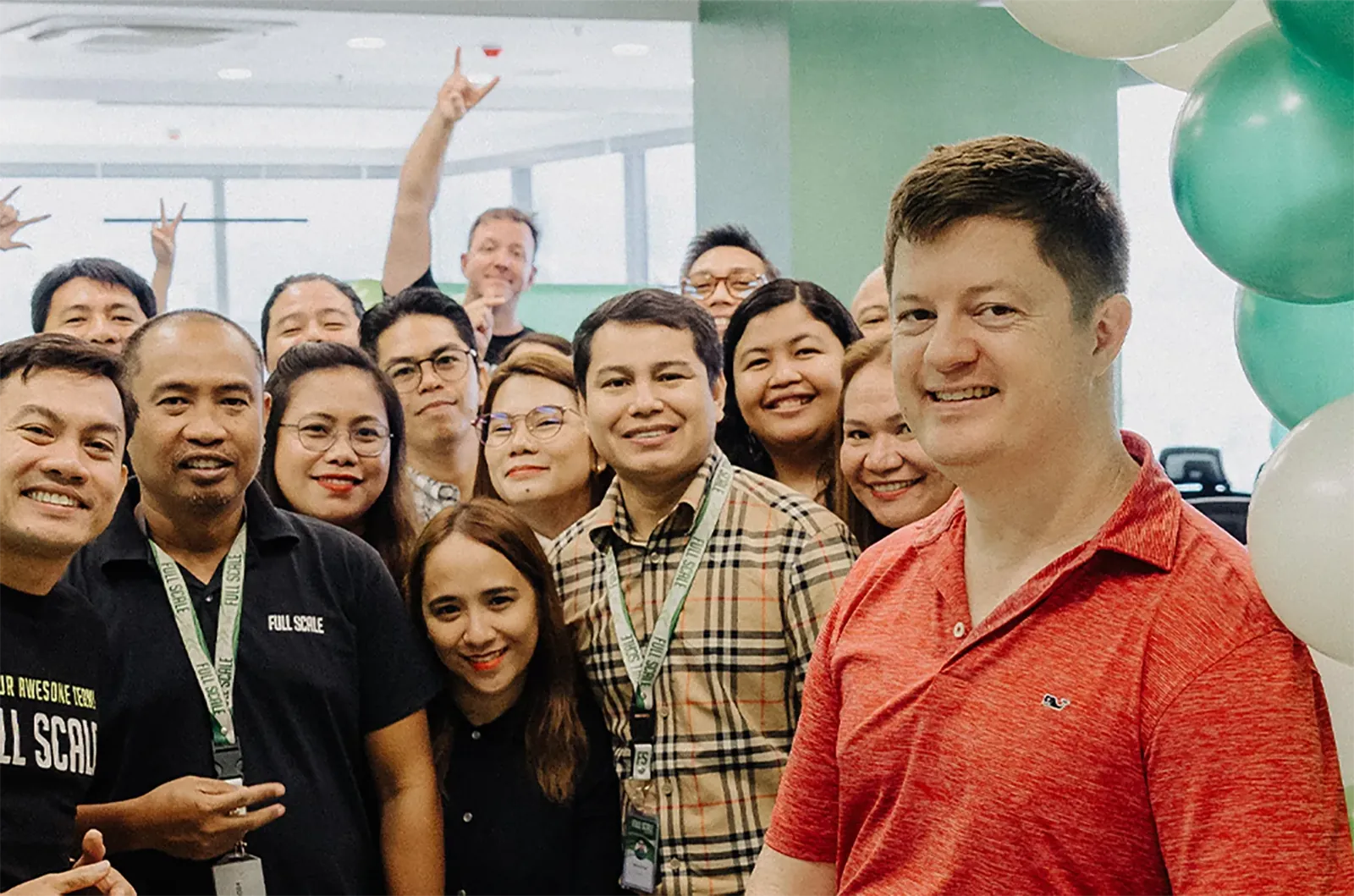
Staff augmentation teams embedded in 200+ U.S. companies across SaaS, fintech, healthcare, and enterprise

Previously founded VinSolutions ($150M+ exit) and Stackify
I ran staff augmentation as a customer before I sold it as a company
In 2018 I needed to hire ten more developers for Stackify, my second startup. Local hiring in Kansas City wasn't going to get me there, so a friend introduced me to developers in the Philippines and we opened a small office together. By 2021, that team had grown past 20 people and was central to why Stackify exited.
That was software development staff augmentation, long before it had a name on our website. Those developers sat in the same Slack threads as my Kansas City engineers, pushed to the same repo, and ran standups on the same cadence. The agency handled payroll, benefits, and HR in the Philippines so that I could focus on the actual work. It was a big reason the company sold.
Friends started asking how to access the same developer pool. Full Scale grew out of that, and we hired 100 developers in our first year as a company. We've now run staff augmentation engagements for more than 200 U.S. companies, including the dedicated .NET team behind AMC Theatres. The model that worked for Stackify is the model we run for clients today.
Hire talent to work directly for you on a long-term basis. Don't hire them just for a project. That's the spine of the entire model.
Staff augmentation hires developers directly onto your team and runs them under your engineering leadership
The clean definition: you hire individual developers who join your team, attend your standups, push to your repo, and report up to your engineering leadership. The staffing partner takes care of recruiting, payroll, benefits, and HR in the background so that you can focus on the actual work, the priorities, and the code review.
When the work is software, the term you'll run into is software development staff augmentation, IT staff augmentation, or technical staff augmentation. Some companies also call it resource augmentation or team augmentation. Eastern European outsourcing shops market the same engagement as team extension, the team extension model, or development team extension. LATAM partners tend to brand it as software team extension or extended development team. The naming varies; the model is the same. The version that works is the one where both sides commit to a multi-year team. Short-term staff augmentation is barely distinguishable from contracting and gives up most of the upside.
If you came in on team extension or extended team and want a deeper read, our development team extension guide covers what the model costs by region, how extended teams differ from dedicated teams, and how to pick a partner who actually runs the engagement the way it should be run. If the structural question (extended team versus dedicated team) is specifically what you came here for, the extended development team guide covers that in depth.
The reason this topic is so confusing is that most articles blur staff augmentation with project outsourcing. They're different models for different problems. Here is how they actually compare side by side.
Outsourcing is the right call for scoped deliverables you don't want a full-time person on after the work is done. Staff augmentation is the right call when the code outlives the contract, which is most of the time for any company building a real product.
Engineers trained on AI and Product Driven principles
The reason most staff augmentation engagements stall is that the engineer placed on your team thinks like a contractor, not a product owner. They wait for tickets, write what they're told, and disappear when the sprint ends without leaving anything behind.
Our engineers are trained to do the opposite. They're hired and developed inside a Product Driven framework, and they use modern AI tooling as part of their daily workflow. That combination is rare, and it's the difference between a staff augmentation hire who acts like your engineer and one who acts like a vendor's resource.
Product Driven engineering
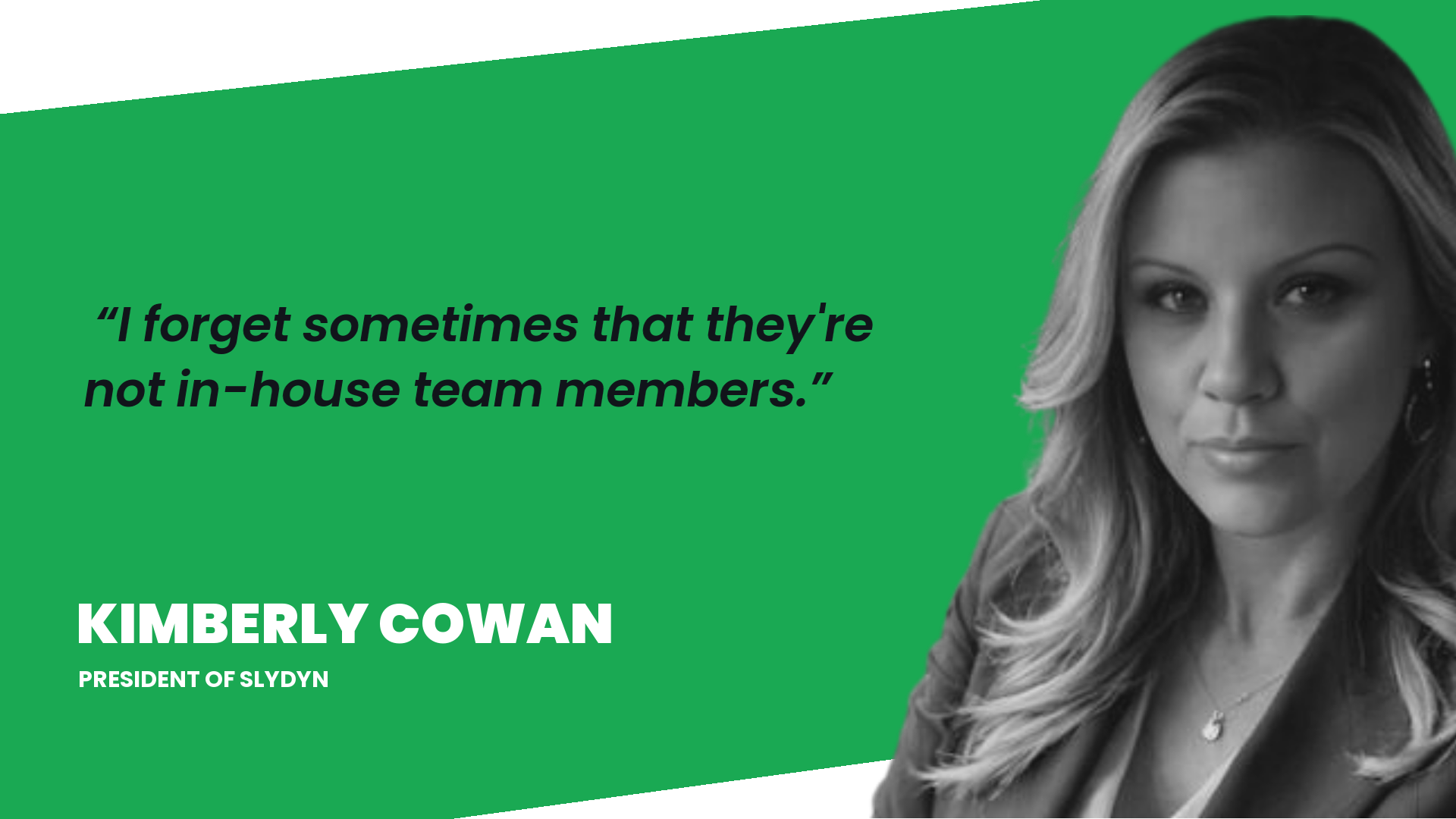
Every engineer we place is trained on the Product Driven framework from Matt's book before they ever join a client team. In practice that means they learn your product, not just your backlog. They ask why a ticket exists, flag the requirement that doesn't make sense, and stay accountable for what ships after the sprint ends. Slydyn's president says she forgets her Full Scale engineers aren't in-house employees, and that's the bar for every placement.
Read Product Driven, the bookAI as a thinking partner
We run an internal AI upskilling program, the Spartan Training Academy, that trains every engineer on our bench on Claude, GitHub Copilot, and Cursor. Your augmented engineers arrive already using AI to scaffold, test, and review their own work, so your team gets the productivity gains without building the training program itself. It's the AI leadership clients like Slydyn call out as a reason the model works.
Staff augmentation works when the engineer joining your team thinks like a product owner from week one. We hire and train for that, and the AI tooling is what makes it scale. Engineers who can think AND use AI well are rare, and that combination is what makes the difference inside an embedded engagement.
The team that built Slydyn from scratch
Slydyn had no in-house engineering team. Augmented Full Scale developers, QA, and product people built the entire platform, and president Kimberly Cowan runs them as her own team.

Dedicated engineers, starting at $35 an hour
That rate is fully loaded: it covers a senior engineer working full-time on your project, with payroll, benefits, HR, and equipment all handled by us. The same role hired locally in the U.S. costs $150K to $195K a year, and that's before recruiter fees, benefits overhead, and the three-month ramp. The math is what drives most of our clients to call.
- Full-time engineer assigned exclusively to your project
- Pre-vetted by senior engineering reviewers on our side
- Works your hours, your tools, your codebase
- Payroll, HR, equipment, and benefits handled by us
- U.S.-based customer success manager you can escalate to
- Two-week money-back guarantee if it isn't a fit
Full Scale has made the Inc. 5000 five years in a row and is Great Place to Work certified. We've been running IT staff augmentation services for U.S. companies since 2018, so the operator-level details of payroll, retention, and replacement are already worked out. Pricing isn't the only reason clients stay, but it's the easiest reason to call.
Three ways to run a staff augmentation engagement
Most clients start with one engineer and grow into a full team. Either way, you get full-time developers who sit on your standups, work your hours, and ship code against your roadmap. These aren't freelancers, they aren't shared between clients, and they aren't sitting at a project shop on the side. This is also what it looks like to hire a dedicated developer at Full Scale.
Single dedicated developer
You hire one full-time engineer who works exclusively on your project and embeds with your team.
- Full-time engineer assigned only to your project
- Works your hours, your tools, your codebase
- Joins your standups, reports to your tech lead
- We handle payroll, HR, equipment, and retention
- Two-week money-back guarantee
Dedicated team
You hire a full pod of engineers and we run it as a unit embedded with your product.
- Full pod sized to your roadmap (typically tech lead + engineers + QA)
- Embedded with your product and design teams
- Customer success manager runs the offshore-employer side
- We handle payroll, HR, equipment, and retention across the pod
- Scale up or down by a head with 30 days notice
Hybrid team augmentation
We run your U.S. team and a Full Scale pod together as one engineering org.
- U.S. leads pair with Full Scale engineers during the first 60 days
- One shared definition of done across both sides
- Time-zone overlap designed for your working window
- Quarterly performance reviews with your engineering management
- Same employment and IP protection as the other engagement models
Staff augmentation rarely breaks at hire. It breaks six months in.
Most IT staff augmentation companies can recruit. The hard part shows up six months in, when the engineer who finally ramped up gets recruited away, or when the partner has them on three projects at once, or when the contract structure makes it impossible to integrate them into your real team. These are the six things we look for on every engagement, and the things most providers skip.
You're allowed to interview every engineer
The single biggest move a buyer can make is interviewing the actual engineers themselves rather than just trusting the partner's vetting. We run candidates through two technical rounds plus a culture-fit conversation, the same way you'd interview a local hire. Vendors who push back on this are protecting an engineer they know is on the edge, or optimizing for placement speed over fit. We send candidates to you for real interviews, and if you pass on all of them we keep looking.
See how we interview developersWhy a partner's bench is a good sign
Most posts treat a partner's bench as a sign of churn. The operator truth is the opposite. A bench means the partner can absorb scope changes without scrambling, swap a poor fit within a week, and scale you up in days rather than the four to six weeks it would take to hire from cold. Our bench is 350+ engineers with current availability we can show you on the discovery call.
How retention actually gets built
The reason our retention runs 93%+ while the offshore industry runs 30 to 50 percent churn is structural. Engineers earn competitive pay, have real career paths, are treated like the senior people they are, and there's a customer success manager who fights for them when something gets weird with a client. Most offshore staffing models optimize for filling seats cheaply, which is why their teams turn over every six months.
Run them as one team, not two
The most common reason staff augmentation fails is the org-chart decision to run the offshore engineers as a parallel unit. The fix is structural. Every new engineer pairs with a U.S. engineer for the first 60 days, with one shared outcome and one shared definition of done. Write the pairing into the onboarding plan before day one, and tell each U.S. engineer that pairing time is part of their job.
Time-zone overlap by design
Our engineers work an evening shift to overlap with U.S. business hours from day one, with four or more hours of overlap to your working window. Negotiate the time-zone setup in the sales conversation, not after the first sprint. Vendors who push back on this are signaling how they treat their own engineers, not how they'll treat your team.
IP, security, and compliance handled before day one
The reason a staff augmentation partner exists at all is so the legal layer is solved before the first sprint. A U.S.-based MSA covers IP assignment, NDA terms, and background verification. SOC 2 or ISO 27001 coverage is available where you need it. Compare that to hiring contractors directly on Upwork and discovering during acquisition diligence that your IP chain is broken.
Staff augmentation versus the four alternatives most teams consider
Vendor pitches blur these models together, but they solve different problems. Picking the wrong one is the most common reason teams end up unhappy with an offshore engagement, so it's worth getting this part right before you sign a contract.
Staff augmentation vs. project outsourcing
Outsourcing hands a vendor a defined deliverable and they go build it. Staff augmentation runs the other way around: you hire the developer directly onto your team and they ship into your codebase for years. The first model buys you a project, while the second builds you a team.
When to pick which: Outsource when the work is scoped and you don't need a full-time person after it ships. Augment when the code outlives the contract.
Read the full comparisonStaff augmentation vs. managed services
Managed services hands a vendor both the developers and the outcomes. Staff augmentation keeps that ownership with you, and the partner just supplies the people.
When to pick which: Which one fits depends on whether you already have technical leadership in-house to direct the work.
Read the full comparisonStaff augmentation vs. independent contractors
Contractors on Upwork or Toptal work for themselves, juggle other clients, and have no long-term commitment. Staff augmentation engineers are full-time employees of the partner, assigned exclusively to your project, typically for years. The partner also handles IP assignment, NDAs, and background checks.
When to pick which: Hire contractors for short fixed-scope jobs. Augment when you're building a product and want the engineer there in year three.
Read the full comparisonStaff augmentation vs. consulting
Consultants hand you an opinion or a strategy document and leave. Staff augmentation engineers stay on your team and ship the work. Consulting and augmentation can complement each other (consult to plan, then augment to build), but they're solving different problems.
When to pick which: Hire a consultant when you need a recommendation. Augment when you need engineering capacity to act on it.
How a staff augmentation engagement actually starts
No 3-6 week recruitment cycles, no sourcing from cold. Our bench of 350+ engineers is already built and vetted, and we publish exactly how we vet engineers. Every step below is real, and every step has a named owner on our side.
Discovery call
30 minutes with our team. We learn your stack, your roadmap, the seniority level you need, and the kind of work the engineer will be doing in the first 90 days. There's no sales pitch on the call, just a working conversation about what you need.
Engineer match
We pull 1-3 pre-vetted engineers from the bench whose skills, seniority, and prior project experience line up with what you described. You see their full profile and their actual project history.
Technical interview
You interview the candidates the way you would interview any senior hire: live coding, system design, and the gotchas that matter for your stack. Pass anyone you don't believe in, and we keep looking.
Contract & onboarding
Sign once. We handle every contract, payroll, equipment, and HR detail in the Philippines, so you don't have an offshore entity to manage. The MSA includes IP assignment, NDA terms, and background verification on the engineer.
First commit
Your developer joins your standups, gets repo access, and ships code in their first week. We pair them with a U.S. engineer on your team for the first 60 days so context isn't trapped in one person's head.
Full Scale vs the other ways to staff your engineering team
Every IT staff augmentation path has trade-offs. Here is how a Full Scale dedicated engagement compares against the alternatives most teams consider first.
| Feature | Full Scale | Freelancer / Upwork | Traditional offshore agency | U.S. recruiter / FTE hire |
|---|---|---|---|---|
| Pre-vetted senior bench you can interview | ||||
| Time to first hire | 7 days | 1-3 days | 3-6 weeks | 6-12 weeks |
| Dedicated full-time, not shared between clients | ||||
| Founder-led, operator-experienced partner | ||||
| Sits on your standups, in your tools | ||||
| Long-term retention | 93%+ | low | varies | varies |
| Two-week money-back guarantee | ||||
| Payroll, HR, equipment, IP handled by partner | ||||
| U.S.-based customer success manager | n/a | |||
| Typical fully-loaded cost vs U.S. | ~40-50% | varies | ~50-65% | 100% |
Real software engineers, named and vetted
A sample of the software engineers on our team. These are real Full Scale developers working remotely from across the Philippines, and you'll meet candidates like them during your interview round.

A senior software developer with 10 years of experience across ASP.NET, C#, and .NET.

A software developer building with React, Vue.js, and JavaScript.

A software developer who ships production work with React, CSS, and JavaScript.

A senior software developer with 12 years of experience across Android, Android Java, and iOS.

A software developer who ships production work with JavaScript, TypeScript, and C#.

A software developer who ships production work with React, Bootstrap, and JavaScript.
95% of our engineers say Full Scale is a great place to work


When you augment your team with Full Scale, you get engineers who want to stay. Great Place to Work surveyed our Philippines team, and 95% said it's a great place to work, versus 65% at a typical company in the Philippines. That low turnover is why your developers stay on the same project for years.
See the Great Place to Work profile
The numbers behind an IT staff augmentation company that actually works
From the U.S. teams we actually staffed engineers for
Full Scale's developers were instrumental in revolutionizing our health management systems. Their ability to seamlessly integrate advanced features and data security has set a standard for our software solutions.

Full Scale has been a cornerstone in the success of our lending platform. Their development team's exceptional skill set and commitment to quality have not only met but exceeded our expectations in every project.

Staff augmentation for regulated and high-stakes industries
Fintech
Payments, lending, and banking software, engineered under SOC 2 and GLBA.
Insurance
Policy, rating, and claims software for carriers and insurtechs.
Healthcare
EHR, telemedicine, and medical device software built under HIPAA.
Real estate
Valuation, lending, and property-management platforms.
Automotive
Connected vehicle, dealership, and fleet software.
eLearning
LMS, course-authoring, and assessment software built for engagement.
Sports & entertainment
Fan engagement, ticketing, and live-stats software built for game day.
Media & entertainment
Ticketing, streaming, and platform engineering at enterprise scale.
Deeper guides to staff augmentation and dedicated teams
Nearshore vs offshore
When each model wins, from a CEO who has run both.
Outsourcing vs offshoring
The distinction most CTOs get wrong, and why it matters.
What offshore development really costs
The real numbers behind offshore rates and total cost.
The ROI of offshore development
The math behind 50-70% development cost reductions.
Offshore development best practices
How to avoid the common ways offshore engagements go wrong.
Offshore due diligence checklist
What to vet before you sign with an offshore partner.
Everything you wanted to know about staff augmentation
Extend your engineering team with a developer who has actually shipped production code before
30-minute discovery call with our team. We'll learn what you're building, walk you through who's on the bench right now, and you'll meet candidates within a week. There's no pressure and no sales pitch on the call.