

Hire API developers expertly trained on AI and product thinking
Hire dedicated API developers from a staffing partner that has spent two decades shipping REST, GraphQL, and webhook integrations into production. We have placed senior API engineers in the Philippines for SaaS, fintech, and enterprise teams. Every engineer on the bench is pre-vetted, full-time, and ready to start in as little as 7 days.
paths:
  /orders:
    post:
      summary: Create order
      operationId: createOrder
      requestBody:
        content:
          application/json:
            schema:
              $ref: "#/CreateOrder"
      responses:
        "201":
          description: Created
        "409":
description: Idempotency conflictAPI teams trusted by enterprises, scale-ups, and Fortune 500s

Previously founded VinSolutions ($150M+ exit) and Stackify
Stackify instrumented production APIs for engineering teams
Before Full Scale, I founded Stackify, an APM and logging platform that instrumented production APIs for engineering teams. I have spent two decades around API stacks, watching what happens when a webhook retries the wrong way, when a slow downstream takes out an entire service, and what separates senior API engineers from ones who only know how to scaffold a controller.
These days, every software developer is basically a plumber. It's all inputs and outputs. Most of what we build is combining the right APIs together, sometimes through a local SDK, sometimes through an external service, sometimes through a webhook flow we hope nobody fires twice. So much has already been built that a lot of the job is reusing things and putting them together in new ways. The senior API engineers I want on a team understand that, and they think about contracts and reliability before they think about endpoints.
My worst experience building APIs was building ASP.NET web services with WCF. It was a special kind of hell I would never want to do again. I'm so glad REST and JSON came around and saved us from those old APIs. The scars from that era are part of how I screen API engineers today: I want people who have actually shipped public contracts, watched a downstream consumer break because of a silent schema change, and learned to be conservative about the things that go in a response body. If you are working in the Microsoft stack, you can also hire dedicated ASP.NET developers from the same bench.
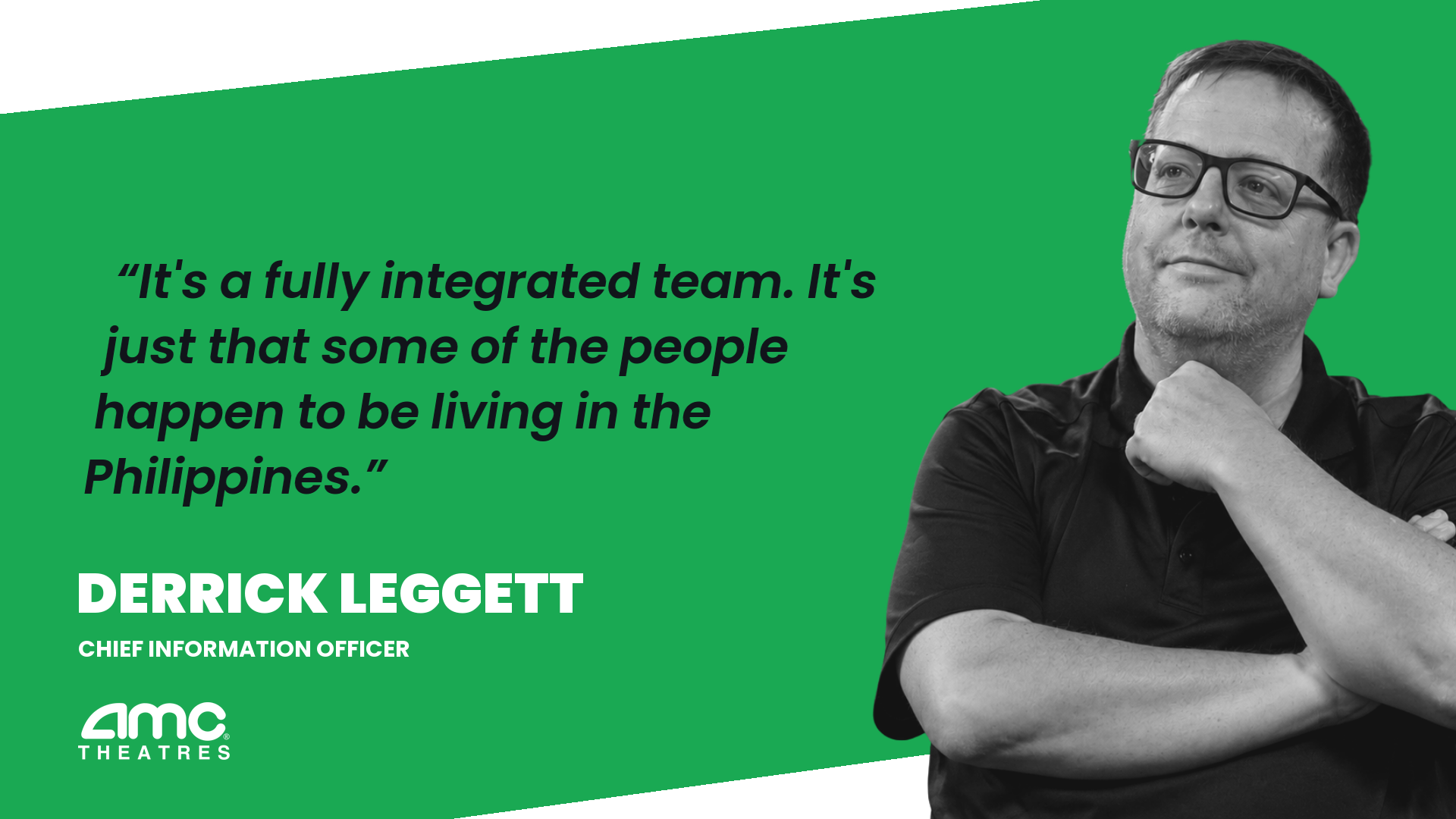
The first offshore developer I ever hired turned out to be in Russia. We needed someone to build the Linux monitoring API at Stackify, a friend recommended his dev agency, and I didn't realize until our first phone call that the engineers he had assigned us were in St. Petersburg. The year was 2012, long before the Ukraine conflict, and it was my first time working with engineers outside the US. The experience was great: the English was solid, the API held up, and we worked with that team for two years. That accident is the reason I had the confidence to keep working with global talent, and eventually to start Full Scale. I wrote up the longer version of how I avoided offshore development for years before accidentally falling into it on the blog.
Today Full Scale is an API development company built around senior Filipino developers and the Product Driven framework. We have hired API engineers in the Philippines, we test them on real contract design problems rather than syntax quizzes, and we have staffed dedicated API teams for fast growing SaaS companies, lenders, and enterprise platforms. When the API is the connective tissue inside a broader product build, our SaaS product development services staff the rest of the application around it. If you are serious about hiring offshore API developers who can actually ship a clean public API, you are in the right place.
AI-powered API engineers, trained on Product Driven principles
Most teams adopting AI for API work are shipping more endpoints without shipping better contracts. The slop volume climbs, breaking changes follow, and engineers whose only skill is typing faster end up costing more in deprecation cleanup than they save in keystrokes.
Full Scale API developers are trained on something different: the Product Driven approach from Matt's book, combined with the full modern AI toolkit (GitHub Copilot, Claude, Cursor). A lot of API work is software assembly now, picking the right pieces and wiring them together cleanly. AI is good at the boring parts of that job, like scaffolding an OpenAPI spec from a domain model, writing the DTO mapping, generating a contract test suite, or flagging a breaking change in a schema diff. It is not good at the decisions that actually matter on an API: where the resource boundary belongs, how to version without painting your consumers into a corner, what scope the auth token should carry, when PATCH is wrong and PUT is right. That combination of taste and tooling is rare, and it's what API teams should be hiring for in 2026. When the API is fronting an LLM or agent rather than a CRUD database, you can also hire dedicated AI engineers from the same bench.
Product Driven engineering
Our engineers are trained on the five pillars from Matt's book: Vision, Focus, Clarity, Ownership, and Courage. The result is developers who push back on bad contract decisions, ask whether a new endpoint should exist before adding it, and own the long-term shape of the API instead of just clearing tickets.
AI as a thinking partner
Every API engineer on our bench works with GitHub Copilot, Claude, and Cursor every day. They use AI to draft OpenAPI specs, scaffold the boring CRUD parts, generate contract tests, and review their own pull requests before a human ever sees them. The engineer still owns every judgment call, and AI takes care of the boilerplate that used to eat the morning.
Learn about GitHub CopilotAI without product thinking is just a slop machine, and the API engineers I want on my team don't get caught by that. They reason about the contract before they reach for Copilot, and they use AI for the parts where judgment doesn't matter. That's who we hire and train at Full Scale.

Dedicated API developers, starting at $35 an hour
That rate covers a senior API engineer in the Philippines working full-time on your project, with payroll, benefits, HR, and equipment all handled by Full Scale. The same role hired locally in the US costs $150K to $195K a year, and that math is what drives most of our clients to call.
- Full-time, dedicated API engineer
- Pre-vetted by senior API reviewers
- Works your hours, your tools, your codebase
- Payroll, HR, equipment, benefits handled by us
- US-based account manager you can escalate to
- Two-week money-back guarantee if it isn't a fit
Full Scale has made the Inc. 5000 five years in a row and is Great Place to Work certified. We have been doing this since 2018, and pricing isn't the only reason clients stay with our API development company, it's the easiest reason to call.
The reason offshore API work succeeds here
You can also hire dedicated developers in the Philippines across every other stack we staff, with the same vetting bar, retention numbers, and engagement model that API clients get.
English-fluent by default
The Philippines is the third-largest English-speaking country in the world. Standups, code reviews, and customer integration calls work the way they do with any US team member.
Real time-zone overlap
Most of our API engineers shift their hours toward the US business day, giving 3-4 hours of real-time overlap with East and West Coast teams, so contract decisions happen live during shared hours rather than crawling through 24-hour async handoffs.
Deep engineering talent pool
Cebu and Manila produce tens of thousands of CS and IT graduates a year. REST, GraphQL, and integration work has been a staple of Philippines computer science programs for two decades, which means deep, ready talent across the full API stack.
Cultural alignment with US teams
Filipino engineers grow up on US business norms, US TV, and US tech culture, so agile rituals, direct feedback, and collaborative workflows feel familiar from day one. These teams integrate fast rather than needing constant management.
Building an endpoint is not the same as shipping a production API
Anyone who passed a bootcamp can wire up a REST controller. Designing a contract that holds up across versions, dozens of consumers, and three years of business changes requires a different bench entirely. When you outsource API development or hire offshore API developers, this is the gap that decides whether the project ships. Here is what we test for, and what most offshore staffing companies skip. The two failure patterns I see most often on offshore API teams are versioning chaos (breaking changes shipped under the same v1, three different versioning schemes in the same codebase, deprecations that never actually happen) and list endpoints with no pagination contract (GET on a collection returns everything, holds up fine in dev, falls over at ten thousand rows in production with no cursor or page token to fix it). Both of those are cheap to get right the first time and brutally expensive to fix later.
Contract design, not just endpoints
Junior developers ship routes. Senior API engineers reason about resource modeling, versioning strategy, OpenAPI schemas, and when REST is the right call versus GraphQL or gRPC. We hire for that judgment, because the wrong contract burns six months of downstream work.
Idempotency and retries that don't double-charge
We test for idempotency keys, deduplication on POST, and the difference between retryable and non-retryable failures. Bad retry logic is the most common reason webhook integrations fire the same payment twice, and it's the kind of bug most offshore teams have never had to debug.
Auth done right, not just tokens passed around
Real API security covers OAuth2 flows, OIDC, JWT validation with rotating keys, scope design, and rate limiting per client. The bench is also stocked with engineers who can walk through a token replay attack and know where to look in the gateway logs when something gets through.
Versioning without breaking your customers
Moving a public API from v1 to v2 is more than renaming a route. We have done full versioning migrations and deprecation cycles for production APIs serving millions of requests a day, which means we know where the landmines are before we start.
Gateways, quotas, and rate limiting
Real gateway work covers Kong, Tyk, AWS API Gateway, and Apigee, plus token-bucket rate limiting, per-tenant quotas, and graceful 429 handling. It isn't a checkbox configured once, and we test for engineers who understand the actual traffic shape of a production API.
Production debugging skills
A senior API engineer should be able to read a distributed trace, correlate a 504 against the right downstream span, and use OpenTelemetry, Datadog, or Stackify-style APM tooling to find a slow query under load. Most offshore developers have never touched these tools.
Hire dedicated API developers for the work that actually matters
Most API hiring conversations skip past the actual project. What kind of API work do you need done? Greenfield REST or GraphQL, an SOAP-to-REST migration, a versioning cutover, a gateway and rate-limiting build, or a performance fix that's been open for six months? As an API development company that bills for engineering hours rather than fixed-bid projects, our developers ship across all of it. Here are the API development services we get hired for most often.
Custom API development
Custom API development means greenfield REST and GraphQL builds with OpenAPI contracts, real resource modeling, and a versioning plan that survives the first 18 months without a rewrite. Your downstream consumers can still reason about the contract on month 19.
Read our API development guideGraphQL development services
GraphQL work covers schema design with Apollo Federation, persisted queries, dataloader-based N+1 elimination, and subscription delivery over websockets. We have shipped GraphQL gateways in front of legacy REST estates and built clean federated graphs from scratch.
REST API design and integration
REST is still where most production APIs live, and we build them with OpenAPI contracts, contract testing in CI with Pact, and clean resource boundaries. Third-party integrations get circuit breakers, retry logic with backoff, and idempotency keys, which gives you an integration layer your downstream consumers don't curse at.
API gateway and platform engineering
We build the platform layer most APIs are missing: Kong, AWS API Gateway, Apigee, or Tyk for routing and rate limiting, plus OAuth2 and OIDC for auth, OpenTelemetry for observability, and Terraform for everything that holds it up. That's the full API platform stack, with no "we hand-rolled a reverse proxy" shortcuts.
Legacy API modernization
We run production API migration projects from SOAP to REST, REST v1 to v2, and monolithic services into clean federated GraphQL or gRPC backends without downtime. We know which clients break in a versioning cutover, how to run dual-write deprecation, and how to drain old traffic before the lights go out. This is modernization work we've done at SaaS-scale throughput.
Read the offshore app development guideAPI performance and reliability engineering
Our API reliability work covers distributed tracing with OpenTelemetry, load testing with k6 or Gatling, query optimization for slow endpoints, and gateway-level rate limiting and caching. These are skills most offshore API shops have never developed, so hire us when your public API is slow or flaky and nobody knows why.
Eight API specializations, one staffing partner
Most API teams need more than one role. Hire dedicated REST and GraphQL developers, senior integration engineers, gateway specialists, and API security engineers from a single vetted bench. If the role you need is a level up the stack, you can also hire dedicated backend developers from the same team. Mix and match seniorities as the project requires.
Backend API Engineers
Senior backend devs design the contract, the business logic, and the data access for your service. They work fluently in Node, Python, Go, .NET, or Java and ship REST and GraphQL APIs end-to-end.
GraphQL Engineers
GraphQL specialists design federated schemas with Apollo, write resolvers that don't blow up on N+1, handle persisted queries, and own the contract between front-end teams and backend services.
Microservices and Integration Engineers
Engineers in this specialization design distributed systems, event-driven integrations on Kafka or SQS, and webhook delivery with idempotency and signed payloads. They are comfortable inside hexagonal or clean architecture from day one.
API Platform and Gateway Engineers
Platform engineers own Kong, AWS API Gateway, Apigee, or Tyk end-to-end. They write the Terraform too, and they tune rate limiting, quotas, and per-tenant policies for production traffic.
API DevOps Engineers
DevOps work on these teams covers CI/CD with contract testing built in, plus containerization, infrastructure as code, and observability. They make API releases boring in the good way.
API Security Engineers
When auth gets weird, these are the engineers you call. They run OAuth2 and OIDC flows, design scope models, harden JWT validation, and run threat models against public APIs.
Full-Stack API and SDK Developers
End-to-end engineers pair backend API work with TypeScript SDK generation, client integration code, and documentation. They ship developer experience across the contract, not just the server side.
API QA and Contract Test SDETs
Our automation engineers write contract tests in Pact, schema tests for OpenAPI, load tests with k6 or Gatling, and end-to-end integration suites. They build the test pyramid you wish you had for your API estate.
API expertise tuned to your industry
As an API development company that has been around for over a decade, we have placed dedicated API developers into nearly every industry where systems talk to systems. Domain knowledge cuts onboarding time in half, so we match developers to projects where they have already shipped real integrations. You can see how this plays out in our client case studies.
Finance & FinTech
Production APIs in finance mean strict audit trails, signed payloads, idempotency on every money-moving call, and zero tolerance for data anomalies. We have built and scaled lending APIs, payment integrations, and compliance webhooks for regulated US companies. APIs still own the seam between every system in this space, and so does our bench.
From REST and GraphQL to gRPC and event-driven webhooks
Whether you want to hire GraphQL developers for a federated graph, hire REST engineers for a public SaaS API, or outsource API development on a legacy SOAP estate, the bench covers every layer of the API stack. Pick what you need. We will match an API programmer fluent in it.
Hire dedicated API developers, two ways
Most clients start with a single dedicated API developer and grow into a full team. Either way, you get full-time engineers who sit on your standups, work your hours, and ship code against your roadmap. Both options are the staff augmentation model at the core: dedicated, long-term engineers embedded in your team rather than freelancers, shared resources, or a project shop on the side. When the API engineer also needs to ship the frontend that calls it, you can hire senior full stack developers from the same bench. For gRPC platforms or high-throughput services, you can hire experienced Golang developers under the same model.
Dedicated developer
Full-time, exclusive, sits on your standups.
- Full-time API engineer assigned only to your project
- Works your hours, your tools, your codebase
- Joins your standups, reports to your tech lead
- We handle payroll, HR, equipment, retention
- Two-week money-back guarantee
Dedicated team
Multiple engineers, embedded as a pod.
- 2-10 API engineers staffed together as one pod
- Optional QA, DevOps, and tech lead included
- Operates as a team inside your engineering org
- Scale up or down by a head with 30 days notice
- Account manager you can escalate to in the US
How to hire a dedicated API developer from Full Scale
We skip the 3-6 week recruitment cycle and the cold sourcing entirely. Our bench of API development talent in the Philippines is already built and vetted (see how we hire engineers), and every step below has a named owner on our side.
Discovery call
30 minutes with our team. We learn your stack, your roadmap, the seniority level you need, and the API style you're building in (REST, GraphQL, gRPC, webhook-heavy integration). We don't pitch on the call, we walk through what you actually need from a hire.
Engineer match
We pull 1-3 pre-vetted API engineers from the bench whose skills, seniority, and prior project experience line up with what you described. You see their full profile and their actual integration history.
Technical interview
You interview the candidates the way you would interview any senior hire: live coding, contract design, idempotency and retry gotchas, and architectural reviews. Pass anyone you don't believe in.
Contract & onboarding
Sign once. We handle every contract, payroll, equipment, and HR detail in the Philippines so you don't have an offshore entity to manage. You just get a developer.
First commit
Your developer joins your standups, gets repo access, and ships code in their first week. Our delivery managers stay involved to make sure ramp-up doesn't stall.
Full Scale vs the other ways to hire an API developer
Every hiring path has trade-offs. Here is how a dedicated API engineer from our API development company compares against the alternatives most teams consider first when they want to hire API developers.
| Feature | Full Scale | Freelancer / Upwork | Traditional offshore agency | US recruiter / FTE hire |
|---|---|---|---|---|
| Pre-vetted senior API bench | ||||
| Time to first hire | 7 days | 1-3 days | 3-6 weeks | 6-12 weeks |
| Dedicated full-time, not shared | ||||
| Founder-led engineering oversight | ||||
| Sits on your standups, your tools | ||||
| Long-term retention | 93%+ | low | varies | varies |
| Two-week money-back guarantee | ||||
| Handles payroll, HR, equipment | ||||
| US-based account management | n/a | |||
| Typical fully-loaded cost vs US | ~40-50% | varies | ~50-65% | 100% |
When offshore API work is the wrong call
Most pages like this would tell you offshore API work is always the right move. It is not. Below are the cases where we have either passed on a project ourselves or told the client they should not hire dedicated engineers from anyone, us included. If any of these match what you are doing, we will say so on the discovery call rather than sign you up and hope it works out.
You don't have a real contract yet
Very early stage exploration where the API surface changes weekly is the wrong fit for a dedicated engineer. What you need is a co-founder or a freelancer who can absorb the thrash. A long-term hire needs accumulated context to be productive, and that context is exactly what you do not have yet.
Your work is on-soil regulated
Certain DoD contracts, ITAR-covered systems, and a narrow slice of regulated workloads require US persons on US soil. If that is you, we will tell you on the call, not after the contract.
The scope is fixed and short
Think a one-time webhook integration, a four-week refactor, or a single migration that ends on a known date. Hire a freelancer or a specialist consultancy for those. Dedicated developers earn their value over months and years, and a short fixed-scope job rarely runs long enough to pay back the ramp-up.
You can't actually fill a developer's time
If you only have 10 hours of well-defined work a week, a dedicated full-time engineer will end up idle or pulled into work you didn't budget for. That ends badly for both sides. Part-time engagements and fractional hires exist for this reason, and we are not them.
Real API engineers, named and vetted
A sample of the API engineers on our team. These are real Full Scale developers working remotely from across the Philippines, and you'll meet candidates like them during your interview round.

A senior API developer with 13 years of experience across C#, .NET MAUI, and Xamarin.

A senior API developer with 10 years of experience across C#, Java, and ASP.NET.

A senior API developer with 18 years of experience across Node.js, Java, and jQuery.

A senior API developer with 11 years of experience across C#, ASP.NET, and TypeScript.

An API developer building with Node.js, Next.js, and React.

A senior API developer with 13 years of experience across Node.js, CSS, and JavaScript.
The numbers behind an API staffing partner that actually works
Six numbers we track on every engagement, drawn from our public client case studies and a decade of hiring senior engineers in the Philippines.
From the people we actually staff teams for
Full Scale's development team was pivotal in elevating our facility management software. Their expertise turned complex challenges into seamless functionalities, enhancing user experience and operational efficiency.
With Full Scale's developers, we transformed the commercial real estate landscape. Their team's proficiency in agile development and proactive communication accelerated our product release.
Deeper guides to API hiring and development
Nearshore vs offshore
When each model wins, from a CEO who has run both.
Outsourcing vs offshoring
The distinction most CTOs get wrong, and why it matters.
What offshore development really costs
The real numbers behind offshore rates and total cost.
The ROI of offshore development
The math behind 50-70% development cost reductions.
Offshore development best practices
How to avoid the common ways offshore engagements go wrong.
Offshore due diligence checklist
What to vet before you sign with an offshore partner.
Everything you wanted to know about hiring API developers
Hire a dedicated API developer who has actually shipped production APIs before
Book a 30-minute discovery call with the API development company that supplies dedicated developers and custom API development services from the Philippines. We'll learn what you're building, walk you through which dedicated API developers, GraphQL engineers, REST programmers, or gateway specialists are on the bench, and you'll meet candidates within a week. You won't get pressure or a sales pitch on the call.