
How to Choose a Custom Software Development Company: Judge the Proposal, Not the Pitch

In this article
Here's how to pick a custom software development company. First, dismiss the pitch, read the proposal.
Pitch is what they want you to think; proposal is how they'll act when the check arrives. Look at whether they asked questions, who they name, how they price risk, and what you own at the end. Seems minor. It sorts most vendors in about an hour.
Quick Answer: Choose a vendor model based on your situation, then evaluate their written proposals by checking five things: did the vendor ask questions first, who are the developers, does the estimate reveal assumptions, is there code ownership/exit language, and does the vendor tell you not to hire them? At Full Scale we sell dedicated teams, which fit some situations and not others, and the table below says which.
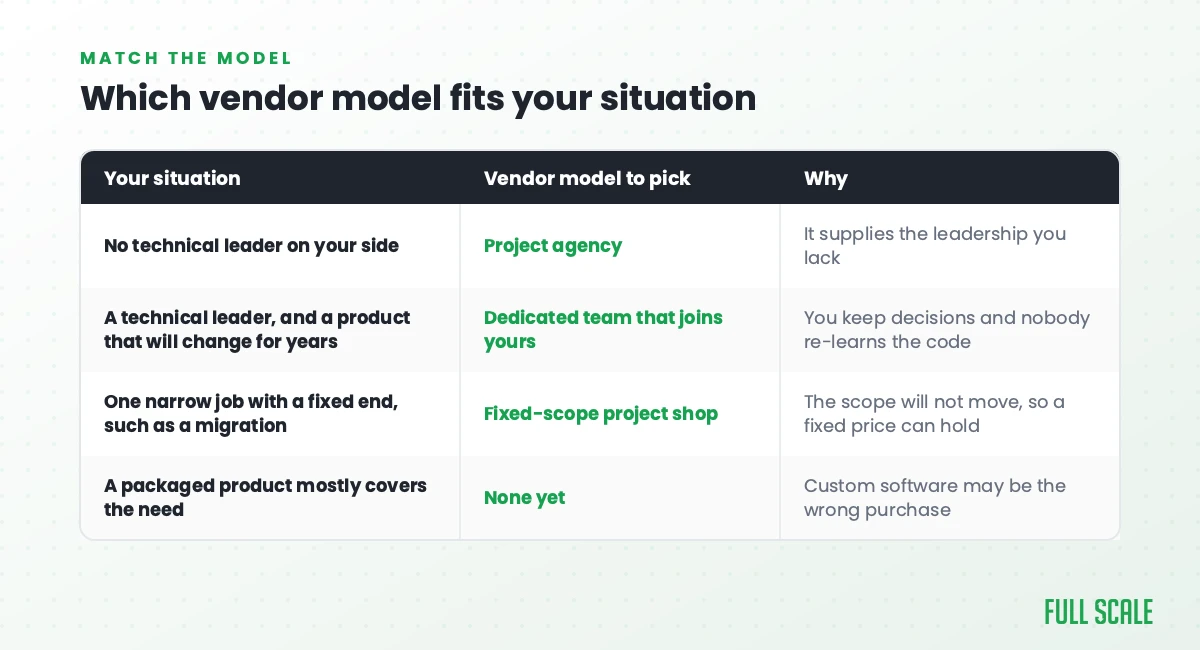
Match the vendor model to your situation first
Before you start comparing vendors, you should figure out what type of company you need. You'll never find the right fit if you're looking for the wrong model. Here's how Full Scale breaks it down. We staff dedicated teams, so we are one of the options, but we also tell you when another approach would be better.
| Your situation | Vendor model to pick | Why |
|---|---|---|
| No technical leader, and you need someone to run discovery, design, and project management | Project agency | The agency supplies the leadership you lack |
| A technical leader on your side and a product that will change for years | Dedicated team that joins yours | You keep the decisions, and nobody re-learns the code every project |
| One narrow job with a fixed end, such as a migration | Fixed-scope project shop | The scope will not move, so a fixed price can hold |
| A software need that a packaged product mostly covers | None yet | Custom software may be the wrong purchase, as the build vs buy software guide explains |
I've always recommended having an in-house tech lead, but if you don't, make sure you get one from the vendor, and know that's what you're doing. For a longer match-by-situation walkthrough, see our software development outsourcing companies guide.
Five tests to run on every proposal
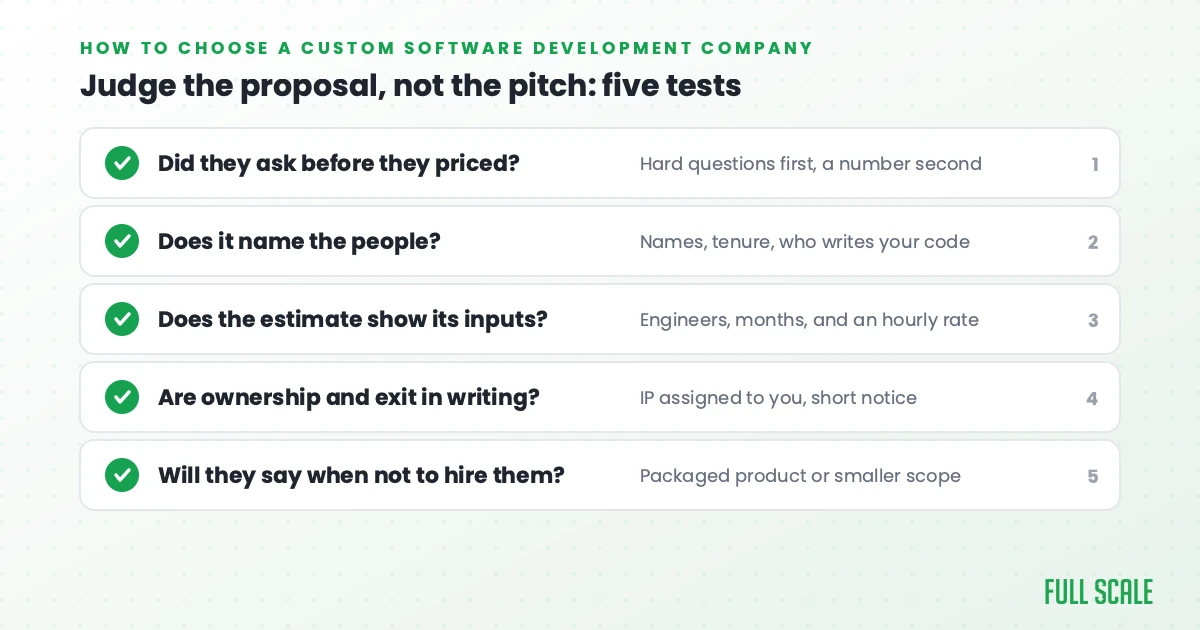
Reviews and awards will help you build a shortlist. The proposal will sort that shortlist. So run these five tests on each one.
1. Did the vendor ask hard questions before it priced?
If you receive a proposal two days after your initial phone call that includes a specific figure, it's been drafted from a template.
Quality vendors ask who the end users are, what happens when the project is delayed, and what you've done previously to resolve the issue.
Count how many questions they asked you. If that number is zero, consider it a red flag.
2. Does the proposal name the people?
"A dedicated team of senior experts" names nobody. Ask for names of the engineers, their years of experience, and if those people in the pitch will be the ones coding your product. The switch from sales to build is old hat, and it continues to work with buyers who don't ask.
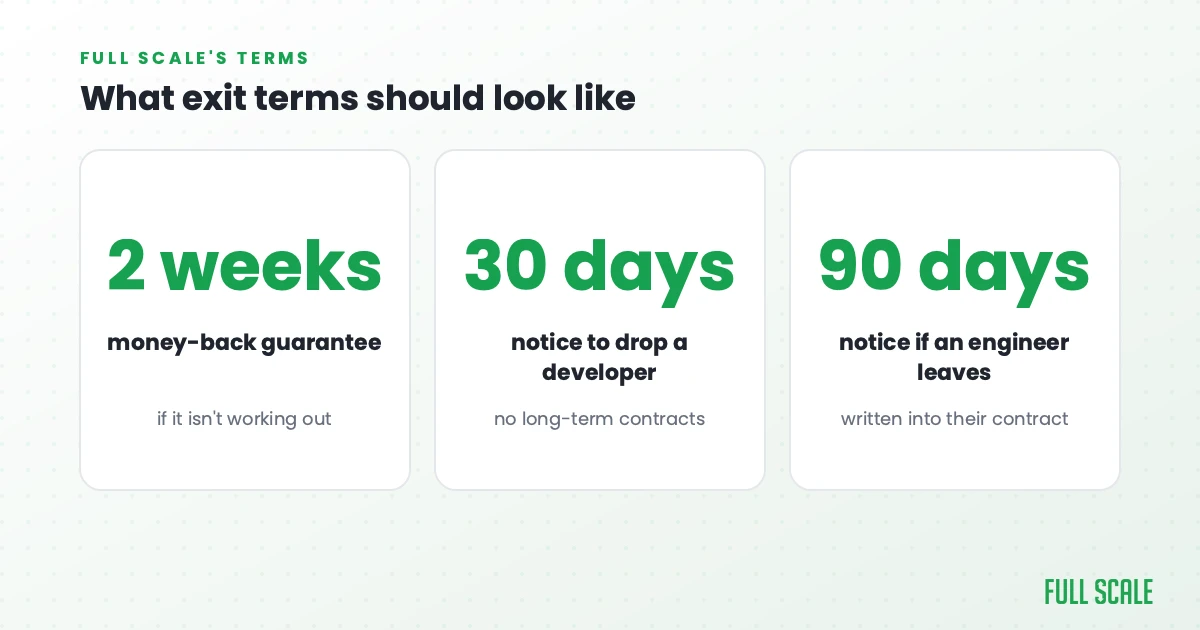
The other side is retention. If a team turns over every year, your project gets reset every year. Full Scale's engineer retention rate is 93%+, and our engineers have to sign a contract stating they will give 90 days' notice if they leave.
3. Does the estimate show its inputs?
Every estimate is an engineer times months times an hourly rate. When the proposal gives one number and keeps the other three hidden, you can't challenge it. Our custom software development cost guide breaks down the math and the source ranges.
Price mostly tells you where a team sits. The Clutch pricing guide puts custom software agencies at $25 to $49 an hour in the Philippines, India, Ukraine, and Mexico; $50 to $99 in the U.S., and $100 to $149 in Canada and Australia. The cheapest rate on that list is also how buyers fall into what I call cheapshoring. They pick the cheapest option, deliver a specification, and provide zero technical direction.
When a firm proposes a fixed bid, find out what happens if the job takes 50% longer. The response will tell you who's taking the risk. We explain why this almost always fails in our article on why fixed cost software development doesn't work.
4. Are ownership and exit terms in writing?
Two clauses decide whether you can walk away: who owns the code, and how you leave.
On ownership, don't make assumptions. Software written by an outside contractor isn't automatically yours under US "work made for hire" rules, so the contract should have a clear assignment of IP to you. The legal requirements for hiring developers in the Philippines article describes the relevant clause in more detail. Full Scale's client agreement assigns IP rights to the client and we never use code we develop for one client for another's project. Have your lawyer review anything you sign.
On exit, check that the notice period is short, there are no lock-in fees, etc. At Full Scale we work with no long-term contracts, 30 days' notice to drop a developer, and a two-week money-back guarantee. If a company tries to make it expensive to leave, they're telling you what they think your relationship will look like.
Make sure the source code is in a repository you have access to from day one. A vendor who has your code, has you.
5. Will the vendor tell you when not to hire it?
Ask if there is a package that would work. Ask if you need a team at all or if you just need a subset.
A vendor that has never told you "You should not build this" has never lost a sale to honesty. That's worth knowing.
Ask these before you sign
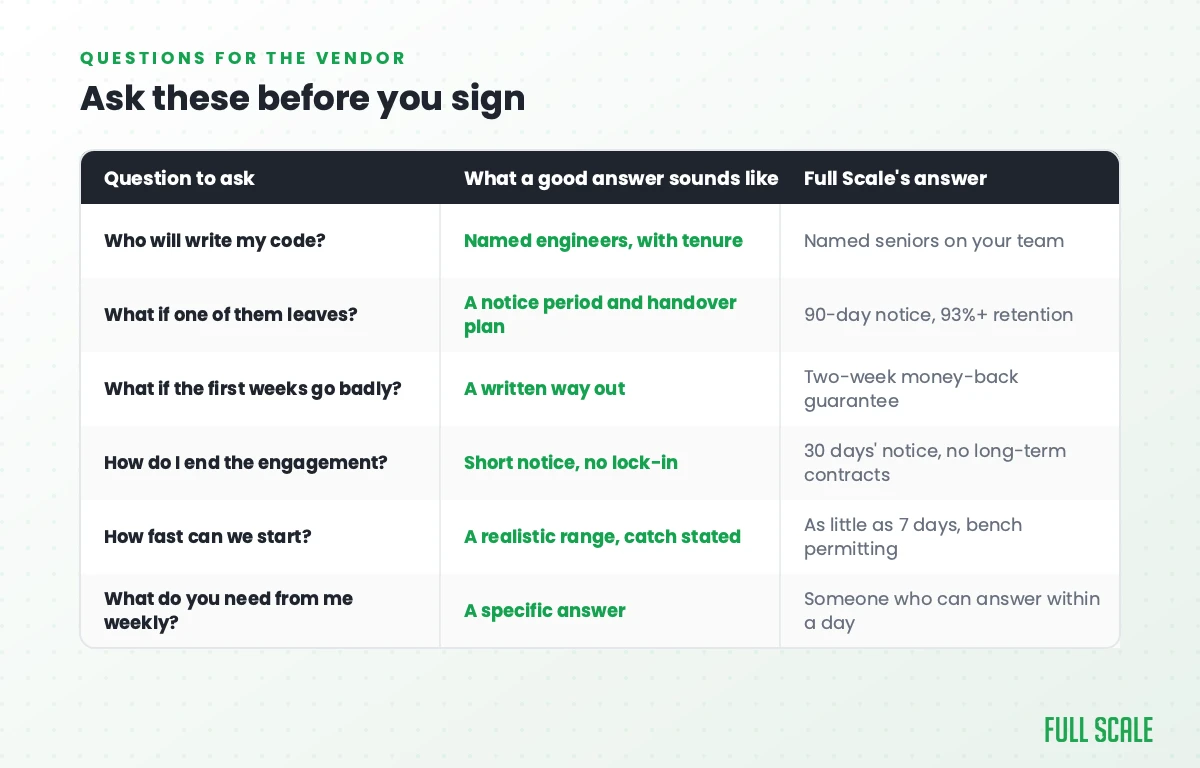
These questions turn a proposal into a conversation. By filling in the last column with how Full Scale answers these questions, you can quickly evaluate how the other companies measure up.
| Question to ask the vendor | What a good answer sounds like | Full Scale's answer |
|---|---|---|
| Who will write my code? | Named engineers, with their tenure | Named senior engineers who join your team, tools, and standups |
| What happens if one of them leaves? | A notice period and a handover plan | Engineers sign a 90-day notice contract, and retention is 93%+ |
| What if the first weeks go badly? | A written way out | Two-week money-back guarantee |
| How do I end the engagement? | Short notice, no lock-in | 30 days' notice, no long-term contracts |
| How fast can we start? | A realistic range with the catch stated | As little as 7 days, depending on bench availability |
| What do you need from me every week? | A specific answer | Someone on your side who can answer the team's questions within a day |
The final question is the one that buyers overlook. For a bespoke project, you need a decision maker on your end, and a vendor that doesn't require one is going to take guesses.
What reviews can and cannot tell you
Directory reviews are a fair way to build a shortlist, but a bad way to make the final decision. We explain how to interpret Clutch, G2, and GoodFirms, including the review gone bad, in how to vet software development companies.
Use that as your list-building method, and use the five tests above to eliminate candidates. If you're building a web app, the vendor question gets a little more complicated, and we break that down in how to choose a web development company and how to hire a custom web application development company.
What integrated looks like
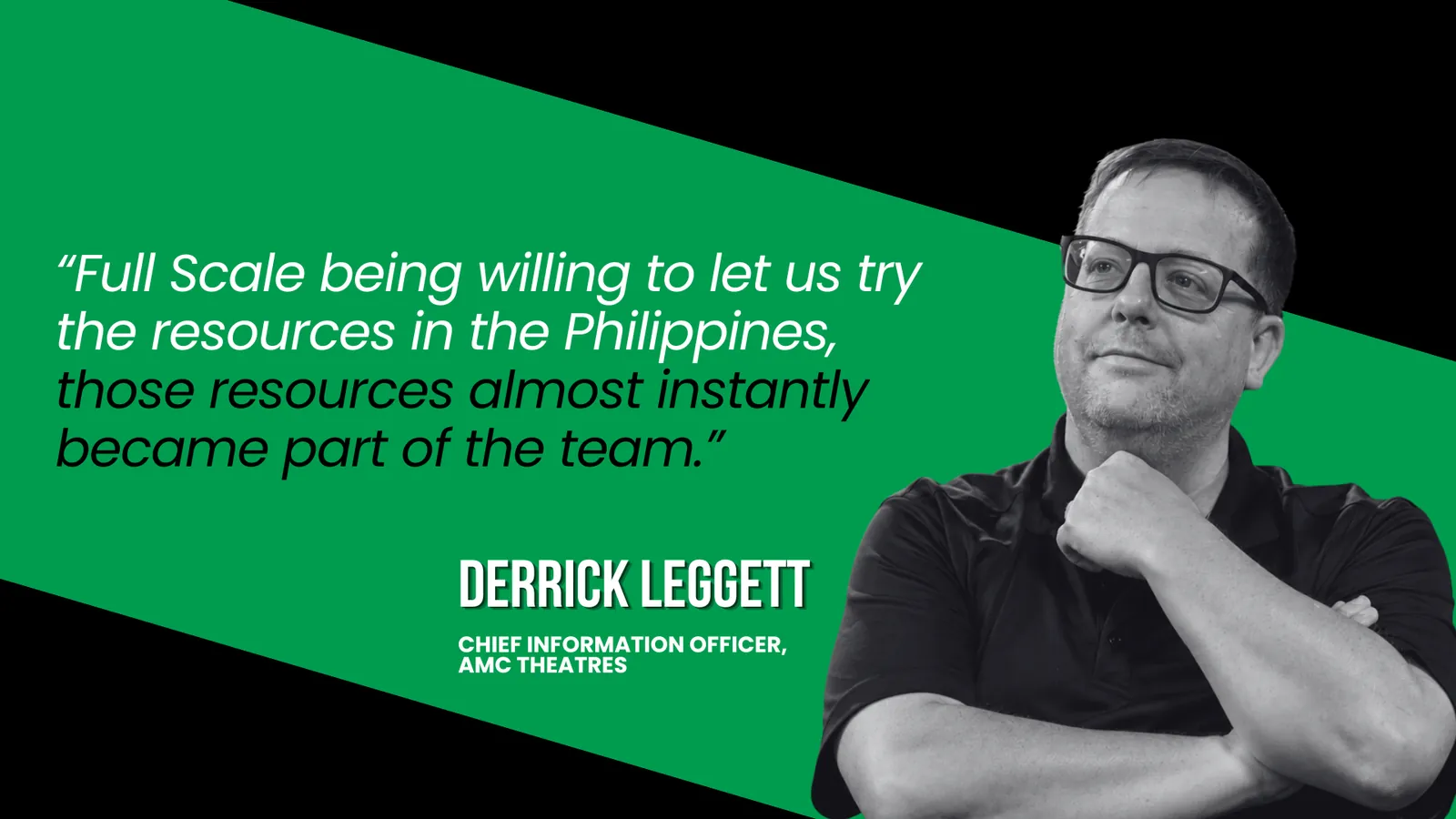
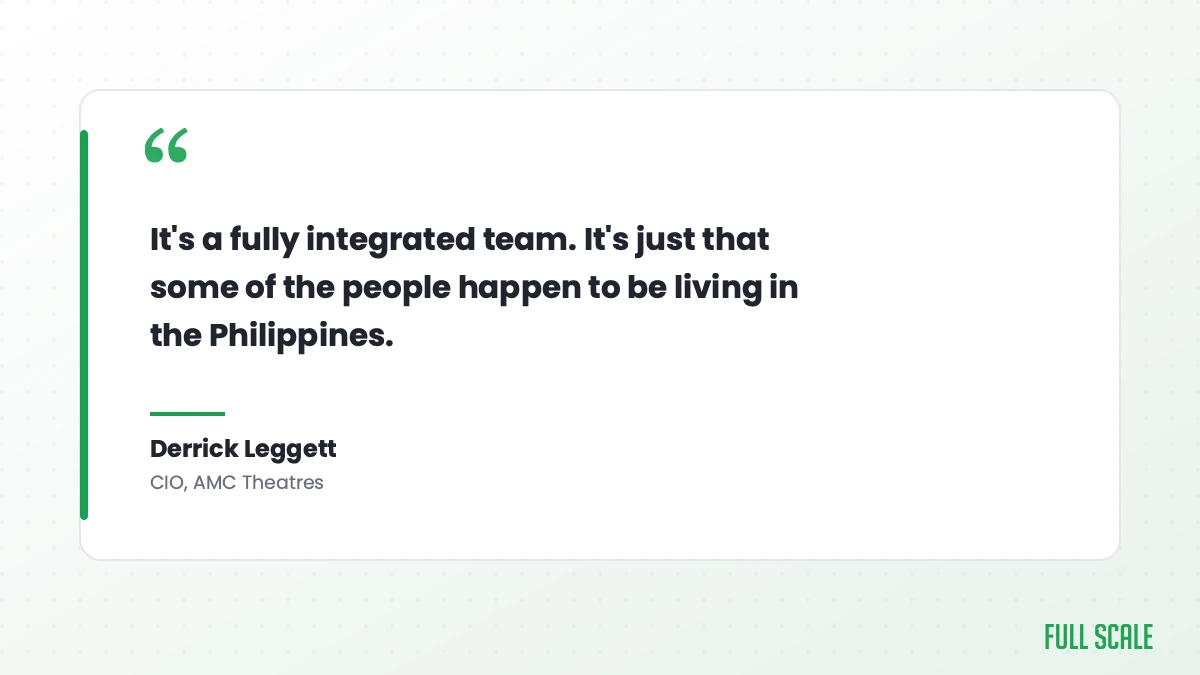
But I think the best proof that a vendor model can work is a client who stopped thinking of the vendor as a vendor. Derrick Leggett, CIO of AMC Theatres, says this about his engineers in the Philippines: "It's a fully integrated team. It's just that some of the people happen to be living in the Philippines."
That's the model we sell. Your engineers will participate in your standups and use your tools. You manage the work. Our page on custom software development services has more details on how an engagement is set up, and the thinking behind it is in my book Product Driven.
Frequently asked questions
How do you choose a custom software development company?
Match the vendor's model to your situation first, then judge each company by its written proposal and not its pitch. A good proposal shows that the vendor asked questions before pricing, names the engineers who will do the work, shows the inputs behind its estimate, puts code ownership and exit terms in writing, and is willing to say when you should not hire it.
What should a custom software development proposal include?
A custom software development proposal should include the scope and what is excluded from the first version, the named team, an estimate that shows engineers, months, and rate, a first milestone you can test, the contract type, an intellectual property assignment to you, and the terms for ending the engagement. A proposal that is a price and a logo wall is a sales page, not a plan.
What questions should I ask a custom software development company?
Ask who will actually write your code and whether they are named in the proposal, what happens if an engineer leaves mid-project, who owns the source code and where it is stored, what you get back if the first weeks go badly, and what the vendor needs from you each week. The answers matter less than how specific they are.
How much do custom software development companies charge?
Clutch's 2026 pricing data puts custom software agencies at $25 to $49 an hour in the Philippines, India, Ukraine, and Mexico, $50 to $99 in the United States, and $100 to $149 in Canada and Australia. Full Scale engineers start at $35 an hour fully loaded. Price tells you where a team sits, and it tells you very little about whether the team is any good.
Should I choose an offshore custom software development company?
Offshore works when the contract and the team are set up well. Check that the agreement assigns intellectual property to you, that the vendor is a company you can hold accountable under your own country's law, and that the engineers are employees and not a rotating pool of contractors. Full Scale contracts with clients as a US company and its engineers are employees with 90-day resignation notice.
Read the proposal twice
Read it once for what it says and once for what it doesn't say, and that's where you'll find out how they actually behave as vendors.
Schedule a call and we will talk through which vendor model fits your situation.