
Mobile App Development Trends in 2026: Skip the Listicle, Check the Hiring Math

In this article
- AI changed who you hire
- AI app builders are real, and they still stop at the hard part
- On-device AI quietly made the everyday AI feature free
- Cross-platform framework choice is a hiring decision, not a benchmark
- Backend-as-a-service vs. custom backend: still the most expensive undecided question in mobile
- The app-store tax finally cracked, and no trend list noticed
- The trends on every list that won’t change your roadmap
- Offshore mobile staffing got harder to fake
- Mobile app development trends, sorted by what actually changes your plan
- Frequently asked questions
- The four questions that actually matter
Car dealers used to track lot inventory on paper, then type it all into a system back at the desk. I built the app that ended the double-entry, running on a device called a Compaq iPAQ, with a camera so grainy it barely counted as one megapixel, controlled with a stylus because touchscreens like we know them didn’t exist. It synced over the .NET Compact Framework, which was the state of the art at the time. That was VinSolutions, years before the iPhone existed. I’ve run Full Scale since 2018. Between VinSolutions and now, I’ve staffed and shipped mobile apps through every hype cycle since: WAP, Flash, the Cordova and PhoneGap hybrid years, the native-only years, and now the Flutter and React Native cross-platform era everyone treats as brand new.
That history is why I can tell you something the average “top mobile app development trends” post can’t: most of what you’re about to read on ten other sites this month is recycled. AI, AR, 5G, low-code, super apps, the same mobile app trends rotate every January with a new year stapled to the title. Some of it is real and changes what you build or who you hire. Most of it is content marketing dressed up as foresight.
Here’s the version sorted by what actually moves a decision, not what fills out a listicle.
AI changed who you hire
Every trend list mentions AI. Almost none of them say what it actually changed, which is the job itself.
Let’s take the uncomfortable version of that first: if AI is already writing 30 to 75% of new code, some teams genuinely need fewer people to ship a straightforward app, and no vetting argument changes that math for a simple CRUD screen. That’s real, and pretending otherwise would be its own kind of recycled content marketing.
Where it stops being true is anywhere the app has real judgment calls in it, which is most of what actually ships. For most of my career, a mobile developer was someone who took a design and turned it into screens. That work is cheap now. Ask the two biggest software companies on earth how much of their new code AI already writes and you get Microsoft at roughly 30%, and Google’s CEO claiming 75%. Whichever number you trust, the share is already large and only going up. Meta stopped measuring and started mandating: an internal document leaked to Business Insider shows the company expects 65% of the engineers in its app org to write more than 75% of their committed code with AI this half. That is a staffing target, not a survey answer. Typing screens was never the valuable part of the job. It just used to take long enough that nobody noticed. Low-code and no-code tools made the same “anyone can build an app” promise years before AI did, and it still took an engineer to make the output actually hold up in production.
Shipping to mobile changes the math here. Get review-and-rollback wrong on web and you patch it in minutes. On mobile you wait for app-store review, and even after it clears, a chunk of your users won’t update for days. A confidently-wrong AI suggestion that slips through sits live in front of real customers far longer than it would anywhere else, which is why the judgment call before you ship matters more now than ever. It’s a specific skill, and you can’t screen for it by asking someone to whiteboard a linked list.
We’ve written the full breakdown of what a mobile job description should actually require now in how AI changed the mobile developer job description, and the Android developer job description if that’s your stack. If your job posting still reads like a list of SDKs, you’re hiring for the part of the job that already got automated.
AI app builders are real, and they still stop at the hard part
The question I get now isn’t whether AI can write code. It’s some version of “my co-founder built our app in Lovable over a weekend, so why do I need developers?”
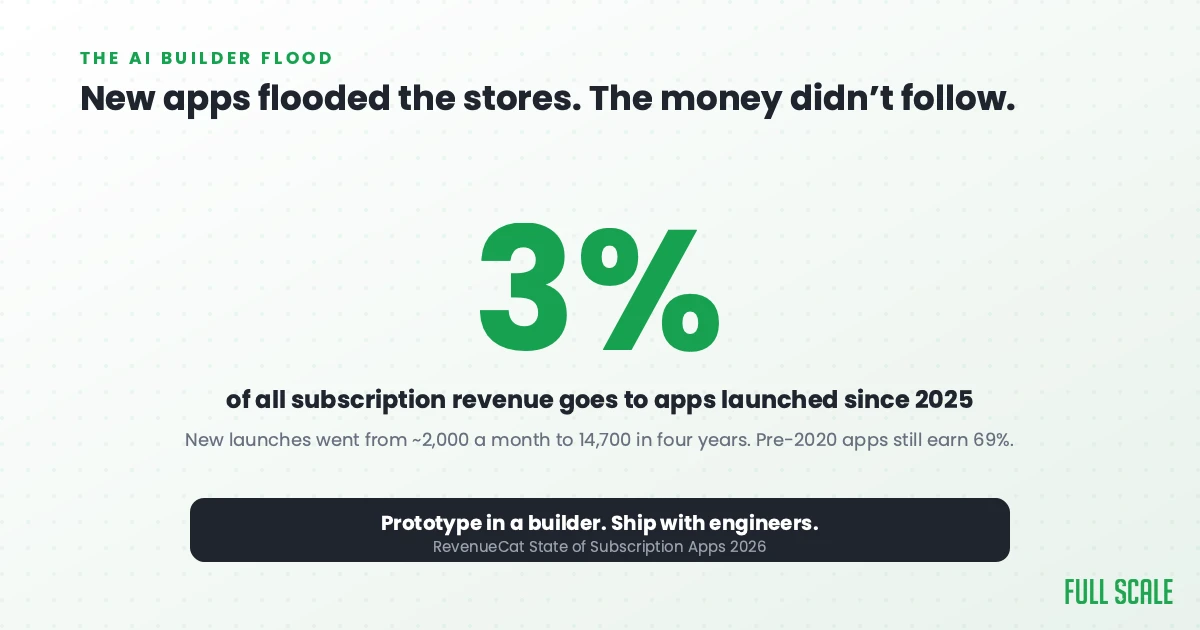
They’re not wrong about the weekend part. Lovable went from $100 million to $400 million in annual recurring revenue in seven months, with 8 million users building apps by describing them. You can see the flood in RevenueCat’s 2026 subscription data: new subscription apps launching each month went from about 2,000 in early 2022 to 14,700 by this January, and the acceleration lines up exactly with the AI builder wave.
Now the other half of the ledger. Apps launched since 2025, the vibe coding era, earn 3% of all subscription revenue. Apps launched before 2020 still earn 69% of it. The flood is real. So is the part where the flood doesn’t make money.
The pattern that actually works: let the builder do what it’s good at, which is getting a real, tappable thing in front of users this week. Then hand it to engineers for the part where it has to survive contact with reality: auth edge cases, payments, offline behavior, and the app-store review gauntlet. Replit‘s own iPhone app sat in Apple review for four months this spring, and they wrote the tool.
A prototype built in a weekend is a great way to learn what to build. It is not a way to skip the people who build it.
On-device AI quietly made the everyday AI feature free
While everyone argued about cloud AI bills, both platforms shipped the alternative. Apple’s Foundation Models framework, live since iOS 26, lets any app call the on-device model directly: free inference, works offline, and the user’s data never leaves the phone. Named apps are already shipping it, from SmartGym’s workout coach to OmniFocus 4 turning a brain dump into a project. Google’s answer, Gemini Nano 4 and the AppFunctions API announced at I/O in May, is real but still in preview.
That flips the cost math on AI features. A cloud LLM feature carries a per-query bill forever and a privacy question in every enterprise review. An on-device feature carries neither. It won’t do everything a frontier model can, but it covers the features users actually notice: summaries, suggestions, smart defaults, natural-language input.
Plan the on-device version as the default and the cloud version as the upgrade, and your AI feature stops being a line item.
Cross-platform framework choice is a hiring decision, not a benchmark
Flutter versus React Native comparisons love frame-rate benchmarks. They almost never mention the axis that actually decides it for most teams: who you can hire and how fast.
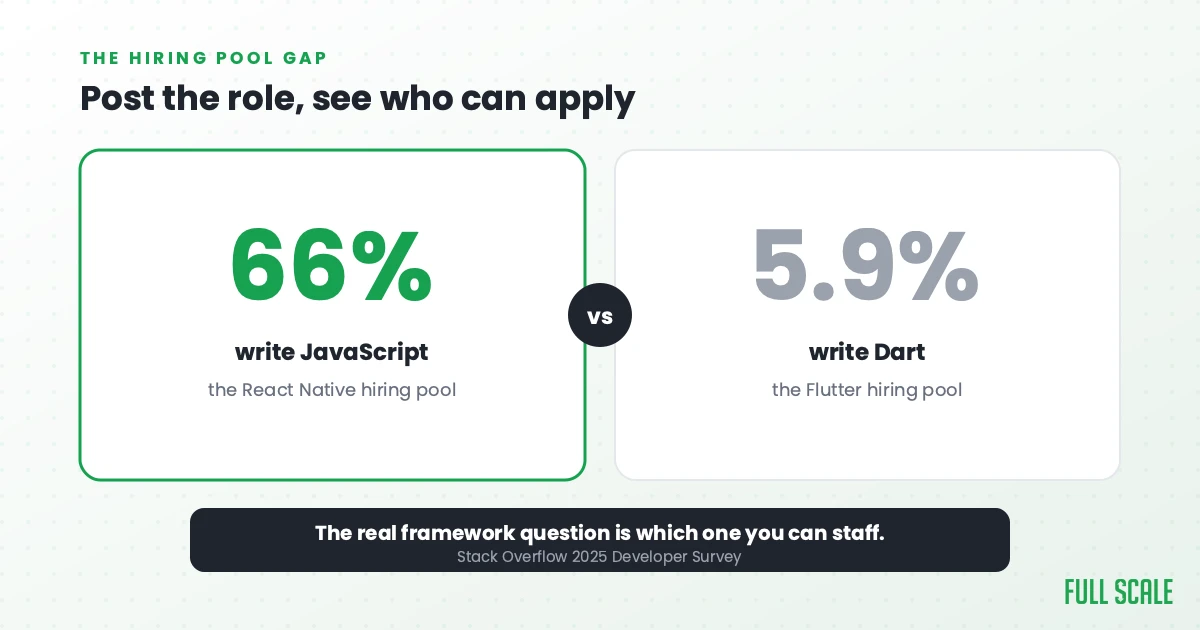
Here’s the number that actually drives the hiring decision. Per the 2025 Stack Overflow Developer Survey, JavaScript and React between them cover most of the developer population: 66% write JavaScript, 44.7% work in React. Dart, the language a Flutter build requires, shows up in just 5.9% of developers. Post a React Native role and you’re pulling from nearly every web developer on the market, while a Flutter posting fishes in a much smaller pond on purpose.
I heard the same “write once, run everywhere” promise about Cordova and PhoneGap fifteen years ago, and it was true right up until an app needed to actually feel native, which was always.
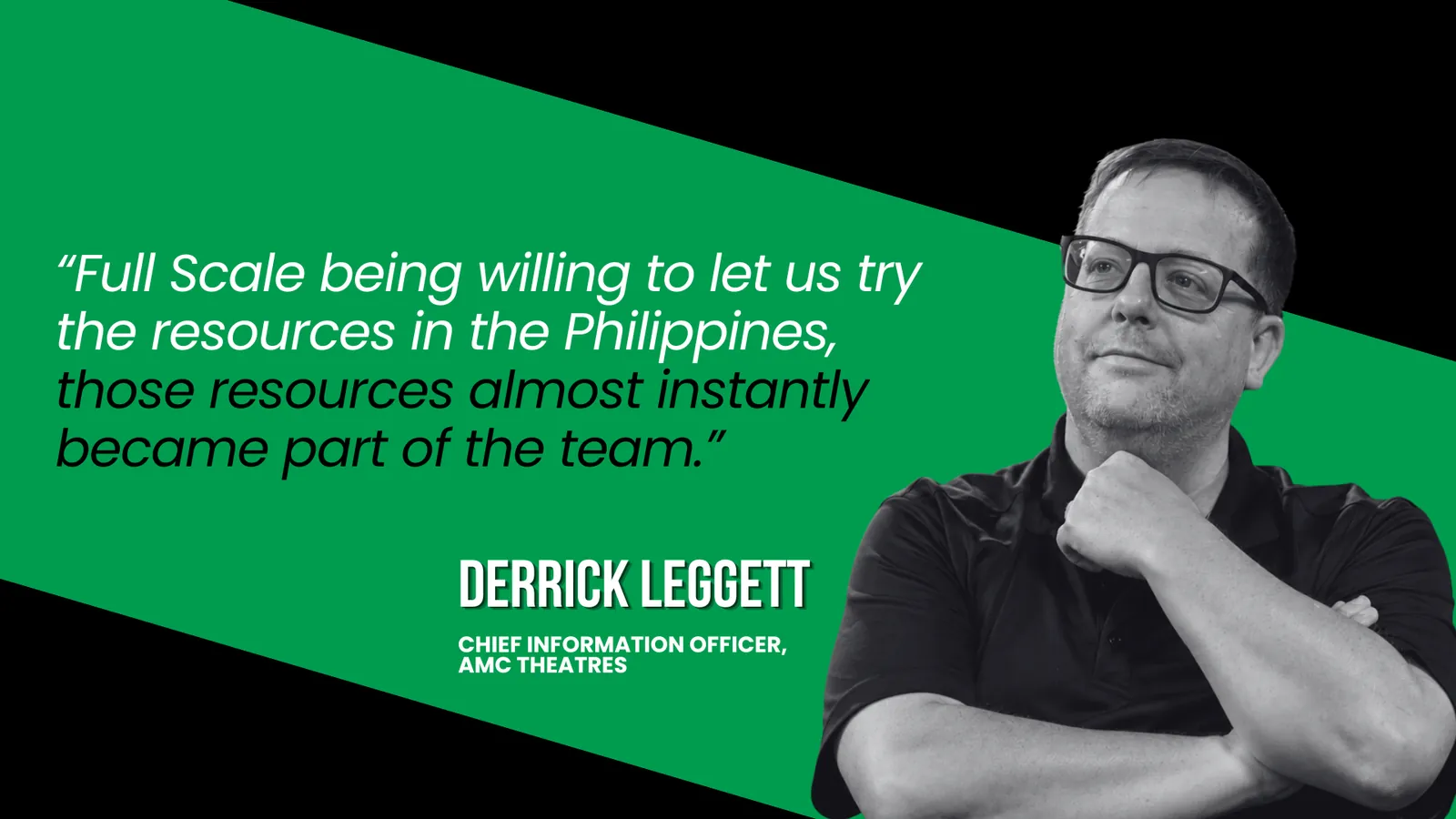
That gap in pool size hasn’t stopped Flutter from winning new-app starts (it edged React Native 9.4% to 8.4% in “worked with” share in the 2024 survey), because for some teams the pixel-perfect UI control is worth hiring specifically for. One Full Scale client, AMC Theatres, had an old Xamarin app that a native rewrite would have taken years to replace. Their own team rebuilt it in Flutter instead and had it live within a few months. A framework choice made like a benchmark argument instead of a staffing decision is how teams stay stuck for a year.
The third option kept moving while everyone watched the two-horse race. Per JetBrains’ KotlinConf keynote in May, the number of top apps using Kotlin Multiplatform more than doubled in the past year, with PayPal, Booking.com, Sony, and Duolingo running it in production. It’s past the science-project stage now. If you are already an Android shop, it is a legitimate answer to the staffing question.
We go deep on the actual comparison, including when the right answer is native or Kotlin Multiplatform instead of either, in Flutter vs React Native. And if you’re a step earlier than that, still deciding if cross-platform is even the right model, start there.
Backend-as-a-service vs. custom backend: still the most expensive undecided question in mobile
This is the trend nobody puts a number on, because the number is embarrassing. Before Full Scale, I built Stackify, an application-monitoring tool. For years, my actual job was staring at dashboards of other companies’ production backends buckling under load they didn’t have yet. The pattern was always the same shape: a team over-builds for a scale that’s still theoretical, and the users who’d justify it never show up in time to matter.
Firebase and Supabase have turned “just use a backend-as-a-service” into a legitimate strategy for a lot of apps, even ones that could eventually outgrow it. The honest 2026 version of this trend is simple: more teams admit a managed backend is fine for the first year of a product’s life. Fewer teams are quietly burning three engineers on infrastructure nobody’s using yet.
The cheapest infrastructure decision is the one you skip: sticking with a managed backend until you actually outgrow it. The signal to graduate is usually one specific wall: custom business logic the platform can’t express, or a compliance requirement like HIPAA or SOC 2 that the managed tier doesn’t cover. We cover the rest of the specific signals in mobile app backend development.
The app-store tax finally cracked, and no trend list noticed
The most resented line item in consumer mobile used to be a law of nature: the stores took 30% and you built your pricing around it. That ended this year, and I haven’t seen it on a single trend list.
In June, Google Play split its fee: a 10% service fee on your first million in annual earnings and on all subscriptions, plus 5% only if you use Play’s own billing. Route to your own checkout and the 5% is gone. On the Apple side, the courts killed the 27% commission Apple tried to charge on web link-outs, and the Supreme Court takes up the fight in its October term. RevenueCat’s data says 41% of top-tier apps already run web revenue on the side.
If your app makes money, your 2026 plan now includes a web checkout decision. That’s a build decision with real dollars attached, which is more than a super app ever did for you.
The trends on every list that won’t change your roadmap
One item on every list is real enough to deserve a straight paragraph instead of a dismissal: app-store privacy labels and data-safety disclosures. Both app stores now reject submissions over vague or missing privacy answers, which makes this a real shipping risk. It won’t change who you hire the way AI or the framework choice will, though it can wreck your release timeline if you treat it as an afterthought.
Everything else on the usual list is closer to padding. I’m going to be the fun police for a minute: a few things show up on every 2026 trend list that will not change what you build or who you hire, and pretending otherwise is how a listicle pads itself to ten items.
Super apps are a real trend in specific markets, largely outside the US. If your buyer is a mid-market American company, you are not building the next WeChat, and treating “super app strategy” as a 2026 priority is a distraction from the app you actually need to ship.
Foldables are the closest thing on this list to a real 2026 story. IDC expects shipments up 30% this year, with Apple’s first foldable iPhone landing at year-end. That makes them a QA problem (does your app behave when the screen unfolds into a tablet), not a hiring one. Test on one. Don’t reorganize your roadmap around one.
5G-driven experiences got a lot of promotional copy a few years back. Apps that genuinely needed low-latency networking, like live video or real-time multiplayer, had already solved it before 5G rolled out widely. Nobody is choosing a mobile architecture in 2026 because of 5G.
Sustainable, green app development is a nice idea and a genuinely thin trend. I have never had a client ask us to optimize battery drain for the planet’s sake. They ask because battery drain gets an app deleted, which was always true.
Voice and touchless interfaces keep showing up on trend lists with no evidence that they’re changing a single hiring plan, outside of accessibility features that were already table stakes and a handful of automotive or smart-home apps where voice is the actual interface, not a bonus.
Augmented and virtual reality get a real trend paragraph on almost every list, and it deserves one, just not here. We already wrote the honest version of that talent math in virtual reality development trends, including when it actually justifies engineering dollars and when it’s still a demo.
Offshore mobile staffing got harder to fake
Mobile has always punished a staffing decision that other kinds of software forgive. A generalist web developer can often fake their way through a backend they don’t fully understand. A developer who’s never actually shipped an app through App Store or Play Store review will find out live, on your timeline, that they don’t know what they don’t know.
That’s always been true. What changed this year is the broader hiring market around it. A senior US developer now costs $190,000 to $260,000 a year fully loaded once you count benefits, taxes, and recruiting, a number I walk through in full in developer hiring trends. Add a visa route that got more expensive and legally uncertain on top of that, and the math got worse for a lot of companies at once. Those same forces are pushing more companies toward staff augmentation, which I cover from the mobile-specific angle in staff augmentation trends.
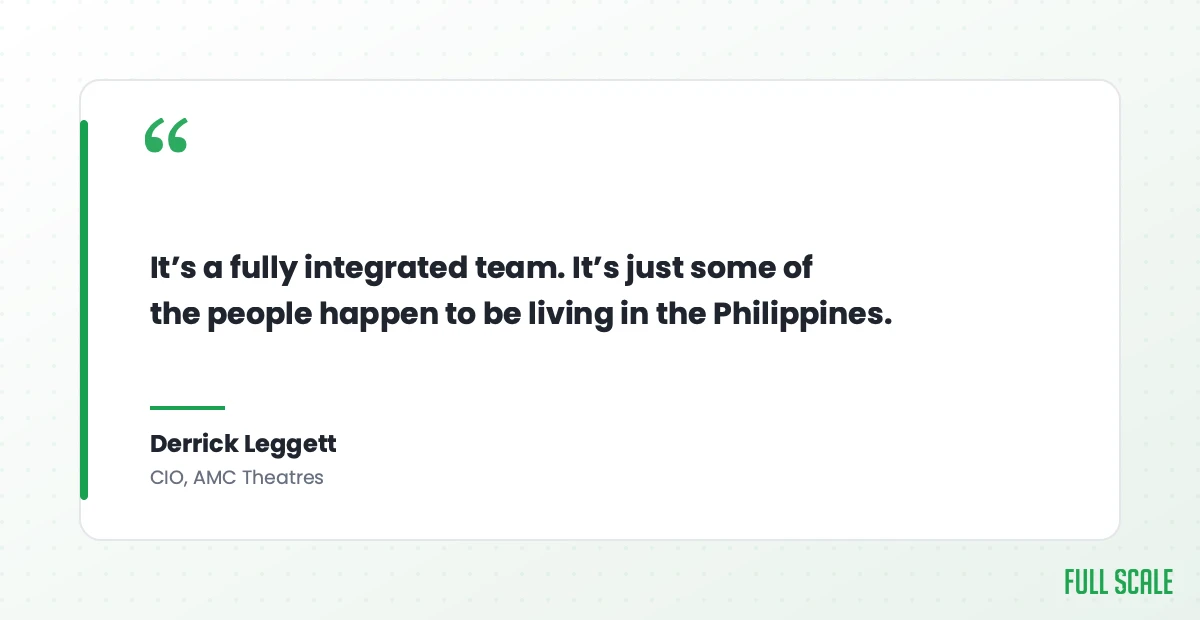
Cost was always the pitch for offshore mobile staffing. Vetting for platform depth is the filter that gets a developer in the door, but whether the engagement actually works comes down to retention and integration: does this person stick around long enough to own your codebase, and does your structure hold them accountable the way it would an in-house hire. AMC Theatres’ CIO, Derrick Leggett, put it simply: “It’s a fully integrated team. It’s just some of the people happen to be living in the Philippines.” That’s the standard a vetted offshore mobile hire should be held to.
We cover exactly what that vetting looks like, and where teams get burned skipping it, in offshore mobile app development and how to outsource mobile app development without getting burned. If your only filter is the lowest hourly rate on the call, you’re doing what I call cheapshoring a mobile team, and you’ll pay for it in review-cycle time later.
Mobile app development trends, sorted by what actually changes your plan
Line the two columns up and see which one you’d actually bet money on.
| What gets pitched | What’s actually real |
|---|---|
| “AI integration is coming to mobile apps” | AI already writes a big share of the code. The vetting bar moved to catching what it gets almost right |
| “Flutter vs React Native, which performs better” | Both perform fine for nearly every business app. The real question is which one you can staff |
| “Cloud-native and serverless are the future” | Backend-as-a-service is already a legitimate default for a new app’s first year, not a stopgap |
| “AR/VR and super apps are must-have 2026 features” | Real for specific markets and use cases, irrelevant for most buyers reading this |
| “Cost savings drive offshore mobile development” | The real driver now is that US hiring and the visa pipeline both got harder at once |
| “AI app builders replace your mobile team” | They 7x’d the supply of new apps, and those apps earn 3% of the revenue. Prototype in one, ship with engineers |
| “Every AI feature carries a cloud bill” | On-device models made the everyday AI feature free to run and private by default |
| “The 30% app-store tax is a fact of life” | Play unbundled to 10% + 5% in June, and US web checkout is open while the courts finish the fee fight |
Read the right column out loud and none of it sounds like a keynote, because a real decision rarely does.
Frequently asked questions
What are the biggest mobile app development trends in 2026?
The trend that actually changes decisions is AI shifting the mobile developer’s job from writing screens to catching what AI gets almost right. Cross-platform framework economics and the backend build-versus-buy call are the other two that move a real budget or hiring plan, and 2026 added two more: whether an AI app builder covers your build (it covers the prototype), and the app-store fee crack, which changed the revenue math for any app that makes money. Most of the rest of the standard trend list (AR, 5G, super apps, voice UI) is real somewhere, just not for most companies reading this.
What are the current trends in mobile app development that actually affect hiring?
The clearest one is the hiring-pool gap between React Native (JavaScript, the largest talent pool in software) and Flutter (Dart, a much smaller one you recruit for specifically). It decides how fast you can staff a team and how deep the bench goes if someone leaves.
Is Flutter or React Native the bigger trend for 2026?
Neither is “winning.” React Native is the faster, deeper hire if you already have JavaScript talent. Flutter is worth hiring specifically for when you need pixel-identical UI across platforms. The full comparison, including when native beats both, is in our Flutter vs React Native breakdown.
Should I still build a custom mobile backend in 2026?
Not on day one, in most cases. A backend-as-a-service like Firebase or Supabase is a legitimate default for a new app’s first year. Build custom once you hit a specific wall, like custom business logic or a compliance requirement the managed tier doesn’t cover.
Are AR and VR worth building into a mobile app in 2026?
For most companies, not yet. AR and VR earn engineering dollars in specific use cases like retail try-on, training simulations, and some gaming. For most business apps, though, they’re still a demo, not a roadmap item. We break down when it’s actually worth it in virtual reality development trends.
Is offshore mobile development still worth it in 2026?
Yes, though the reason has shifted. US hiring and the visa pipeline both got harder this year, which is a bigger driver now than cost ever was (more in developer hiring trends). The savings still land in the 50 to 70% range against a US hire, but check whether the developer they place actually sticks around and integrates with your team instead of just clocking hours at a low rate.
Should I use an AI app builder or hire developers in 2026?
Use the builder for the prototype. Tools like Lovable are genuinely good at getting a working app in front of users in days, and the launch numbers prove the model works that far. The part that makes money (auth, payments, surviving app-store review, retention) is still engineering, which is why the apps from that wave earn about 3% of subscription revenue. Plan on both: prototype with AI, ship and maintain with a real team.
Do I need a separate iOS and Android team in 2026?
For most business apps, no. One Flutter or React Native team ships to both stores, and the choice between them comes down to which talent pool you can hire from, not benchmark performance. Keep native specialists for the cases that genuinely need them: AR, heavy 3D, hardware integrations, or day-one OS features.
The four questions that actually matter
Everything above collapses into four questions worth asking before you spend a dollar chasing any 2026 mobile trend. What are you actually screening for when you hire? Which framework can you realistically staff, not just build on? Do you need a custom backend yet, or are you paying for infrastructure you won’t touch for a year? And is your offshore partner vetting for platform depth, or just quoting the lowest number on the call?
Get those four right and the AI, AR, and 5G debates mostly take care of themselves.
If you want help working through any of it, people who’ve staffed mobile teams since before app stores existed are a phone call away. Let’s talk.