
Virtual Reality Development Trends: The Talent Math That Decides What You Build

In this article
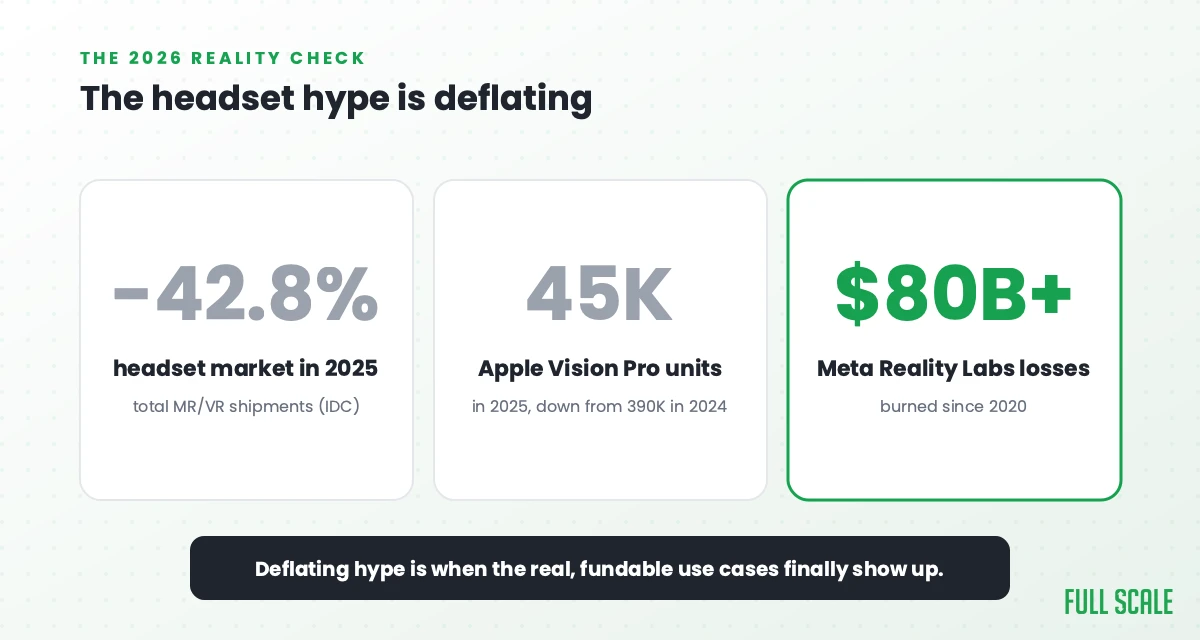
Apple shipped about 390,000 Vision Pro units in 2024. In 2025 that number fell to roughly 45,000, after Apple halted production for most of the year (IDC, via The Register). Meta’s Reality Labs has now lost more than $80 billion since 2020 chasing the headset future. The whole mixed and virtual reality headset market is on track to shrink almost 43% for the year.
So virtual reality is dead, right?
No. The hype is finally deflating, and that’s exactly when the real, fundable use cases show up. I’ve been around long enough to watch a few hype cycles play out, and the pattern is always the same. The headlines cool off, the tourists leave, and the people doing serious work get to build without the noise.
If you run an engineering team, the interesting question about virtual reality development was never which trend is hottest. It’s whether a given trend justifies your scarce engineering dollars, and how you’d staff the build if it does.
That’s the talent math, and it decides what you should build far more than any headset spec sheet does.
The hype is deflating, and that’s good news for builders
The trend pieces tend to skip the reality check, so start there.
The hardware story in 2026 is brutal. IDC put total mixed and virtual reality headset shipments down 42.8% for 2025. Meta Quest shipments fell 16% year over year. Apple’s Vision Pro got an M5 chip refresh in late 2025 and almost nobody cared; by spring 2026 the reporting was that Apple had largely moved on. The expensive face computer everyone argued about turned out to be a niche product.
Back in 2023 I wrote a newsletter about why I love boring software companies, and I closed it with a line about Mark Zuckerberg betting his company on the metaverse: “Good luck, Zuck.” Three years and more than $80 billion in Reality Labs losses later, that bet still hasn’t paid off.
Here’s why none of that means you should ignore VR.
A deflating hype cycle is a buying signal for builders. When a technology is overhyped, every conversation is about the demo and the headset. When the hype clears, the conversation moves to who actually pays for this and why. That second conversation is where real products get built. The companies quietly shipping useful immersive software right now are not trying to build the metaverse. They’re solving a specific, often boring problem for a customer who will pay for it.
That’s the lens for everything that follows.
The trends that actually justify engineering dollars
Strip away the headset drama and a few genuine shifts are left. These are the ones worth a line item in your budget.
AI changed the development pipeline more than the headsets did
The biggest real trend in VR development has nothing to do with a headset. It’s that building 3D content got dramatically cheaper, because AI now does a lot of the grunt work.
Generating a 3D model, a texture, or a whole environment used to mean an artist and a lot of hours. Tools like NVIDIA’s Omniverse generative AI services now generate usable 3D assets from a prompt, and the same wave of AI coding tools reshaping the rest of software applies here too. Google’s CEO has said AI now writes around 75% of the company’s new code. Asset creation, the part of VR work that always made it expensive, is collapsing in cost, and that cuts in your favor.
One caution. AI accelerates the work, but the judgment stays with the engineer. Veracode found that 45% of AI-generated code carried a known security flaw, and AI-generated 3D assets still need a human to check scale, performance, and whether the thing is any good. AI makes a smaller team faster. It still needs the engineer who knows what “good” looks like, and that’s the same shift happening across AI in software development generally.
The money is in enterprise training and simulation, not consumer
Consumer VR is a hard way to make money. Enterprise VR is where the budgets actually are.
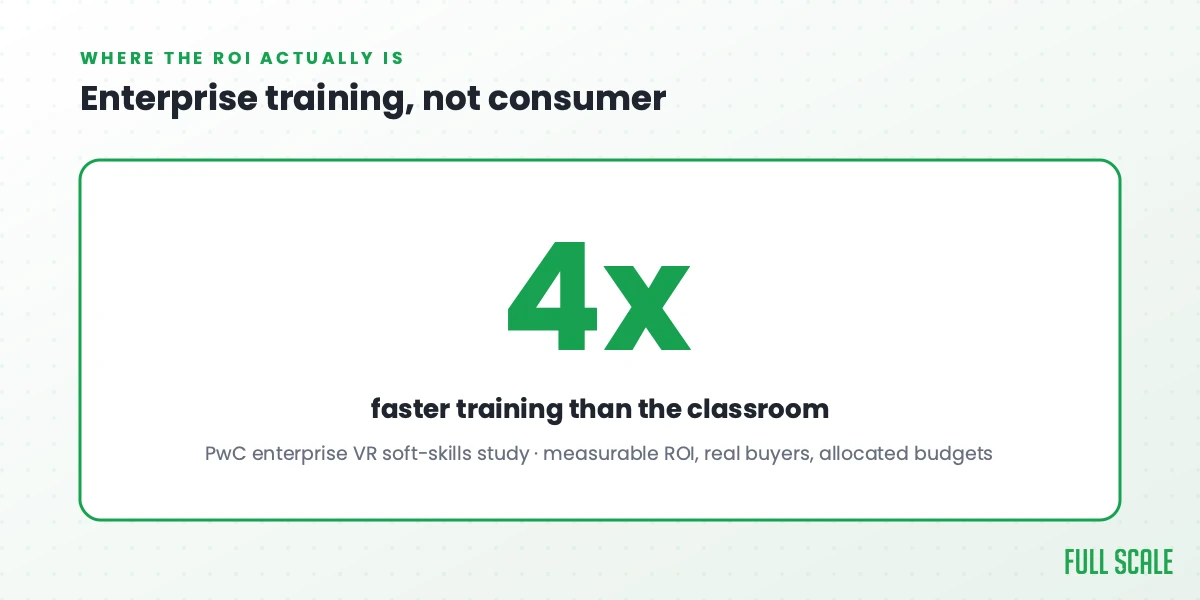
The strongest case is training. PwC ran a study comparing the same course taught in a classroom, through e-learning, and in VR. The VR learners trained up to four times faster than in the classroom, were far more confident applying what they learned, and were dramatically more focused than the e-learning group. For training that is dangerous, expensive, or hard to stage in real life, those numbers translate directly into money saved.
The same logic holds for simulation, design review, and remote collaboration. A surgeon rehearsing a procedure. A technician practicing on a machine that costs millions. A team walking through a building before it’s built. These use cases are not flashy, and that’s exactly why they’re worth funding.
The platform is fragmenting toward glasses, so build for portability
While headsets struggled, smart glasses grew 211% in 2025. Google and Samsung shipped the first Android XR headset, the $1,799 Galaxy XR, with Google’s Gemini AI built in. Apple is reportedly steering toward glasses too.
The takeaway for an engineering leader is not to pick the winning device. It’s to assume you can’t. The hardware is fragmenting, so the smart money builds for portability across platforms instead of betting the product on one headset that might get discontinued. Where it fits, WebXR lets you deliver an immersive experience straight through a browser with no install at all, which is the cheapest way to test demand before you commit to a native build.
The trend the listicles miss: the talent math
Every other VR trends article will tell you the use cases. Almost none of them will tell you the hard part, which is finding the people to build any of it.
VR and XR developers are among the scarcest, most expensive specialists in software. The skill set is a specific blend:
- Deep command of a game engine, usually Unity for standalone headsets or Unreal for high-end visuals.
- 3D math and rendering performance, because a dropped frame in VR makes people physically sick.
- Mobile-class optimization, since a standalone headset is a phone chip strapped to your face.
- Spatial interaction design, which most web and app engineers have never had to think about.
Rare skills carry a premium on top of an already expensive market. A senior US software engineer runs around $200,000 a year fully loaded once you add benefits and overhead to the BLS base salary. For a specialized XR engineer, you pay more, and you wait longer to find one.
I run a company whose entire job is finding scarce specialists like these, and the founders I’ve interviewed say the same thing. Renji Bijoy, the CEO of Immersed VR, told me on my podcast that hiring in an emerging technology like VR was one of the hardest parts of building the whole company. The idea was the easy part. Finding people who could build it was what kept him up at night.
Most VR projects don’t fail because the technology wasn’t ready. They fail because the team was under-resourced and chasing a demo instead of a customer. Years ago I talked to Taylor Clark, who built an augmented reality app called Pair that let you drop 3D furniture into your living room. He started by targeting architects, then moved to consumers once he saw where the demand actually was. Same technology, different customer, and that pivot is what kept the company alive. He also told me, back in 2018, that augmented reality would be “the next smartphone.” Eight years later it still isn’t. The technology worked fine. The timing and the demand were the hard parts.
There’s a fair objection here: VR has been one cycle away for a decade, so why believe this time is different? The honest answer is that for consumer VR, it might not be. But enterprise training is a different animal. The buyer exists today, the budget is already allocated to training, and the ROI is measurable in the PwC numbers above. You don’t need the metaverse to arrive for a refinery to want safer, faster safety training.
A simple way to decide whether to build
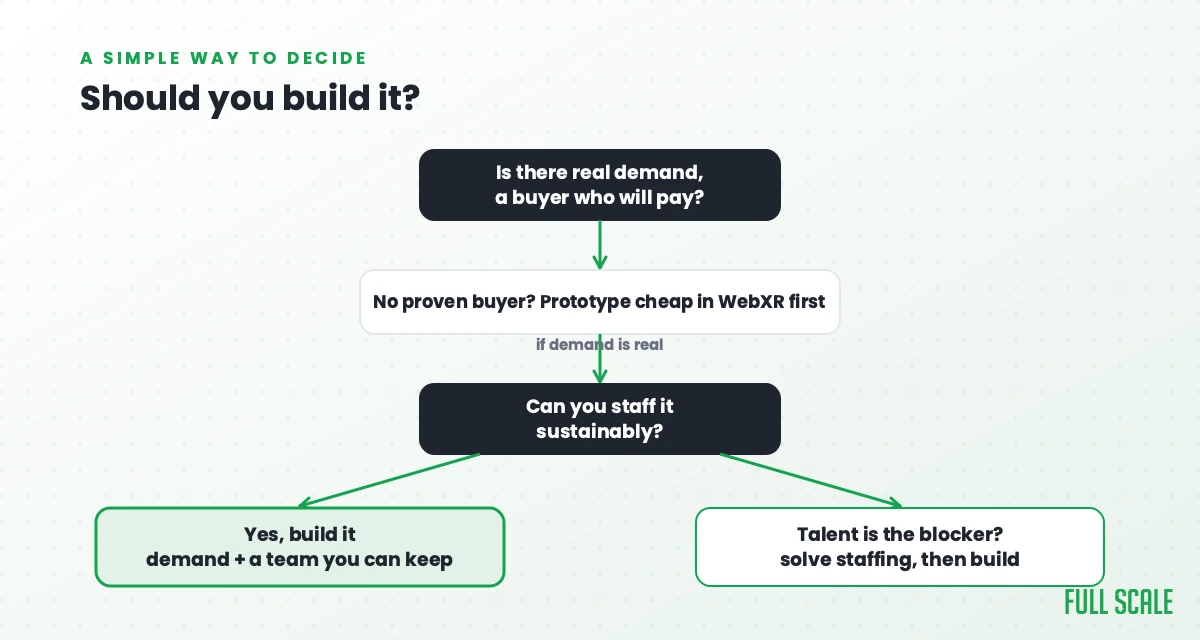
Before you put a single engineer on a VR project, answer two questions honestly.
Is there real demand, from a customer who will pay, or just a cool demo? A demo impresses your board. A paying customer funds the team. If you can’t name the buyer and the problem, you’re not ready to build.
Can you staff it sustainably, or are you betting the company on hiring two unicorns? A build that depends on landing two of the scarcest engineers in the market is a project with a single point of failure before it starts.
If the answer to both is yes, build. If the demand is real but staffing is the problem, that’s solvable, and I’ll get to it below. If the demand isn’t proven, prototype it cheap first. Ship a WebXR experiment, watch what people actually do, and spend the real engineering money only once the demand is obvious. This is the Product Driven habit applied to immersive tech: build for demand you can point to, not for the demo that looks cool.
There’s an old line about gold rushes. The people who got rich often sold the pickaxes, not the gold. For most companies, the smart VR play isn’t betting on a headset platform. It’s building the boring, useful tooling and integrations around immersive tech that customers need no matter which device wins. Keep it simple and boring until you can’t.
How to staff a VR build without overpaying for it
If the demand is real and the talent math is your blocker, this is the part Full Scale exists to solve.
The scarcity premium on XR engineers is a cost-of-living problem as much as a skills problem. Talent is everywhere; the reason companies hire globally is that the same senior engineer costs a fraction as much in another market, not that the talent doesn’t exist at home. We staff companies with senior developers across the stacks immersive work depends on, with offshore staff augmentation at a fully loaded $35 an hour and 93% annual retention. Our in-house recruiters spend their time chasing the passive candidates, the strong engineers who already have jobs and never answer a job post, which is exactly the pool you need for a rare skill set. The full cost comparison usually surprises people.
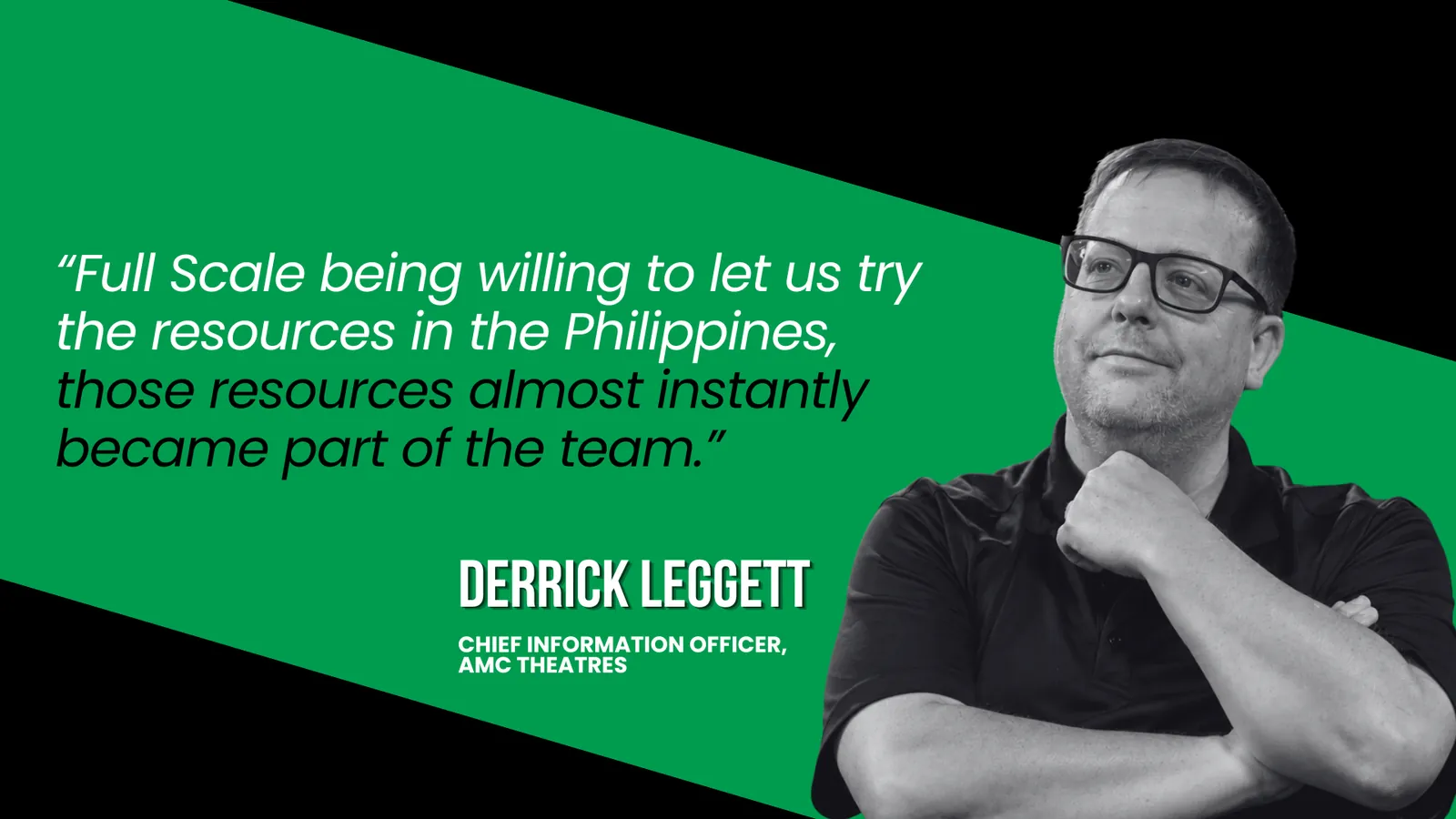
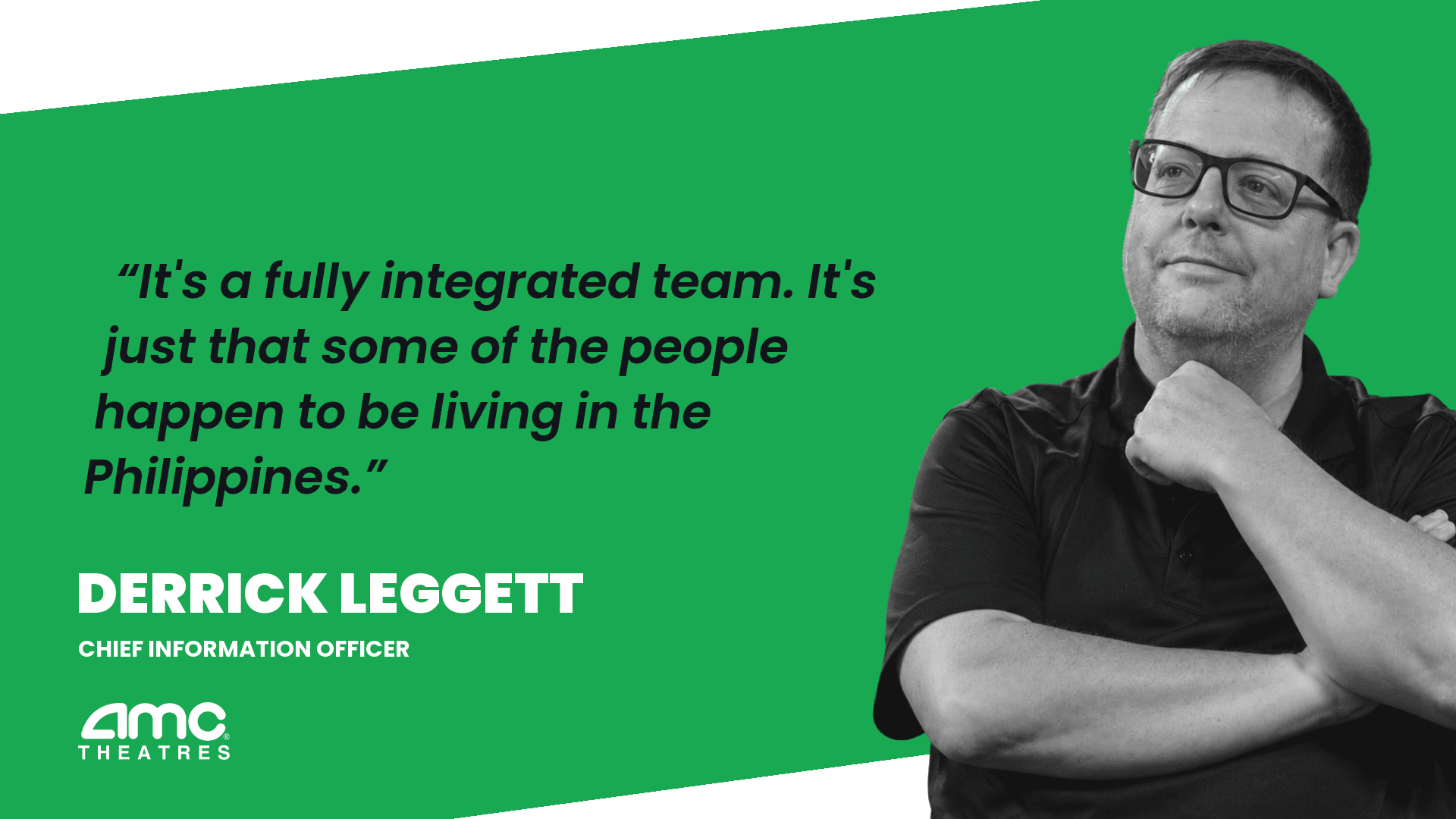
Two things matter when the skill is specialized. First, don’t hire the cheapest developer you can find. I call that cheapshoring, and it’s how you end up paying twice. With a rare skill like XR, the gap between a cheap hire and a strong one is enormous. Second, treat the team as one team, not a vendor on the other side of a wall. Our engineers at AMC Theatres sit in the same standups and use the same tools as the in-house staff, because that’s the only model that works for hard, long-term engineering. As Derrick Leggett, AMC’s CIO, put it, “it’s a fully integrated team. It’s just that some of the people happen to be living in the Philippines.”
We also put every engineer through our internal AI training program, the Spartan Training Academy, because the VR pipeline now leans heavily on AI tooling and we refuse to hand a client a team that’s behind on it. The goal is the same one I’ve chased in every company I’ve built: a win for the developer, a win for the client, and a win for us, in that order. That last one only happens if the first two do.
That’s how you build immersive software without betting the company on a hiring miracle. The trends are real. The talent math is the part you have to solve first.
Frequently asked questions
Is VR development still worth investing in in 2026?
For the right use case, yes. Consumer headset sales are down and the metaverse hype has cooled, but enterprise training, simulation, and design tools deliver real, measurable returns. The honest test is whether you have a paying customer and a problem VR solves better than the alternatives, not whether the technology is trendy.
What skills does a VR developer need?
Strong command of a game engine like Unity or Unreal, 3D math and rendering performance optimization, and experience building for the mobile-class chips inside standalone headsets. Familiarity with WebXR, spatial interaction design, and AI-assisted 3D content tools is increasingly valuable. It’s a specialized blend, which is why these engineers are scarce and expensive.
How much does it cost to build a VR app?
It depends entirely on scope, but the dominant cost is the engineering team, not the headset. A senior US engineer runs around $200,000 a year fully loaded, and specialized XR talent costs more. AI tools that generate 3D assets have lowered content costs, and hiring senior engineers offshore can cut the team cost substantially, since offshore rates run well below US salaries for the same seniority.
Should I use Unity or Unreal Engine for VR?
Unity is the common choice for standalone and mobile headsets like Meta Quest because it runs well on lightweight hardware and supports broad cross-platform deployment. Unreal is favored for high-end, visually demanding experiences. For browser-based delivery with no install, WebXR is worth a look. Pick based on your target devices and your team’s existing skills.
Can you hire offshore VR developers?
Yes. Full Scale recruits and staffs senior developers across the engines and skills immersive projects need, at a fraction of US cost and with high retention. For a scarce, expensive skill set like XR, an offshore team that works as a long-term extension of your own is often the only way to staff a build without blowing the budget. VR is one line item in the broader mobile app development trends picture, and usually a smaller one than the listicles suggest.
Thinking about building something immersive and trying to figure out how to resource it? Talk to Full Scale about staffing your VR project with senior engineers who work as part of your team.