

Java development services that ship real software, not slide decks
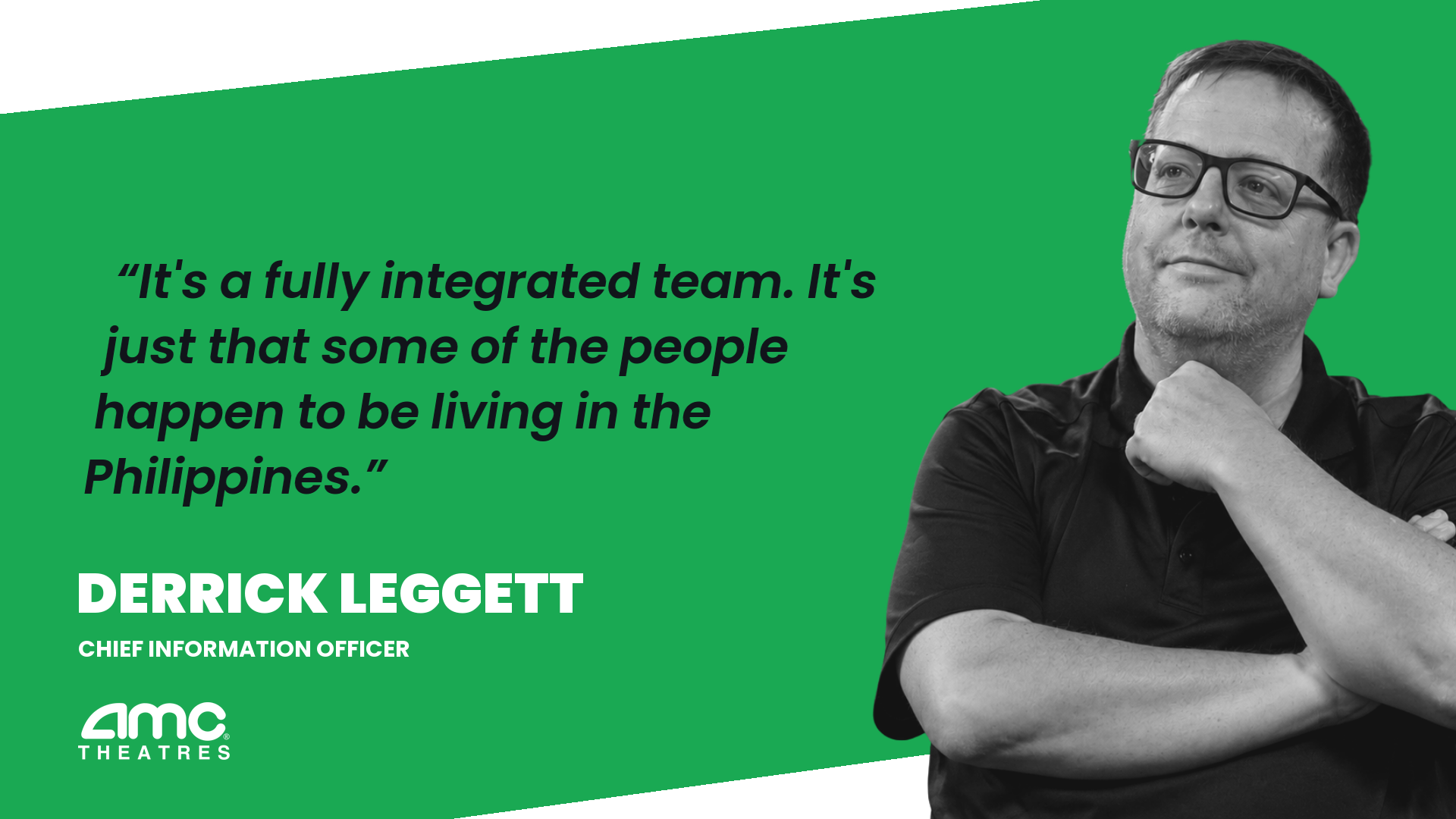
Full Scale is a Java development company that delivers custom enterprise Java builds, Spring Boot API development, microservices architecture, and legacy modernization through senior Filipino engineers who join your team. Founded by a builder whose APM platform instrumented Java in production for teams, we have placed Java engineers, including the team behind enterprise systems at AMC Theatres. You direct the work; we handle hiring, payroll, and HR. First sprint in as little as 7 days.
@RestController
@RequestMapping("/api/orders")
public class OrderController {

  private final OrderService service;

  @PostMapping
  public ResponseEntity<Order> create(
    @Valid @RequestBody CreateOrder cmd) {
    return ok(service.create(cmd));
  }
}Java teams trusted by enterprises, scale-ups, and Fortune 500s

Previously founded VinSolutions ($150M+ exit) and Stackify
Stackify instrumented Java applications in production for teams
Before Full Scale, I founded Stackify, an APM and logging platform that instrumented Java applications in production for engineering teams. I have spent two decades around Java stacks, debugging memory leaks at 2am, profiling Spring Boot services under load, and watching what separates senior Java engineers from ones who only know how to scaffold a controller.
The first Java developer I ever hired turned out to be in Russia. We needed Java for Linux monitoring work at Stackify, a friend recommended his dev agency, and I didn't realize until our first phone call that the engineers he had assigned us were in St. Petersburg. The year was 2012, long before the Ukraine conflict, and it was my first time working with engineers outside the US. The experience was great: the English was solid, the code held up, and we worked with that team for two years. That accident is the reason I had the confidence to keep working with global talent, and eventually to start Full Scale. I wrote up the longer version of how I avoided offshore development for years before accidentally falling into it on the blog.
Today Full Scale is a Java development company built around senior Filipino developers and the Product Driven framework. We have hired Java engineers in the Philippines, we test them on real architecture problems rather than syntax quizzes, and we have built dedicated Java development teams for fast-growing SaaS companies, lenders, and enterprise platforms. When the engagement is a full SaaS build, see our SaaS development company page. If you need Java development services from a team that actually builds things, rather than a vendor that subcontracts the work, you are in the right place.
Five reasons Java is the right stack for enterprise-grade software
If you've already committed to Java, you don't need to read this. If you're still evaluating whether Java is the right call for your project, or whether to migrate an existing system toward it, these are the technical arguments that hold up in production, not in a vendor slide deck.
A runtime built for throughput at scale
The JVM has been hardened for almost three decades. Its JIT compiler, mature garbage collectors, and predictable throughput make Java a default for high-volume backend systems where steady performance under sustained load matters more than raw startup speed. The honest caveat is startup time and memory footprint, which is why we'll tell you when a workload belongs on Go or a GraalVM native image instead.
The deepest enterprise platform in software
Spring and Spring Boot cover almost every backend concern out of the box, and the wider library, framework, and tooling support is unmatched for enterprise work. Less custom plumbing, more battle-tested components, and a hiring pool that already knows the stack.
Write once, run anywhere it still holds
The same bytecode runs on Windows, Linux, macOS, and in containers without a recompile. For teams moving from on-premise servers to cloud-native Kubernetes, that portability removes a whole class of migration risk and keeps your deployment target flexible.
Static typing and tooling that pay off over years
Compile-time type safety, first-class refactoring, and the best IDE support in the industry are exactly what large, long-lived codebases need. The strictness that feels heavy on a weekend prototype is what keeps a 500k-line enterprise system maintainable five years in.
Longevity and a talent pool you can plan around
Java ships a predictable LTS line (17 and 21 are current), Oracle and the OpenJDK community keep it current, and the talent pool is enormous and global. Choosing Java for a system you'll run for a decade is a low-risk bet, not a fashion choice.
AI-powered Java engineers, trained on Product Driven principles
Most enterprise Java teams adopting AI are shipping more code without shipping better software. The slop volume climbs, production bugs follow, and engineers whose only skill is typing faster end up costing more in cleanup than they save in keystrokes.
Full Scale Java developers are trained on something different: the Product Driven approach from Matt's book, combined with the full modern AI toolkit (GitHub Copilot, Claude, Cursor). They think first, type second, and use AI for the parts where judgment doesn't add value. That combination is rare, and it is what enterprise Java teams should actually be hiring for in 2026. When the Java team needs a custom ML model rather than a service layer, you can also hire machine learning engineers from the same bench.
Product Driven engineering
Our engineers are trained on the five pillars from Matt's book: Vision, Focus, Clarity, Ownership, and Courage. The result is developers who push back on bad product decisions, ask whether a ticket should exist before writing it, and own the outcome of what ships. They are not order takers.
Read Product Driven, the bookAI as a thinking partner
Every Java engineer on our bench works with GitHub Copilot, Claude, and Cursor every day. They use AI to explore options, scaffold the boring parts, generate test suites, and review their own pull requests before a human ever sees them. Judgment stays with the engineer, the grunt work moves to the machine.
AI without product thinking is just a slop machine, and the Java engineers I want on my team don't get caught by that. They reason about the system before they reach for Copilot, and they use AI for the parts where judgment doesn't matter. That's who we hire and train at Full Scale.

The Java development services we deliver across the full build lifecycle
Greenfield custom Java development, a Spring Boot 3 migration, a cloud-native AWS build, a legacy modernization, a performance fix that's been open for six months: our engineers ship across all of it. The difference is how we deliver. Every one of these Java development services runs through staff augmentation, so you get senior Java engineers embedded in your team and billed for engineering hours, not a fixed-bid project shop that disappears at handoff. Here are the Java development services we get hired for most often.
Custom Java application development
Custom Java development means greenfield builds on modern Java 21 with Spring Boot 3, JPA, MapStruct, and a real domain model rather than a CRUD scaffold. The codebase survives the first 18 months without a rewrite, and your team can still reason about it on month 19.
Read our Java development guideEnterprise Java development
Enterprise Java work is multi-tenant SaaS, role-based access, audit logging, and regulatory reporting: the unglamorous stuff that enterprise software lives or dies on. Java still owns this space in fintech, lending, and large back office systems, and our bench has shipped all of it.
Java API development & system integration
We build REST APIs with OpenAPI contracts, gRPC for internal services, and contract testing in CI with Spring Cloud Contract. Third-party integrations get circuit breakers (Resilience4j), proper retry logic, and idempotency keys, which gives you an API layer your downstream consumers don't curse at.
Hire experienced API developersCloud-native Java on AWS, Azure, and GCP
We build cloud-native Java on EKS, Lambda, SQS, RDS, and DynamoDB. Infrastructure is Terraform, observability is OpenTelemetry, and auth flows through IAM and Secrets Manager. That's the full cloud stack, with no "we deployed the jar to EC2" shortcuts.
Legacy Java modernization and Spring migration
We run production Java migration projects from Java 8 or Java 11 to Java 21 without downtime. We know which libraries break in a JDK migration, where javax.* to jakarta.* sneaks in, and how to stage a Spring Boot 2 to Spring Boot 3 cutover so business doesn't stop. This is modernization work we've done for systems with millions of users.
Read the offshore Java development guideJava performance & debugging
Our Java performance work covers Java Flight Recorder, JProfiler, async-profiler, and heap dump analysis when things get weird. These are skills most offshore Java shops have never developed, so hire us when your Spring Boot service is slow and nobody knows why.
Architecture patterns our Java engineers apply in production
Most offshore Java shops deliver a working application at handoff. What determines whether it's still working and maintainable 18 months later is the architecture decisions made in the first sprint. These are the patterns our engineers reach for, and the reasoning behind when each one earns its complexity.
Hexagonal / Clean Architecture
Domain at the center, framework and infrastructure at the edge through ports and adapters. In Spring this keeps the business logic independent of the web layer, the persistence layer, and the messaging layer. The codebase survives a database or framework change without rewriting the core.
Domain-Driven Design (DDD)
Bounded contexts, aggregates, value objects, and domain events. We reach for DDD when the domain is complex enough to justify it, not as a default, but as a deliberate choice for systems where the business rules are the hard part.
CQRS + Event-Driven
Read and write models split so each is optimized independently, with events on a durable log. We implement this with Kafka or Axon depending on whether you need a full event-sourced system or pragmatic async messaging between services.
Cloud-Native on Kubernetes
Spring Boot services built for containers from the start: health probes, graceful shutdown, config externalized, and observability through Micrometer and OpenTelemetry. GraalVM native images where cold start and memory genuinely matter.
Modular Monolith + Vertical Slices
Feature-aligned modules with enforced boundaries (Spring Modulith) instead of premature microservices. Each slice owns its handler, its model, and its tests. A well-modularized monolith ships faster than a distributed system, and we'll say so when it's the right call.
Microservices & Distributed Systems
Service decomposition, sync vs async communication, distributed transactions via saga orchestration and the outbox pattern, resilience with Resilience4j, and tracing across boundaries. We decompose when the org and the load justify it, not before.
Opinionated takes on Java from engineers who ship it
Most vendors tell you Java is the right choice for everything. We'll tell you when it isn't. These are the actual opinions we hold based on building and maintaining Java systems in production, not talking points from a sales deck.
Enterprise backends with complex domain logic, high-throughput services that run for years, anything deep in the Spring stack, Android, and big-data or streaming pipelines on Kafka. If you need a stable platform, a deep hiring pool, and tooling that scales to a large team, Java is hard to beat.
Quick scripts, prototypes, and data science, where Python's libraries are genuinely ahead. Pure frontend work, which belongs in TypeScript. Ultra-low-latency or systems programming, where Rust, C++, or Go win. And cold-start-sensitive serverless, where the JVM's startup cost hurts, unless you stay on Java with a GraalVM native image. We'll tell you when the JVM is the wrong tool rather than force it.
We ship constructor injection, immutability, Optional over null, real integration tests with Testcontainers, and exception handling with intent. We refuse field injection sprinkled everywhere, anemic domain models where all behavior lives in fat *Service classes, catching and swallowing Exception, God objects, and Lombok @Data on JPA entities. And we don't split a monolith into microservices before the domain boundaries and the org are ready.
Big-bang jumps from Java 8 to 17 or 21 that ignore removed APIs and the javax-to-jakarta namespace break, so half the dependencies stop compiling. Java EE to Spring migrations that never address that same namespace shift. Monolith-to-microservices splits that keep a single shared schema, so you inherit the operational cost of distributed systems with none of the isolation. And migrations that skip GC and heap tuning, so the shiny new deployment OOMs under the first real load test.
From first call to production: how a Java project runs at Full Scale
Staff augmentation without a delivery framework is just headcount. Here is what the engagement actually looks like from the first conversation to a deployed production system and the ongoing work that comes after.
We scope the engagement together: what to build first, what specializations to staff, what the first sprint should deliver. You walk away with a staffing plan and a candidate shortlist, not a 40-page requirements document.
You interview our pre-vetted candidates and select who starts. We handle employment, payroll, and equipment setup on the Philippines side. Your engineer gets access to your repo, your tools, and your standups. First commit typically happens within the first week.
Your engineer works in your sprint cadence, under your tech lead, committing to your repo. You see the work in progress, not at a scheduled demo. Architecture decisions happen in your standups, not behind a project management wall. The sprint velocity is yours to direct.
Our engineers write tests as part of delivery, not as a post-sprint cleanup task. Unit tests in JUnit 5 and Mockito, integration tests against real dependencies with Testcontainers, and coverage for the critical paths. AI-assisted PR review (Copilot, Cursor) before human review. Code that ships is code that's been tested.
Your engineers own the production deployment: infrastructure as code, observability from day one (Micrometer, OpenTelemetry, or Datadog), and runbook documentation for the most likely failure modes. They stay on after launch. Post-launch bugs go into your backlog like any other work, not into a 'warranty period' clause in a contract.
How a Java development project starts at Full Scale
No discovery phase you pay for before a line is written. No 6-week RFP process. We scope in a single call, assemble pre-vetted engineers (see how we hire for the vetting), and have code shipping in the first week.
Scoping call
30 minutes. We learn what needs to be built, what's already in the codebase (if anything), what the first sprint should deliver, and what specializations the project needs. We don't pitch on this call. We scope.
Team assembly
We pull 1–3 pre-vetted Java engineers whose skills, seniority, and prior project experience match what the project requires. You see their full profiles and actual project history before the interview.
Technical interview
You interview candidates the way you would any senior hire: live system design, concurrency and JVM questions, and Java-specific technical depth. Pass on anyone you don't believe in. We keep looking.
Contracts & setup
One contract with Full Scale. We handle all employment, payroll, equipment, and HR logistics in the Philippines. Your engineer gets repo access, tool access, and sprint 1 is planned.
First delivery
Your engineer joins your standups, commits to your repo, and ships code in the first week. Our delivery team stays in the loop through ramp-up to make sure velocity doesn't stall. They own the work through launch and beyond.
Signing a contract is not the same as shipping software
Most Java outsourcing failures aren't engineering failures. They are delivery model failures. The fixed-bid agency model creates incentives that work against you: speed over quality, handoffs over ownership, scope control over outcomes. Staff augmentation realigns those incentives. Here are the six ways the agency model breaks down on real Java projects.
Fixed-bid scope creep destroys budgets
Agencies win the bid with an optimistic estimate, then recover their margin through change orders. Every requirement that wasn't in the original spec becomes a billable revision. By go-live, the 'fixed' price has doubled and the relationship is adversarial.
The agency disappears after handoff
Fixed-bid projects end at deployment. The engineers who built your system move to the next bid. You own every production bug and architectural decision without the institutional knowledge of the people who made them. Post-launch support becomes a new contract negotiation.
No visibility until it's too late to change
Black-box delivery means you see the product at the end of a sprint cycle or, worse, at handoff. By the time you learn the architecture doesn't fit your use case, the codebase is already built around it. Staff aug keeps engineers in your repo and your standups from day one.
Speed incentives drive wrong architecture
Fixed-bid agencies are paid to ship fast, not right. That means a distributed system where a modular monolith belonged, JPA mappings that trigger N+1 queries under load, and business logic buried in fat service classes. You inherit a Java codebase optimized for handoff velocity, not long-term maintainability.
Engineer rotation breaks continuity
Agencies staff projects with whoever is available, not whoever is best-matched. Project managers cycle. The developer who built your core auth module gets rotated to another engagement. New engineers read code they didn't write for onboarding, and the velocity cliff arrives around sprint 8.
Production failures become "out of scope"
Memory leaks that surface after a week of uptime, GC pauses under real load, security gaps that weren't in the spec, agencies classify these as new work. With staff augmentation, your engineers own what they shipped and have incentive to build it right the first time.
Java expertise tuned to your industry
As a Java development company that has been around for over a decade, we have placed dedicated Java developers into nearly every industry that runs on the JVM. Domain knowledge cuts onboarding time in half, so we match developers to projects where they have already shipped real code.
Finance & FinTech
Production Java in finance means strict audit trails, regulatory reporting, and zero tolerance for data anomalies. We have built and scaled Java lending platforms, mortgage tools, and payment systems for regulated US companies. Java still owns this space, and so does our bench.
From Spring Boot 3 microservices to legacy Java 8 migrations
Whether you want to hire Spring Boot developers for a greenfield build, hire AWS Java developers for a cloud migration, or outsource Java development on a legacy Java EE system, the bench covers every layer of the JVM stack. Pick what you need. We will match a Java programmer fluent in it.
Hire dedicated Java developers, two ways
Most clients start with a single dedicated Java developer and grow into a full team. Either way, you get full-time engineers who sit on your standups, work your hours, and ship code against your roadmap. Both options are staff augmentation at the core: dedicated, long-term engineers embedded in your team rather than freelancers, shared resources, or a project shop on the side. When the project crosses the Java backend and a modern frontend, you can also hire senior full stack developers from the same bench. Teams running a JVM service alongside a new Go service can hire Golang engineers from the same staff augmentation model.
Dedicated developer
Full-time, exclusive, sits on your standups.
- Full-time Java engineer assigned only to your project
- Works your hours, your tools, your codebase
- Joins your standups, reports to your tech lead
- We handle payroll, HR, equipment, retention
- Two-week money-back guarantee
Dedicated team
Multiple engineers, embedded as a pod.
- 2-10 Java engineers staffed together as one pod
- Optional QA, DevOps, and tech lead included
- Operates as a team inside your engineering org
- Scale up or down by a head with 30 days notice
- Account manager you can escalate to in the US
Dedicated Java developers, starting at $35 an hour
Every engineer we staff on your Java project is a senior developer in the Philippines working full-time under your direction, and we cover the payroll, benefits, HR, and equipment. The same role hired locally in the US costs $150K to $195K a year, which is the delivery math that brings most teams to the table.
- Full-time, dedicated Java engineer
- Pre-vetted by senior Java reviewers
- Works your hours, your tools, your codebase
- Payroll, HR, equipment, benefits handled by us
- US-based account manager you can escalate to
- Two-week money-back guarantee if it isn't a fit
Full Scale has made the Inc. 5000 five years in a row and is Great Place to Work certified. We have been doing this since 2018, and pricing isn't the only reason clients stay with our Java development company, it's the easiest reason to call.
Why we deliver Java projects from the Philippines
Every Java project we deliver is staffed from the Philippines. You can also hire dedicated developers in the Philippines across every other stack we work in, with the same vetting bar, retention, and engagement model that Java clients get.
English-fluent by default
The Philippines is the third-largest English-speaking country in the world. Standups, code reviews, and customer calls work the way they do with any US team member.
Real time-zone overlap
Most of our Java engineers shift their hours toward the US business day, giving 3-4 hours of real-time overlap with East and West Coast teams, so decisions happen live during shared hours rather than crawling through 24-hour async handoffs.
Deep engineering talent pool
Cebu and Manila produce tens of thousands of CS and IT graduates a year. Java has been a staple of Philippines computer science programs for two decades, deep enough to staff a full Java project team in Spring Boot and across the broader JVM stack without compromising on seniority.
Cultural alignment with US teams
Filipino engineers grow up on US business norms, US TV, and US tech culture, so agile rituals, direct feedback, and collaborative workflows feel familiar from day one. These teams integrate fast rather than needing constant management.
Staff augmentation vs the other ways to get Java software built
Every Java delivery model has a different set of trade-offs. Fixed-bid agencies offer a contract; consultancies offer a proposal. Staff augmentation offers engineers who embed in your team and work under your direction from day one. Here is how those models compare on the things that actually determine whether a Java project succeeds.
| Factor | Full Scale (staff aug) | Fixed-bid agency | Consultancy / SI | Build in-house |
|---|---|---|---|---|
| Time to first sprint | 7 days | 4-8 weeks | 6-12 weeks | 3-6 months |
| You control architecture decisions | ||||
| Visibility into work in progress | ||||
| Engineers dedicated full-time to your project | ||||
| Scope flexibility when requirements change | ||||
| Budget predictability | ||||
| Engineers own what they ship post-launch | ||||
| You own all IP from day one | ||||
| Engineer continuity across the project | 93%+ retention | varies | low | varies |
| Fully-loaded cost vs US in-house team | ~40-50% | ~60-80% | ~100-150% | 100% |
The numbers behind a Java staffing partner that actually works
From the people we actually staff teams for
Full Scale's development team was pivotal in elevating our facility management software. Their expertise turned complex challenges into seamless functionalities, enhancing user experience and operational efficiency.
The team at Full Scale brought our vision to life with their development skills. They helped us navigate technical requirements with ease, resulting in a robust platform our users trust.
Deeper guides to Java development and architecture
Offshore Java development
When offshoring Java work is the right move, and how to do it well.
Outsource Java development
How to outsource Java development without losing control or quality.
Nearshore vs offshore
When each model wins, from a CEO who has run both.
Outsourcing vs offshoring
The distinction most CTOs get wrong, and why it matters.
What offshore development really costs
The real numbers behind offshore rates and total cost.
The ROI of offshore development
The math behind 50-70% development cost reductions.
Everything you wanted to know about Java development services
Get Java development services from a team that has actually built JVM systems before
30-minute discovery call with the Java development company that delivers custom enterprise builds, Spring Boot APIs, microservices architecture, and modernization through dedicated developers from the Philippines. We'll learn what you're building, walk you through which Java, Spring Boot, Kotlin, or microservices engineers are on the bench, and you'll meet candidates within a week. You won't get pressure or a sales pitch on the call.