

Front end web development services that ship
Full Scale staffs senior front-end engineers onto U.S. product teams to build the interface itself: design systems, accessible layouts, and the Core Web Vitals work that keeps a web application fast. They work in React, Next.js, Vue, and Angular, join your standups, and bill a flat monthly rate per engineer.
Front end web development services trusted by U.S. SaaS, enterprise, and Fortune 500 teams

Previously founded VinSolutions ($150M+ exit) and Stackify
The interface is the product to your users, and I built Full Scale around engineers who treat it that way
I've been building web applications for over 20 years. I shipped VinSolutions from a backroom database into a SaaS platform thousands of auto dealers used every day, sold it for $150M, then started Stackify and ran it through years of production scale. The lesson that stuck with me from both companies is that users don't see your architecture, they see the front end. A slow, clunky, or inaccessible interface costs you the same way a backend outage does, and front-end work almost never gets the senior attention it deserves.
Full Scale staffs front-end engineers who own that layer properly: the component library, the design system, the responsive and accessible markup, the Core Web Vitals numbers. Full Scale is a front end web development company built around senior engineers in the Philippines. We integrate them directly into your team and charge a flat per-engineer rate so the math is honest. There are no layered project managers between you and the developer, the engineer doesn't rotate off your account in six months, and the invoice you get next year looks like the invoice you got this month. If you've been burned by a front-end development agency before, this page is going to read very differently from what you're used to.
The part of your product your users actually touch
The clean definition: front end web development is building the user interface of a web application, the part that runs in the browser. It covers the markup and styling, the interactive components, the design system that keeps them consistent, the responsive layouts that work on every screen, the accessibility that lets everyone use them, and the performance work that keeps Core Web Vitals fast. It also covers the front-end architecture and state management that hold a large app together as it grows. Front end web development services deliver that layer, wired into your API and your design, not the backend or the database behind it.
People shopping for this blur three different things together: custom front-end engineering, a template or site-builder, and a design-only handoff. They are not interchangeable. One ships a real interface tied into your product, one gives you a themed page you fill in, and one stops at a mockup someone else still has to build.
Here is how the three approaches actually compare side by side.
For a U.S. team with real users and a product they keep shipping to, custom front-end engineering is usually the right answer. A template can't carry a real application, and a design handoff still needs someone to build it. The catch is that front-end work done by people who treat it as second-class turns into slow, inaccessible, inconsistent UI, and almost every team unhappy with their front end is unhappy because of who built it, not because of the model. That is the part Full Scale staffs for.
Front-end engineers trained on Product Driven principles
Most front-end teams adopting AI are shipping more code without shipping better software. Tickets move from open to merged in a day, the slop volume climbs, and your senior engineers spend the week cleaning up components that shouldn't have been written. The savings on the rate card get eaten by the cleanup tax.
Full Scale front-end engineers are trained on something different: the Product Driven approach from Matt's book, combined with the full modern AI toolkit. They think first, type second, and use AI for the parts where judgment doesn't add value. That combination is rare in front-end development, and it's what U.S. teams should actually be hiring for in 2026.
Product Driven engineering
Our front-end engineers are trained on the five pillars from Matt's book: Vision, Focus, Clarity, Ownership, and Courage. The result is engineers who push back on bad product decisions, ask whether a UI should work this way before they build it, and own the outcome of what ships. They are not order takers, and they don't ship code they think is wrong just because the ticket asked for it.
Read Product Driven, the bookAI as a thinking partner
Every front-end engineer on our bench works with GitHub Copilot, Claude, and Cursor every day. They use AI to explore options, scaffold components, generate test suites, and review their own pull requests before a human ever sees them. Judgment stays with the engineer, the grunt work moves to the machine, and the cost per shipped feature drops sharply.
The thing I learned shipping four products and running engineering across five countries is that the bottleneck is never the code. It's the judgment behind the code. We train our front-end engineers to think like product owners first, and then we hand them AI to make the typing fast. That's how front-end development actually works.

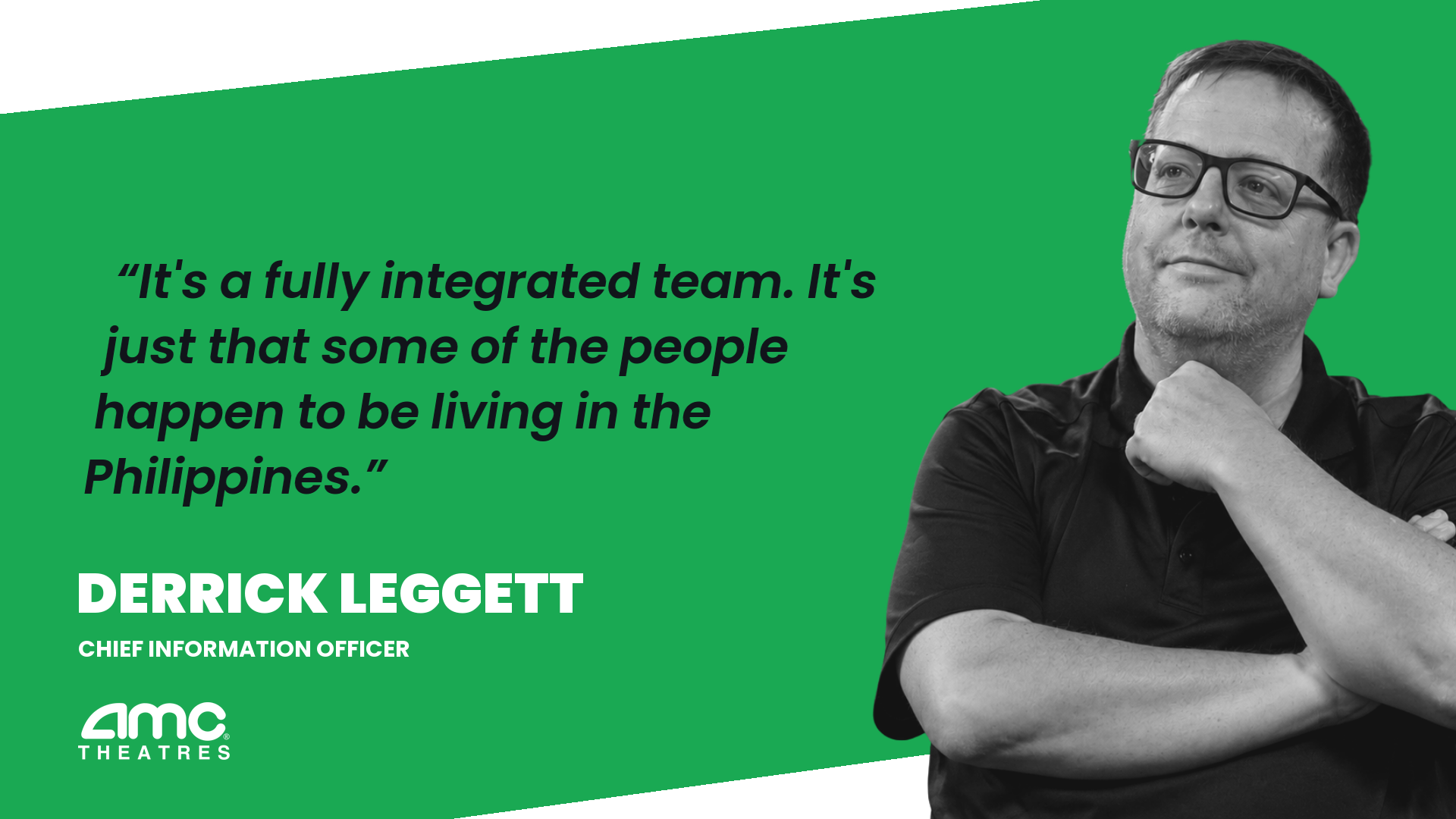
Dedicated front-end engineers, starting at $35 an hour
That rate is fully loaded and flat: a senior front-end engineer in the Philippines working full-time on your team, billed monthly, with payroll, benefits, HR, and equipment all handled by us. No recruiting fees and no markup tiers. The same role hired locally in the U.S. typically costs $150K to $200K a year, so front end web development services through Full Scale come in at roughly 40 to 50% of the all-in U.S. cost. The math is what gets most of our clients on the phone.
- Full-time, dedicated senior front-end engineer
- Pre-vetted for design translation, accessibility, and performance
- Works your hours, your design system, your codebase
- Payroll, HR, equipment, benefits handled by us
- U.S.-based account manager you can escalate to
- Two-week money-back guarantee if it isn't a fit
Full Scale has made the Inc. 5000 five years in a row and is Great Place to Work certified. We have been delivering front end web development services to U.S. teams since 2018. Pricing isn't the only reason clients stay, but it's the easiest reason to call.
The reason front-end development from the Philippines actually works
English-fluent by default
The Philippines is the third-largest English-speaking country in the world. Standups, code reviews, and customer demos work the way they do with any U.S. team member, with no translation layer in between. It is one reason so many U.S. teams hire dedicated developers in the Philippines.
Real time-zone overlap
Our front-end engineers shift their hours toward the US business day, giving 3-4 hours of real-time overlap with East and West Coast teams. Design reviews and standups happen live during shared hours instead of crawling through 24-hour async handoffs.
Deep front-end talent pool
Cebu and Manila produce tens of thousands of CS and IT graduates a year, with strong concentration in JavaScript, React, Vue, Angular, and TypeScript. The country has been the front-end web development home for U.S. companies for two decades.
Cultural alignment with U.S. teams
Filipino engineers grow up on U.S. business norms, U.S. tech culture, and U.S. SaaS products. Agile rituals, direct feedback, and collaborative workflows feel familiar from day one. Teams integrate fast instead of needing constant management.
Anyone can write JSX, few can ship a front-end
When clients tell me their last front-end hire was a disaster, it is almost never because the person couldn't write React. It is because the build didn't match the design, the app was slow on a phone, nobody could use it with a keyboard, and the interface fell into inconsistency as the team grew. Front-end is its own craft, and most hiring treats it as the thing the back-end engineer does on the side. Here are the six ways front-end builds and hires go wrong, and how Full Scale screens for engineers who avoid them.
Developers who can't translate Figma faithfully
The most common front-end failure is the gap between the design file and what ships. Spacing is off by a few pixels everywhere, the hover states are missing, the responsive breakpoints don't match, and the designer spends half their week filing tickets to fix the build. A real front-end engineer reads a Figma file the way a back-end engineer reads a schema, and ships it the way it was drawn.
Accessibility treated as an afterthought
Most developers bolt accessibility on at the end, if at all. Then a customer using a keyboard or a screen reader can't get through checkout, the legal team gets a demand letter, and someone spends a quarter retrofitting ARIA onto components that were never built for it. Accessibility has to be in the work from the first component, not patched in after launch.
Bloated bundles and poor Core Web Vitals
It is easy to npm install your way to a 5MB JavaScript bundle that takes eight seconds to load on a phone. Then your Largest Contentful Paint tanks, mobile users bounce, and Google drops your rankings. Performance is a discipline, not an accident. It means watching bundle size, code-splitting on purpose, and treating Core Web Vitals as a number you own, not a report you read after the fact.
No design-system discipline
Without a shared component library, every developer reinvents the button. You end up with nine shades of blue, four date pickers, and an interface that feels like it was built by nine people who never spoke, because it was. A senior front-end engineer builds and enforces the design system so the product stays consistent as the team grows.
Communication that fails async
Front-end work goes sideways when the only overlap with the U.S. team is a 30-minute morning standup. UI questions stack up overnight, the designer's intent gets lost, and the offshore engineer fills the gap by guessing. The fix isn't more meetings, it's designing the schedule so the engineer is in your standups and design reviews live.
Engineers who churn off the account
The agency or shop swaps engineers on and off based on what's billable that week. The person who learned your design system in March is on a different project in May, and the replacement starts from zero on an interface you've paid a year to build. Front-end knowledge lives in the person who built the components. When they leave, it leaves with them.
Hire dedicated front-end engineers for the UI work that actually matters
Front-end work covers a lot of ground, and most hiring conversations skip past the actual project. What does your UI need? A new React or Vue single-page app, a design system the whole team can build against, a Figma-to-code push, a WCAG compliance deadline, a Core Web Vitals score that's tanking your SEO, an AngularJS front end nobody wants to touch? Full Scale's front end web development services cover all of it. Here are the engagements U.S. product teams hire us for most often.
Custom front-end and SPA development
Single-page apps and front-end feature work for B2B SaaS, dashboards, and customer-facing products. React, Next.js, Vue, and Angular, with TypeScript end to end. Our front-end engineers own the browser side of your product, routing, data fetching, state, and the rendered UI, working against your roadmap rather than a fixed-scope contract.
React development servicesDesign system and component library engineering
Reusable component libraries built in Storybook, documented and versioned so every team ships consistent UI. Design tokens, theming, and a shared front-end architecture that stops a growing product from sprawling into ten different button styles. The library the rest of your engineers build against.
UI/UX implementation and design-to-code
Front-end engineers who turn Figma files into pixel-accurate, interactive interfaces. They care about spacing, motion, and interaction detail, and they push back when a design will not hold up under real data. Clean handoff from design to a working front end, without the usual translation loss.
Responsive and accessible front-end (WCAG)
Layouts that hold up from a 320px phone to an ultrawide monitor, plus real WCAG 2.2 AA compliance: keyboard navigation, focus management, ARIA, and screen-reader testing. Accessibility built into the components, not bolted on after a lawsuit threat lands in the inbox.
Front-end performance and Core Web Vitals
Engineers who treat Largest Contentful Paint, Interaction to Next Paint, and Cumulative Layout Shift as features. Bundle splitting, lazy loading, image optimization, and render profiling to get your Lighthouse and field scores into the green and keep them there as the app grows.
Front-end testing and QA automation
Component and end-to-end coverage in Playwright, Cypress, and Jest, plus visual regression testing so a CSS change never silently breaks a page. SDETs who own the front-end gates in your CI pipeline instead of leaving the UI to manual click-through.
Hire QA engineersFramework migrations and front-end modernization
Moving an aging AngularJS or jQuery front end onto React or Vue, migrating to Next.js, or untangling a build that nobody wants to touch. We do this incrementally, screen by screen, so the product keeps shipping while the front-end stack gets rebuilt underneath it.
Angular development servicesEight front-end engineering roles, one vetted bench
Most product teams need more than one kind of front-end engineer. Hire senior framework specialists, front-end tech leads, design system engineers, and front-end QA from a single bench instead of piecing the team together from four different vendors. Mix and match seniorities as the project requires, and add or remove heads as the roadmap changes.
Senior Front-End Engineers
Five to ten years of shipped production UI, comfortable owning a front-end feature end to end in React, Next.js, Vue, or Angular. Most of our placements are seniors, because that's the level where the UI gets built right the first time.
Front-End Tech Leads
Senior front-end engineers who also run a small pod: front-end direction, code review, mentoring, and hiring input. The right fit when a U.S. team wants their UI engineers to operate with less day-to-day management.
React, Vue, and Angular Specialists
Deep specialists in one framework rather than generalists who touch all three. Hire a React or Next.js engineer for a SaaS build, a Vue or Nuxt engineer for an existing front end, or an Angular engineer for an enterprise app, matched to your actual stack.
UI Engineers
Engineers who live where design meets code: interaction detail, motion, layout, and the polish that makes a product feel finished. They turn Figma files into pixel-accurate interfaces and push back when a design won't survive real data.
Design System Engineers
Component-library specialists who build and maintain the shared UI other engineers consume. Storybook, design tokens, theming, and versioning, so a growing product doesn't end up with ten different button styles.
Front-End Performance Engineers
Engineers who treat Core Web Vitals as a feature. Bundle splitting, lazy loading, render profiling, and image optimization to get LCP, INP, and CLS into the green and keep them there as the front end grows.
Accessibility Specialists
Front-end engineers fluent in WCAG 2.2, ARIA, keyboard navigation, and screen-reader testing. They build accessibility into the components instead of bolting it on after a compliance deadline or a demand letter arrives.
Front-End QA and SDETs
SDETs who build component and end-to-end coverage in Playwright, Cypress, and Jest, plus visual regression testing so a CSS change never silently breaks a page. They own the front-end gates in your CI pipeline.
Front-end engineering tuned to your industry
As a software team that has been running U.S. engagements since 2018, we have placed dedicated front-end engineers into nearly every major industry. Domain knowledge cuts onboarding time, so we match engineers to products where they've already built real UI.
SaaS & Scale-ups
B2B SaaS is the home turf of Full Scale's front end web development services. Our engineers have built data-dense dashboards, settings and admin UIs, onboarding flows, and white-label theming, with the design systems that keep all of it consistent as the product grows.
From React and Next.js to Vue, Angular, TypeScript, and beyond
Full Scale's front end web development services cover the modern browser stack end to end. Hire React and Next.js engineers for a SaaS UI, Vue or Nuxt engineers for an existing front end, Angular engineers for an enterprise app, or design system and performance specialists when the UI needs to scale. The bench covers all of it, and you mix and match the stacks per engagement.
Hire front-end developers, two ways
Most clients start with a single dedicated front-end developer and grow into a full team. Either way, you get full-time engineers who sit on your standups, work your hours, and ship code against your roadmap. Both models run agile front-end development the same way your in-house team does, with the same sprint cadence, the same code review process, and the same retros. These aren't freelancers, they aren't shared between clients, and they aren't sitting at a project shop on the side. This is staff augmentation, with engineers embedded in your team. See how the same dedicated developer model works across every stack we staff.
Dedicated developer
Full-time, exclusive, sits on your standups.
- Full-time front-end engineer assigned only to your project
- Works your hours, your tools, your codebase
- Joins your standups, reports to your tech lead
- We handle payroll, HR, equipment, retention
- Two-week money-back guarantee
Dedicated front-end team
Multiple engineers, embedded as a product pod.
- 2-10 front-end engineers staffed together as one pod
- Optional QA, designer, and tech lead included
- Operates as a dedicated front-end team inside your org
- Scale up or down by a head with 30 days notice
- Account manager you can escalate to in the U.S.
Dedicated front-end engineers versus the four alternatives most teams consider
These hiring models get blurred together, but they solve different problems. Picking the wrong one is the most common reason teams end up unhappy with their front-end web development engagement, so it's worth getting this part right before you sign a contract.
Dedicated front-end engineer vs freelance front-end dev
A freelancer on Upwork or Toptal works for themselves, juggles several clients, and rarely stays past the project they were hired for. A dedicated front-end engineer through Full Scale is a full-time employee of Full Scale, assigned only to your team, who learns your design system and ships into your codebase for years. The freelancer is cheaper to start and gone the moment the work gets hard. The dedicated engineer compounds, because the person who built your component library in month one is still owning it in year two.
When to pick which: Hire a freelancer for a one-off landing page or a short fixed-scope build. Hire a dedicated front-end engineer when you're building a product and you want the same person on the UI every sprint.
Read the contractor vs staff aug breakdownStaff augmentation vs a U.S. front-end agency
A U.S. front-end agency hands you a finished build and a markup of two to three times the engineer's real cost, with project managers in the middle and a team that rotates off the moment the invoice is paid. Staff augmentation puts a senior front-end engineer directly on your team at a flat hourly rate, in your standups, taking direction from your design and product leads. The agency sells you a deliverable. Staff augmentation builds you a front-end team that stays.
When to pick which: Use an agency for a bounded redesign you never need to touch again. Augment when the interface keeps evolving, which is the normal state of any product with users.
Read the staff aug vs outsourcing breakdownSenior front-end specialist vs a generalist full-stack hire
A full-stack generalist can wire up a form and call it done. A senior front-end specialist knows why the form re-renders on every keystroke, how to keep the bundle under budget, and how to make it usable with a keyboard and a screen reader. Front-end is its own discipline now. Accessibility, Core Web Vitals, design-system architecture, and framework internals are deep enough that treating the UI as the back-end engineer's spare-time work is how interfaces end up slow and inconsistent.
When to pick which: A generalist is fine when the UI is a thin admin screen. Bring in a front-end specialist the moment the interface is the product and your users judge you by it.
Full Scale vs a generic offshore shop
A generic offshore shop quotes a low rate, then hands you a developer who can recite React but ships an inaccessible, 4MB bundle that does not match the Figma. Full Scale runs the same offshore economics out of the Philippines, but the engineers are vetted for the front-end specifically: faithful design translation, accessibility, performance, and design-system discipline. You also get U.S.-based account management and a two-week money-back guarantee instead of a contact form and a time-zone gap.
When to pick which: A bargain shop can work for throwaway internal tools. Choose Full Scale when the front-end is customer-facing and the quality of the interface is the quality of the product.
Hire front-end developers with Full ScalePhilippines vs India vs Eastern Europe vs Latin America
For U.S. teams building long-lived front-ends, the success of an offshore engagement depends on more than hourly rates or time zone proximity. Full Scale hires exclusively in the Philippines because the combination of English fluency, real time-zone overlap, retention, and cultural alignment shows up there in a way it doesn't show up anywhere else at the same price. Here's how the four regions stack up.
| Factor | Philippines | India | Eastern Europe | Latin America |
|---|---|---|---|---|
| English fluency | Very High | Varies | Moderate | Moderate |
| Time zone compatibility (U.S.) | Good (mid-shift overlap) | Poor | Poor | Very Good |
| Cultural alignment | High | Moderate | Moderate | High |
| Retention | High | Varies | Moderate | Moderate |
| Front-end expertise (React, Vue, Angular) | Very Strong | Very Strong | Strong | Strong |
| Political stability | Stable | Stable | Varies | Stable |
| Infrastructure quality | Good | Good | Very Good | Good |
| Typical hourly rate range | $25-$55 | $15-$45 | $45-$95 | $40-$85 |
For a long-running U.S. front-end roadmap, the Philippines is the only region where English fluency, real time-zone overlap, retention, and cultural alignment all show up at once at an offshore price point.
A time zone difference that works in your favor
Most offshore front-end teams struggle because their schedules fight the work. The U.S. side is asleep when the offshore side is online, decisions take 24 hours to make, and by the time the engineer asks the clarifying question the sprint is already over. The Philippines has the right geography for U.S. overlap, but geography alone doesn't fix the schedule problem. What fixes it is how you design the model around that overlap.
The mid-shift model
Full Scale designs overlap on purpose. Your front-end engineers work a mid-shift schedule built to balance two things: real-time collaboration with your U.S. team, and uninterrupted build time for the deep work. Most engineers are online from roughly mid-afternoon through late evening Philippine time, which puts them in your standups, your design reviews, and your incident channels live.
- Front-end work progresses while your U.S. team is offline, and there's a real handoff at the end of the day instead of a black hole
- Decisions happen live during shared hours, not 24 hours later
- Context carries forward cleanly because the same engineer is in the conversation when the question gets answered
- Meetings shrink, output grows, because async plus overlap beats full overlap with constant interruption
Async plus overlap beats full overlap with constant interruption.
How to hire front-end developers from Full Scale
The 3-6 week recruitment cycle doesn't apply here, and there's no sourcing from cold. Our bench of front-end developers in the Philippines is already built and screened through our vetting process. Every step below is real, and every step has a named owner on our side.
Discovery call
30 minutes with our team. We learn your stack, your roadmap, the seniority level you need, and the specific front-end work that fits. There's no sales pitch on the call, just a working conversation about what you need.
Engineer match
We pull 1-3 pre-vetted front-end engineers from the bench whose skills, seniority, and prior project experience line up with what you described. You see their full profile and their actual project history.
Technical interview
You interview the candidates the way you would interview any senior hire: live coding, component design, framework-specific gotchas, and front-end architecture reviews. Pass anyone you don't believe in.
Contract and onboarding
Sign once. We handle every contract, payroll, equipment, and HR detail in the Philippines so you don't have an offshore entity to manage. You just get a developer.
First commit
Your developer joins your standups, picks up tickets in your sprint, and ships code in their first week. Agile front-end development works when the engineer runs the same rituals your in-house team runs, not a parallel cadence in another time zone. Our delivery managers stay involved to make sure ramp-up doesn't stall.
Full Scale vs the other ways to hire front-end developers
Every front-end web development hiring path has trade-offs. Here is how a Full Scale dedicated front-end engineer compares against the alternatives most teams consider first.
| Feature | Full Scale | Freelance front-end dev | U.S. front-end agency | Generic offshore shop |
|---|---|---|---|---|
| Pre-vetted senior front-end bench | ||||
| Time to first commit | 7 days | 1-3 days | 3-6 weeks | 4-8 weeks |
| Translates Figma faithfully, pixel for pixel | ||||
| Accessibility and WCAG built into the work | ||||
| Core Web Vitals and bundle-size discipline | ||||
| Design-system and component-library work | ||||
| Sits on your standups, your tools | ||||
| Long-term retention on your account | 93%+ | low | varies | low |
| Two-week money-back guarantee | ||||
| Flat per-engineer rate, no recruiting fees | ||||
| Typical fully-loaded cost vs U.S. | ~40-50% | varies | 100%+ | ~30-40% |
Real front-end engineers, named and vetted
A sample of the front-end engineers on our team. These are real Full Scale developers working remotely from across the Philippines, and you'll meet candidates like them during your interview round.

A front-end developer who ships production work with Vue.js, TypeScript, and .NET Framework.

A front-end developer who ships production work with React, Vue.js, and Next.js.

A front-end developer who ships production work with React, Angular, and Vue.js.

A front-end developer building with React, TypeScript, and Next.js.

A senior front-end developer with 10 years of experience across React, Vue.js, and JavaScript.

A senior front-end developer with 11 years of experience across TypeScript, ASP.NET, and C#.
The numbers behind a front-end engineering partner that actually works
From the people we actually build front-ends for
The team at Full Scale brought our vision to life with their front-end engineering skills. They built the interface our users rely on every day and made the technical requirements easy to work through.
Full Scale's front-end team was pivotal in improving our facility management software. They turned complex screens into a clean, fast UI and made the product easier for our customers to use every day.
More on front-end development
React development services
Dedicated React engineers for component libraries and SPAs.
Vue.js development services
Vue engineers for fast, maintainable front-ends.
Angular development services
Angular engineers for large, structured front-end apps.
Hire front-end developers
How to add senior front-end engineers to your team.
Web app development services
Full-stack teams when you need more than the front-end.
Web development services
The broader scope: websites, custom web apps, and headless builds.
What offshore development really costs
The real numbers behind offshore rates and total cost.
Everything you wanted to know about front end web development services
Build your front-end with engineers who stay
30-minute discovery call with our team. We'll learn what you're building, walk you through which front-end developers are on the bench, and you'll meet candidates within a week. The call is a working conversation about your roadmap, not a sales pitch.