Offshore Software Development Trends: What AI Changed in 2026

In this article
- The trends everyone lists are real, but they’re the surface
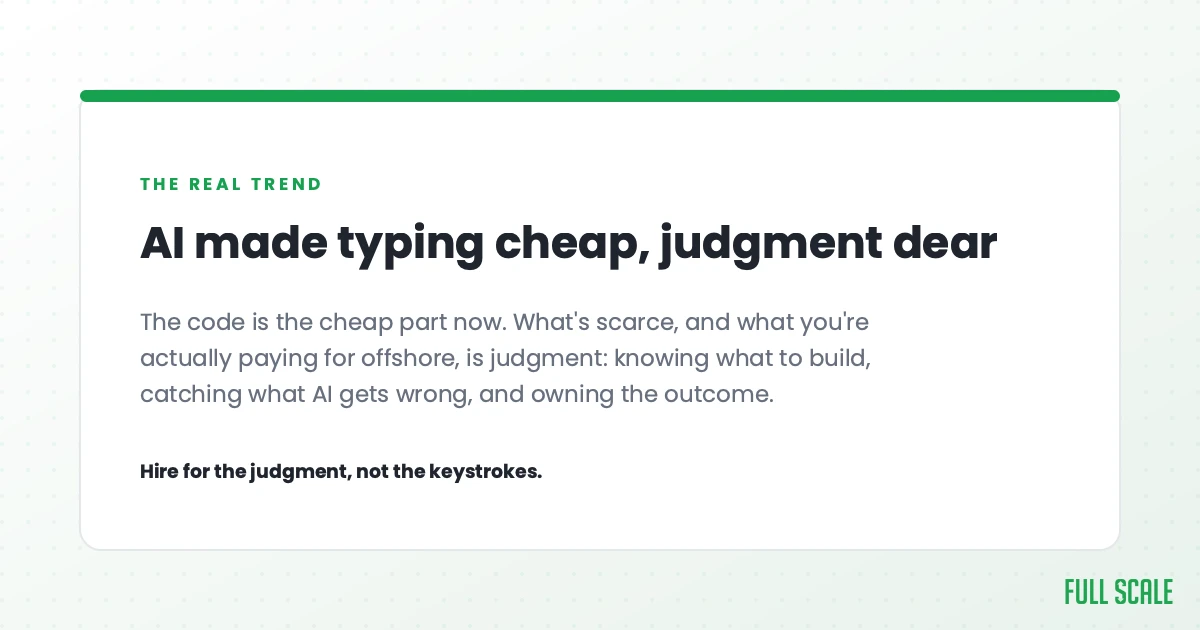
- AI made the typing cheap and the judgment expensive
- The roles are blurring, and everyone is writing code now
- From software engineer back to software developer
- Why order-takers are the ones who fail at offshore now
- What we’re actually doing about it at Full Scale
- What this means when you pick an offshore partner in 2026
- Frequently asked questions
- Build an offshore team that can actually think
Every roundup of offshore software development trends this year lists the same five things: AI coding tools, cloud-native architecture, DevOps, security and compliance, and hybrid teams. Most of those lists were written by the shops trying to sell you the trend. One shift worth watching is the rise of offshore software testing, as AI moves the bottleneck from writing code to checking it. It is one piece of a bigger picture we map out in our guide to developer hiring trends.
Here is the one that actually matters, and almost nobody writing these articles will say it out loud.
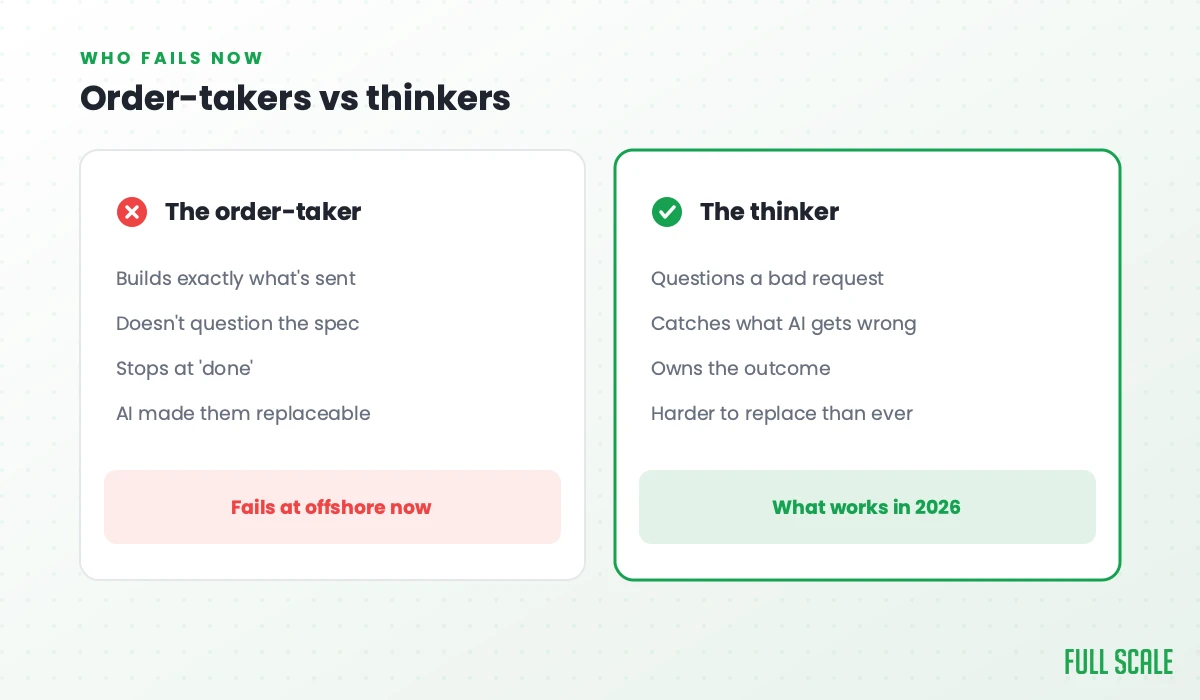
There’s an old joke about this kind of hire. Ask them to build a door, and if you don’t also tell them to put a knob on it, you get a door with no knob. They build exactly what the spec says and not one thing more, because figuring out what you actually needed was never their job. That’s the developer I’m talking about, and that person doesn’t really have a job anymore. We have a name for them now.
We call it Claude.
And here’s the irony: even Claude knows a door needs a doorknob. For about twenty years, a big slice of the offshore industry sold exactly that person: a fast typist on the other side of the world who would build whatever you spec’d, as long as you spec’d every detail. That was the whole pitch: cheap hands for well-defined work. It’s the same factory-floor pitch that’s been sold since the 1960s, laid out in how offshoring actually evolved. AI coding tools do that job now, faster and cheaper, and they don’t need a time-zone overlap. The same shift shows up in marketing, where teams now hire a developer to run the marketing stack rather than piling on headcount.
So the real story in offshore right now sits underneath that whole checklist. AI reset what an offshore developer has to be worth. I run Full Scale, an offshore software company with 350+ engineers in the Philippines, and I can tell you we are scrambling to retrain our teams for it, same as everyone else. This is what I’m actually watching change. The same reset is driving the evolution of marketing software development, where AI turned a pile of marketing SaaS into work that needs a real engineer.
The trends everyone lists are real, but they’re the surface
Let me give the standard list its due, because the items on it aren’t wrong.
AI coding assistants are now table stakes. The 2025 Stack Overflow Developer Survey found 84% of developers use or plan to use AI tools, up from 76% a year earlier, and 51% of professional developers use them every day. Cloud-native builds, solid DevOps pipelines, and real security practices are expected, not special. And the market itself keeps growing. The Philippine information technology and business process management sector alone hit about $40 billion in export revenue in 2025, growing faster than the global average, with $42 billion projected for 2026. The wider IT staffing trends point the same way: the market is turning back up while the shape of hiring changes underneath it. Companies that haven’t filled the DevOps gap yet often look to hire offshore DevOps engineers in the Philippines, where the talent pool has grown alongside cloud-native adoption.
That’s all true, and all worth knowing. But none of it explains what’s actually happening to the work, because every offshore competitor has the same tools and the same cloud and the same certifications. When everyone has the trend, the trend stops being the advantage. What you do with it does.
AI made the typing cheap and the judgment expensive
Here’s the part the tool roundups skip.
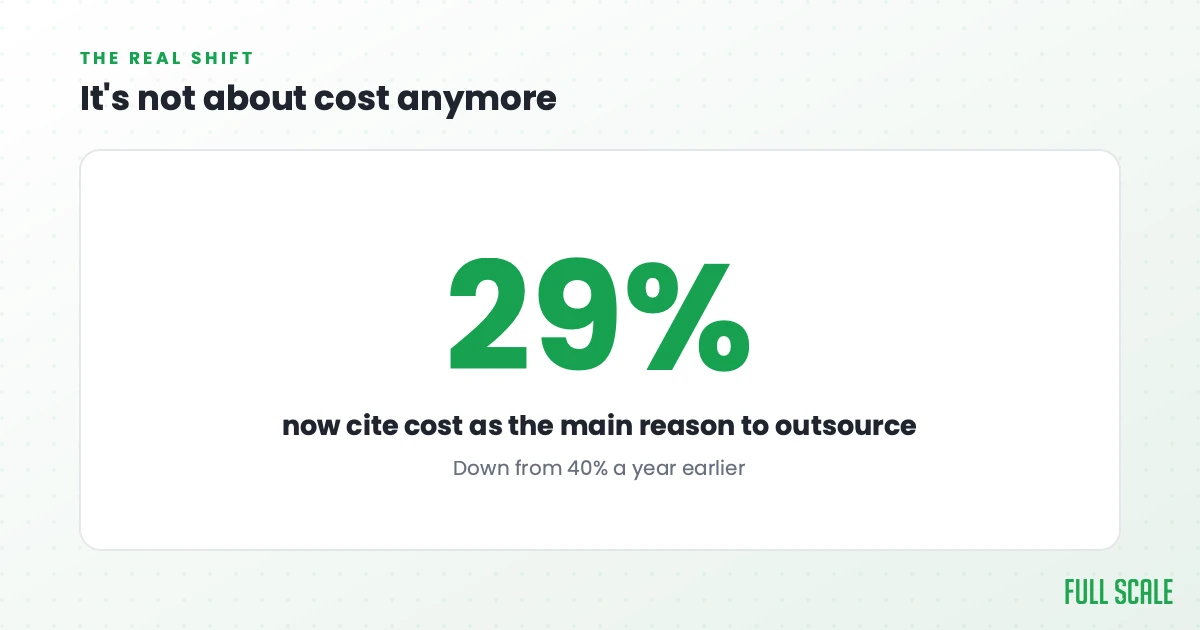
AI is fantastic at writing code and unreliable at knowing whether the code is right. Trust in AI output among developers actually fell to 29% in 2025, down from 40% the year before. Adoption went up and trust went down at the same time, which tells you exactly where the hard part of the job moved.
The best data I’ve seen on this is a randomized controlled trial from METR. They had experienced developers work real issues on their own large codebases, some with AI allowed and some without. The developers predicted AI would make them 24% faster. They were actually 19% slower with it. And even after finishing, they still believed AI had sped them up by 20%. Reviewing and fixing what the AI produced ate the time it saved, and the developers couldn’t even feel it happening.
Read that twice if you manage engineers, because it’s the whole game.
AI gives you a confident junior developer who works at light speed and is wrong often enough to hurt you. The value of a human sitting next to that is no longer in the typing. It’s in catching the mistake, knowing the question to ask, and understanding the product well enough to tell good output from garbage. As I’ve said before, vibe coding only works if you’ve been coding long enough to know when the AI is wrong.
That is the skill AI can’t hand you. And it is the exact skill the order-taker developer never had to build, because their job was to wait for someone else to do the thinking.
The roles are blurring, and everyone is writing code now
The second big shift is that the old walls between roles are coming down.
For a long time the pipeline was tidy. Product wrote the spec, engineers built it, quality assurance (QA) tested it, and ops shipped it, each group throwing the work over the wall to the next. AI is dissolving those walls. Product people prototype in code now, engineers shape the requirements they used to just receive, and QA is busy automating itself. Everybody touches the part of the process that used to belong to someone else. Most of that prototyping happens in tools that build a working app from a prompt, not in an IDE. AI has changed where the real work sits across the software development life cycle.
We are all still figuring out the new workflow. I don’t think anyone has it fully solved, and any consultant who tells you they do is selling something. But the direction is obvious. The narrow specialist who only does one slice of the pipeline, and only when handed a perfect input, is the one with the most exposure. The work is collapsing back toward people who can carry an idea across the whole arc, from “what should we build” to “it’s live and it works.”
From software engineer back to software developer
When I started my career a little over twenty years ago, there wasn’t a clean line between “engineer” and “developer.” You talked to the user, figured out what to build, built it, tested it, and put it into production. You owned the thing end to end. Somewhere along the way the industry sliced that job into narrow pieces, and a lot of offshore work got sold as the narrowest piece of all: just the coding, none of the thinking.
AI is pushing us back to the older shape of the job, and I think that’s a good thing.
The developers who win in 2026 are the ones involved in figuring out what code to write, not just writing it. They sit in on product and planning, they push back when a requirement doesn’t make sense, and they follow the work through quality assurance and deployment instead of tossing it over a wall. In short, they act like they own the outcome, because engineers who think like owners outperform the ones who wait for tickets.
That’s not a new idea for me. I wrote a whole book about it. But AI took it from a nice-to-have to a survival trait, and it did it in about two years.
Why order-takers are the ones who fail at offshore now
This is the uncomfortable part for my own industry.
Plenty of offshore and outsourcing shops won on volume. Throw enough bodies at a problem, keep the rate low, and brute-force your way through whatever the client spec’d. That model is breaking, and it’s breaking fastest at exactly the shops that leaned on cheap, replaceable order-takers, because that is the precise thing AI now does for less.
The buyers already see it. In Deloitte’s 2024 Global Outsourcing Survey, 83% of executives said they’re already using AI inside their outsourced services, and skilled talent and agility have moved up alongside cost as the top reasons companies outsource at all. Read between the lines: the buyers stopped treating offshore as a pure cost play. If cheap is the only thing your offshore partner offers, they are now competing directly with an API, and they will lose.
I lived a smaller version of this years ago. I used to outsource quick projects myself, WordPress builds and an Elasticsearch project, things I didn’t know much about and just needed done. That worked because the scope was tiny and well-defined. The second the work needed real judgment, the hand-off-a-spec model fell apart. AI just dropped the floor for that kind of well-defined work to almost zero, which means the only offshore work left worth paying a human for is the work that needs a human’s judgment.
What we’re actually doing about it at Full Scale
So as an offshore company, what do you do when the old product gets commoditized overnight? You upskill, on two fronts at once, and fast.
The first front is obvious: teaching our engineers to actually use AI well, which is harder than it sounds. Using it well means knowing when not to trust it, and it changes how knowledge moves through a team when half the first draft comes from a model.
The second front is the one that matters more, and it’s product thinking. This is the core of my book, Product Driven, and it turns out to be the exact thing AI made non-optional. An engineer who understands the customer, the problem, and the “why” behind the work can direct AI and catch its mistakes. An engineer who only knows how to convert a ticket into code cannot, and now has nothing to offer that a tool doesn’t.
I frame the human side of this for our teams as three things, what I call the Three C’s: communication, curiosity, and courage. Communication, because the job is now mostly about understanding problems and working with people. Curiosity, because this is what I tell our engineers will keep them safe: stay curious about how AI changes your work and how to use it, and you’ll adapt. And courage, the safety to speak up, push back, and ask why a thing is even worth building. Those are the skills that survive when writing code stops being the hard part.
This isn’t only my read. Laura Tacho, the CTO of DX, came on my podcast after her team studied AI’s impact across hundreds of engineering organizations, and her numbers are a useful gut check. The real performance gain turns out to be modest: a median of about three hours and forty-five minutes saved per developer per week, not the revolution the headlines promise. What decides who gets more than that is the part I keep harping on. The real “10x developers of the future,” she told me, are the ones who are “very product savvy, very business savvy, and understand how to use AI tools.” That’s product thinking, described by someone who measures it for a living.
Why upskilling is harder than it sounds
It’s working, but I won’t pretend it’s easy, and the hard part is the one most people don’t think about. Upskilling sounds simple until you have more than 80 active clients, because we don’t fully control how any of them use AI, and that directly shapes how much our own engineers get to use it.
Look at the range across our teams. Some of our developers sit with startups that went all in on AI, and they’re becoming experts fast because they live in the tools all day. Others support a simple legacy app where a single engineer keeps the lights on, and the odds of that person turning into an AI power user are far lower, through no fault of their own. Then there are big enterprise clients who either ban AI outright or, for reasons I still can’t explain, hand their teams the worst tools on the market. And yes, a few of our developers just don’t want to use AI at all.
The challenge is real.
Any offshore firm claiming they’ve smoothly upskilled their entire team is skipping the messy part. We push on it hard anyway, and a 93% developer retention rate plus the time to train people deeply is what makes it possible. A shop renting out interchangeable coders by the hour has a much harder road, because their whole model assumed the coding was the value.
What this means when you pick an offshore partner in 2026
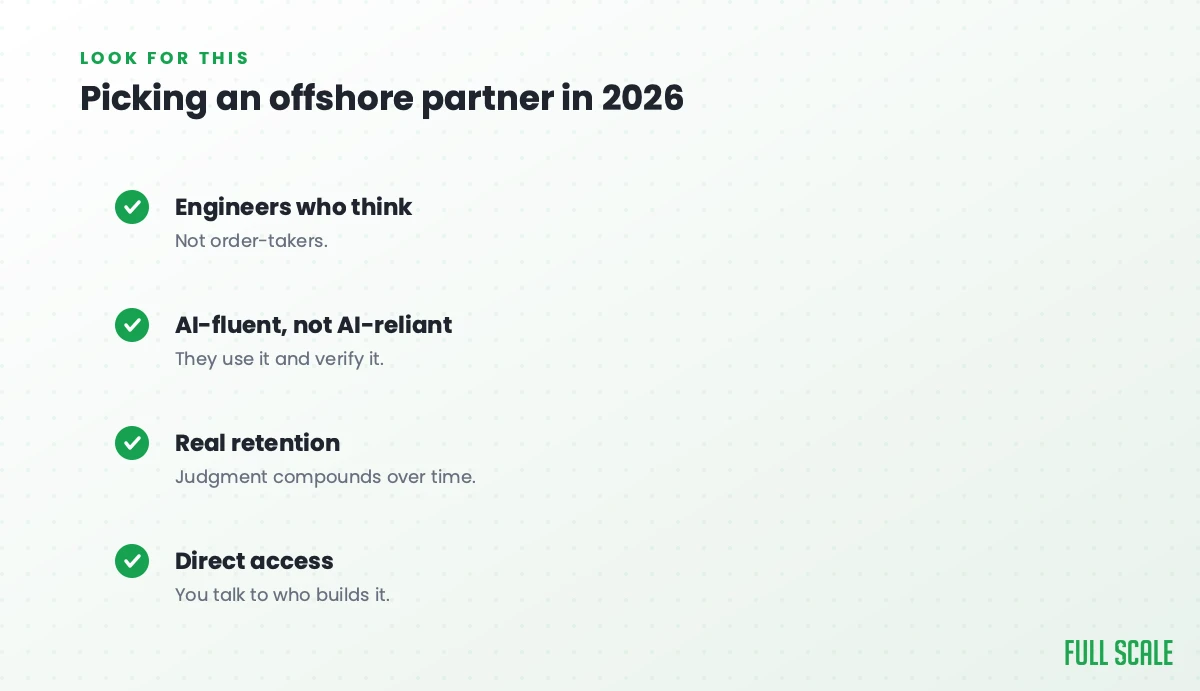
If you’re a CTO or a founder evaluating an offshore software development partner right now, the trends list isn’t your buying guide. This one question is.
Can their people think, or are they order-takers waiting on a perfect spec?
Everything else follows from that. Ask how their developers work with AI, and listen for whether they treat it as a tool to be supervised or a magic box. Ask whether their engineers join your standups, your planning, and your roadmap, or whether you only ever talk to a project manager who shields the actual developers from you. That middleman pattern was always a red flag. Now it’s a tell that the people behind the wall can’t do the part that’s left.
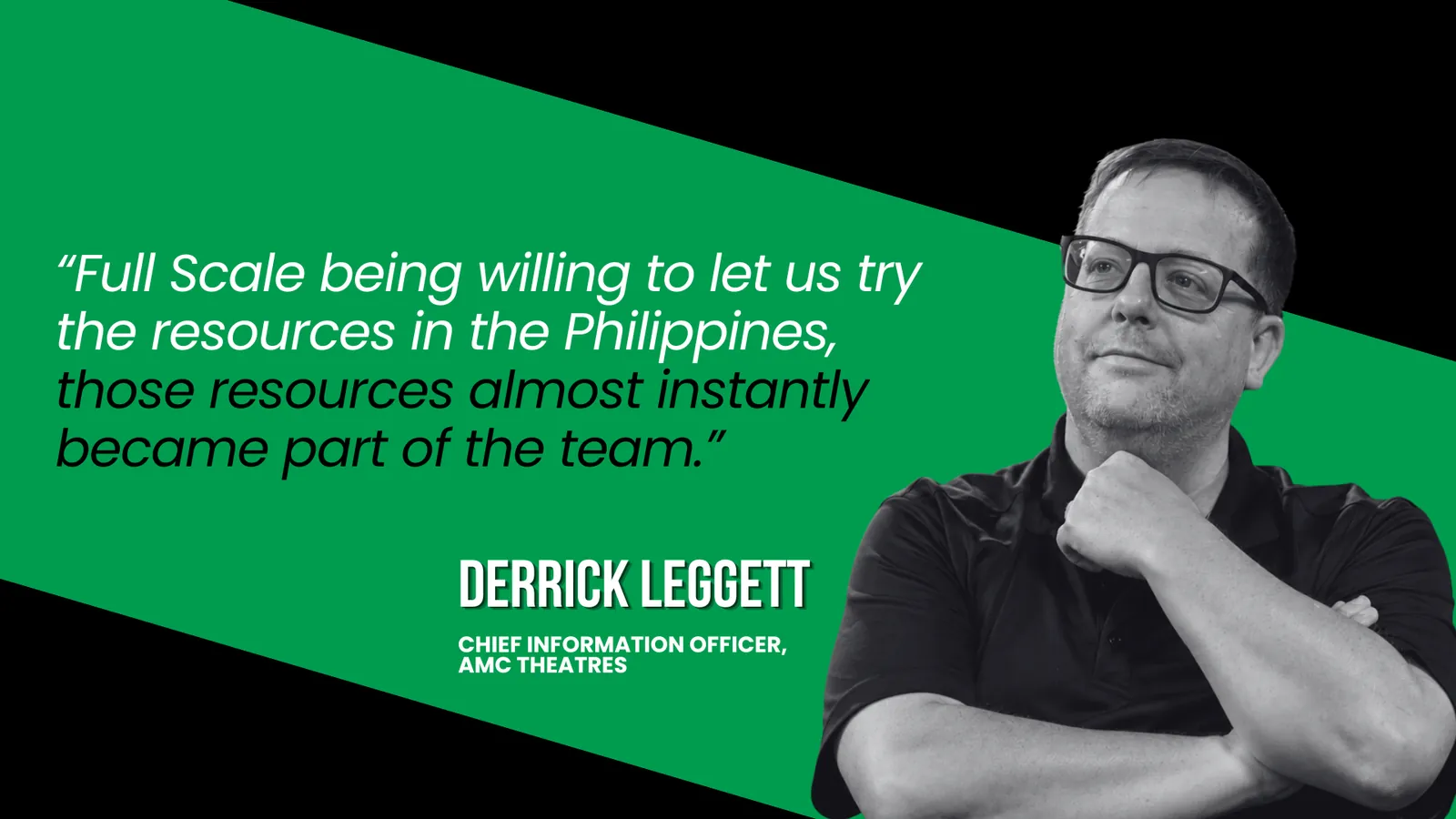
The model my best clients use isn’t outsourcing in the old sense at all. Derrick Leggett, the CIO at AMC Theatres, put it best about the engineers we staff for him: “It’s a fully integrated team. It’s just some of the people happen to be living in the Philippines.” He also tells his people something I’d put on a wall: anyone who doesn’t learn to use AI is “going to be working at 30%, 50%, 80% of what the person sitting next to them is.” That’s true for individual developers and it’s true for offshore firms.
The offshore software development trend that matters in 2026 isn’t on the tools list. It’s that the floor fell out from under cheap, thoughtless coding, and the value moved to people who can think about the product. Hire for that, on your own team and at whatever partner you choose.
Software development is back, and the teams that remember what that actually meant are the ones that win.
Frequently asked questions
What is the biggest offshore software development trend in 2026?
The biggest trend is that AI has commoditized routine coding, which shifts the value of an offshore developer from writing code to product thinking and judgment. Developers who only convert detailed specs into code now compete directly with AI tools. The offshore teams that win are the ones whose engineers can understand the problem, direct AI, and own the outcome from planning through deployment.
Will AI replace offshore software developers?
AI replaces the narrow, order-taker version of the role, the developer who needs perfect requirements and only writes code. It does not replace developers who understand the product, catch AI’s mistakes, and carry work across the whole development process. A METR study found experienced developers were actually 19% slower using AI on complex tasks, because reviewing AI output takes real skill. That skill is exactly what keeps good offshore developers valuable.
Is offshore software development still growing?
Yes. The Philippine IT and business process management sector alone reached about $40 billion in export revenue in 2025 and is projected to hit $42 billion in 2026, growing faster than the global average. Demand is still rising, but the reason companies offshore is changing. Deloitte’s research shows skilled talent and agility now rank alongside cost as primary drivers, so buyers want capable teams, not just cheap ones.
How should I evaluate an offshore software partner now?
Ask one core question: can their developers think, or do they need a perfect spec to function? Look for engineers who join your standups, planning, and roadmap rather than hiding behind a project manager. Ask how they use AI and whether they treat it as a tool to supervise. A partner whose only advantage is a low hourly rate is now competing with AI itself, and that is not a safe bet for long-term product work. It is also the real answer to the anxious question of AI coding tools vs. hiring offshore developers: the thinking ones get more valuable, not less.
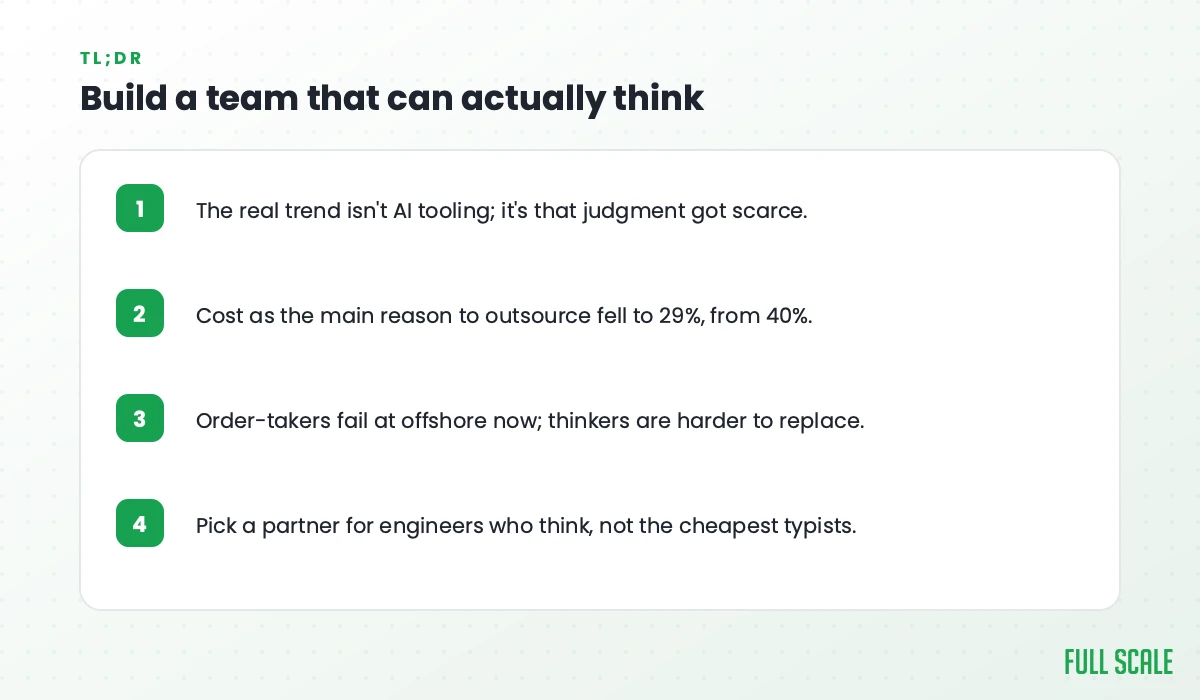
Build an offshore team that can actually think
Want to talk through what a product-thinking offshore team would look like for your roadmap? Schedule a call with Full Scale and we’ll walk you through how we build and train ours.