

AI development services without the agency markup
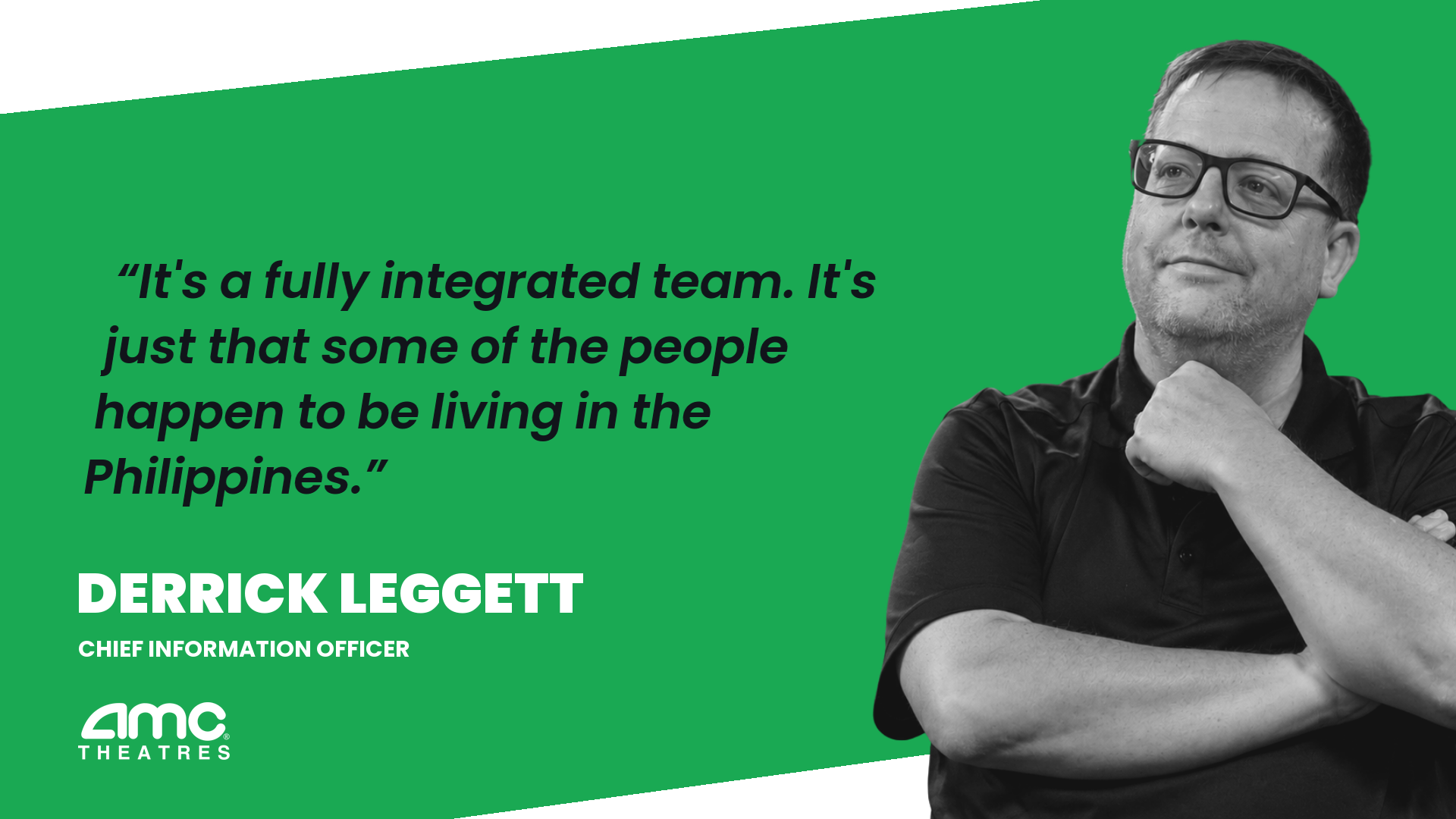
Full Scale is an AI development company that staffs dedicated senior engineers from the Philippines directly onto your team. We supply the people who build your LLM apps, RAG systems, AI agents, and ML pipelines. AMC Theatres and other product teams use this model to ship AI features faster than hiring in-house. First sprint in as little as 7 days.
from anthropic import Anthropic
from pinecone import Pinecone

def answer_with_rag(question: str):
    hits = index.query(question, top_k=5)
    context = rerank(hits, question)
    return claude.messages.create(
        model="claude-sonnet-4-6",
        system=GROUNDED_PROMPT,
        messages=[{"role": "user",
        "content": f"{context}\n\n{question}"}],
    )
AI teams trusted by SaaS scale-ups, enterprises, and Fortune 500s

Previously founded VinSolutions ($150M+ exit) and Stackify
We build AI into products at Full Scale Ventures and ship the same work for our clients
When I first started using LLMs in 2025, it was clear that we'd be able to build real functionality into software with them. The first thing we tried was qualifying leads, which required analysis and numeric comparisons across noisy inputs. The models that year honestly didn't do that great of a job consistently. Fast forward a year and the new models handle that work well. We use what we learn building our own products to staff better AI engineers for our clients.
Full Scale delivers AI development services through staff augmentation: dedicated senior engineers in the Philippines who join your team, work your hours, and report to your tech lead. We are building three AI startups inside Full Scale Ventures right now, and we staff specialists in LLM application development, RAG systems, agent engineering, machine learning, and MLOps for product teams around the world. Every engineer on the bench uses Claude, GitHub Copilot, and Cursor as part of their daily workflow.
The model is the easy part, the engineering around it is the work
If you've already scoped your AI build, you don't need to read this. If you're still figuring out what AI can realistically do for your product and what it takes to ship it to production, these are the technical positions that hold up in practice, not in a demo.
Most AI products are retrieval, not training
The highest-value AI work for most companies is wiring an LLM to your own data with RAG, good chunking, and a vector store, not training a model from scratch. We build the retrieval and grounding layer that makes a general model actually useful on your problem, which is where the real product value lives.
The hard part is the system around the model
An AI feature is 10% prompt and 90% the engineering around it: data pipelines, evals, guardrails, caching, fallbacks, and cost control. We staff engineers who build that production system, not just a notebook that worked once on a demo input.
Evals are how you know it works
Without an eval harness, you're shipping vibes. We build test sets, scoring, and regression checks so you can change a prompt or swap a model and actually know whether quality went up or down, rather than guessing from a handful of manual spot-checks.
Model-agnostic by design
OpenAI, Anthropic, open-weight models on your own infra, the right choice depends on cost, latency, privacy, and the task. We build behind an abstraction so you can switch providers when the economics or capabilities change, instead of getting locked into one vendor's API forever.
The honest trade-offs
Not every problem needs AI, and a model in the loop adds latency, cost, and non-determinism you have to design around. When a deterministic rule or a plain database query does the job better, we'll say so rather than bolt an LLM onto something that didn't need one.
AI engineers, trained on Product Driven principles
Most teams adopting AI right now are shipping more code without shipping better software. The slop volume climbs, hallucinations leak into production, evals get skipped, and AI features that looked great in a demo quietly bleed budget after launch.
Full Scale AI developers are trained on something different: the Product Driven approach from Matt's book, combined with the full modern AI toolkit (Claude, GitHub Copilot, Cursor, and the OpenAI, Anthropic, and Google AI APIs). They think first, type second, and use AI for the parts where judgment doesn't add value. That combination is rare, and it is what serious AI teams should actually be hiring for in 2026.
Product Driven engineering
Our engineers are trained on the five pillars from Matt's book: Vision, Focus, Clarity, Ownership, and Courage. The result is AI developers who push back on bad product decisions, ask whether a feature should ship before they wrap an LLM around it, and own the outcome of what gets deployed. They are not order takers, and they are not prompt jockeys.
Read Product Driven, the bookAI as a thinking partner
Every AI engineer on our bench works with Claude, GitHub Copilot, and Cursor every day, and most have shipped production features built on the OpenAI, Anthropic, and Google AI APIs. They use AI to explore options, scaffold the boring parts, generate evals, and review their own pull requests before a human ever sees them. Judgment stays with the engineer, the grunt work moves to the machine.
I describe myself as a product person first and an engineer second, and from that seat, it has never been a better time to be alive and use AI to build things. But AI without product thinking is just a slop machine, and the engineers I want on my team know the difference. They reason about the product before they reach for a prompt, and they use AI for the parts where judgment doesn't matter. That's who we hire and train at Full Scale.

Six AI development services, one dedicated team
Every engagement is delivered through staff augmentation: dedicated senior engineers based in the Philippines who join your team full-time and report to your technical lead. You direct the work; we supply the engineers. Here are the AI development services clients come to Full Scale for most often.
Generative AI and LLM application development
Production LLM apps on Claude, GPT, and open-weight models. Custom AI development means real engineering around the model: structured outputs, function calling, streaming UIs, multi-turn memory, evals, and cost controls baked in from day one. We build AI features that survive contact with real users instead of falling apart the week after the demo.
Retrieval-augmented generation (RAG)
End-to-end RAG systems over your private data: ingestion, chunking, embeddings, hybrid retrieval, reranking, and grounded generation. We build the boring parts that decide whether RAG actually works, like document parsing, metadata filtering, and citation handling, on vector stores like Pinecone, Weaviate, Qdrant, and pgvector.
AI agent engineering
Autonomous and human-in-the-loop agents built with the OpenAI Agents SDK, the Anthropic Agent SDK, LangGraph, and CrewAI. We staff engineers who know how to design tool interfaces, scope agent autonomy, handle long-running tasks, and keep the agent from drifting off the rails when production data hits it.
Machine learning engineering
Custom ML models trained on your data: classification, regression, recommendation, ranking, forecasting, anomaly detection. Our ML engineers work fluently in PyTorch, TensorFlow, scikit-learn, XGBoost, and HuggingFace Transformers, and they know when a smaller model beats a fine-tuned LLM on cost and latency.
AI integration and product engineering
Embedding AI features into existing SaaS products. API integration with OpenAI, Anthropic, Google AI, and Cohere, plus streaming UIs in React and Next.js, eval pipelines, observability, and per-tenant cost controls. This is the work most engineering teams need most: making AI feel like a native part of their product rather than a bolted-on chatbot.
MLOps and AI infrastructure
Production deployment, monitoring, versioning, and scaling for ML and LLM systems. Our MLOps engineers ship with MLflow, Weights & Biases, SageMaker, Vertex AI, Azure ML, Kubeflow, and Langfuse, and they know how to keep model serving cost predictable when traffic grows 10x in a quarter.
Patterns our AI engineers apply in production
Most offshore AI shops deliver a notebook that worked once on a cherry-picked input. What determines whether an AI feature survives real users, real data, and a finance review of the token bill is the decisions made in the first sprint. These are the patterns our engineers reach for, and the reasoning behind when each one earns its complexity.
RAG Done Properly
Chunking that respects document structure, embeddings tuned to the domain, a vector store (pgvector, Pinecone, Weaviate), and reranking so the model gets the right context, not the nearest five paragraphs. Retrieval quality is the single biggest lever on whether a RAG product is useful or hallucinates confidently.
Agents, Tools & Orchestration
Tool calling, structured outputs, and multi-step workflows with a framework (LangChain, LlamaIndex) or hand-rolled when that's cleaner. We keep agents on a short leash with validation and bounded steps, because an unbounded agent loop is how you burn a budget and trust at the same time.
Model Abstraction & Routing
A provider abstraction so you can route between OpenAI, Anthropic, and open-weight models by cost, latency, or task, with fallbacks when one is down. You're never one pricing change or rate limit away from an outage, and you can adopt a better model the week it ships.
Evals & Observability
Test sets, automated scoring (LLM-as-judge plus deterministic checks), and tracing on every call so you can see prompts, tokens, latency, and cost in production. This is how you ship a prompt change with confidence instead of hoping it didn't regress something.
Guardrails, Cost & Caching
Input and output validation, PII handling, prompt-injection defenses, semantic caching to cut repeat-call cost, and rate and spend limits. The safety and cost layer is what separates a demo from something you can put in front of customers and finance.
MLOps & Fine-Tuning When It Earns It
Data pipelines, fine-tuning or LoRA adapters when retrieval isn't enough, model versioning, and deployment on managed APIs or your own GPUs. We reach for training only when the eval numbers say it beats a well-built RAG system, not because fine-tuning sounds impressive.
Opinionated takes on AI from engineers who ship it
Most vendors will tell you AI is the answer to whatever you asked. We'll tell you when it isn't, and what it actually takes to ship the times it is. These are the actual positions we hold based on putting AI features in production, not talking points from a sales deck.
When the task is fuzzy, language-heavy, or pattern-rich, summarization, extraction, classification, search over your own docs, drafting, support triage. Those are where an LLM earns its cost. If you have proprietary data and a workflow people do by reading and typing, there's usually a real AI product in there.
When a deterministic rule, a SQL query, or plain software does the job better, cheaper, and more predictably, we'll tell you to skip the model rather than bolt an LLM onto it to look modern. Adding AI to something that didn't need it just buys you latency, cost, and a new class of bugs.
We ship retrieval with real reranking, an eval harness before a launch, model abstraction, guardrails, and cost and latency budgets. We refuse prompt-only products with no evals, agents that loop without bounds or validation, RAG that dumps the nearest chunks without reranking, shipping on vibes instead of a test set, and hard-coding to one provider's API with no fallback.
Demos that dazzled on three inputs and fell apart on the fourth because there were no evals. Fine-tuning reached for when better retrieval would have solved it for a fraction of the cost. Agent loops that ran up a four-figure token bill overnight. And RAG systems that retrieved confidently wrong context and presented it as fact because nobody measured retrieval quality.
From first call to a production AI feature: how an AI project runs at Full Scale
Staff augmentation without a delivery framework is just headcount. Here is what the engagement actually looks like from the first conversation to a shipped, evaluated AI feature and the ongoing work that comes after.
We scope the engagement together: what AI can realistically do for your product, whether retrieval or fine-tuning fits, what the first sprint should deliver, and what specializations to staff. You walk away with a staffing plan and a candidate shortlist, not a 40-page requirements document.
You interview our pre-vetted candidates and select who starts. We handle employment, payroll, and equipment setup on the Philippines side. Your engineer gets access to your repo, your data, and your standups. First commit typically happens within the first week.
Your engineer works in your sprint cadence, under your tech lead, committing to your repo with traces and eval results you can see. You watch quality and cost move in a dashboard, not at a scheduled demo. Architecture and model decisions happen in your standups, not behind a project management wall.
Our engineers build the eval harness as part of delivery, not as an afterthought. Test sets, automated scoring, regression checks on every prompt or model change, plus standard code tests in CI. AI-assisted PR review (Copilot, Cursor) before human review. We ship changes because the eval numbers moved, not because the demo felt better.
Your engineers own what runs in production: tracing and observability, guardrails, semantic caching, spend and rate limits, and model-version management. They stay on after launch. As models and prices change, they adapt the system instead of leaving you with a frozen integration that ages out.
How an AI development project starts at Full Scale
No discovery phase you pay for before a line is written. No 6-week RFP process. We scope in a single call, assemble pre-vetted engineers (see how we vet engineers), and have a working, evaluated slice running in the first week.
Scoping call
30 minutes. We learn what you want AI to do, what data you have, what the first sprint should deliver, and what specializations the project needs. We'll also tell you honestly whether AI is the right tool. We don't pitch on this call. We scope.
Team assembly
We pull 1–3 pre-vetted AI engineers whose skills, seniority, and prior project experience match what the project requires, whether that's RAG, fine-tuning, or MLOps. You see their full profiles and actual project history before the interview.
Technical interview
You interview candidates the way you would any senior hire: live retrieval and eval design, prompt and cost-control questions, and real depth on LLMs and the surrounding system. Pass on anyone you don't believe in. We keep looking.
Contracts & setup
One contract with Full Scale. We handle all employment, payroll, equipment, and HR logistics in the Philippines. Your engineer gets repo access, data access, and sprint 1 is planned.
First delivery
Your engineer joins your standups, commits to your repo, and ships a working, evaluated slice in the first week. Our delivery team stays in the loop through ramp-up to make sure velocity doesn't stall. They own the work through launch and beyond.
A demo that works is not the same as a system in production
Most AI outsourcing failures aren't model failures. They are delivery model failures. The fixed-bid agency model creates incentives that work against you: a dazzling demo over a measured system, handoffs over ownership, scope control over outcomes. Staff augmentation realigns those incentives. Here are the six ways the agency model breaks down on real AI projects.
Fixed-bid scope creep destroys budgets
Agencies win the bid with an optimistic estimate, then recover their margin through change orders. With AI, where the scope is genuinely uncertain until you've run evals, that model is even worse: every iteration the model needs becomes a billable revision, and the 'fixed' price doubles.
The agency disappears after the demo
Fixed-bid AI projects end at a demo that looked good. The engineers move to the next bid. You own every hallucination in production, every model deprecation that breaks the integration, and every cost spike, without the people who built it. Post-launch support becomes a new contract negotiation.
No visibility until the token bill arrives
Black-box delivery means you see the AI feature at a staged demo, not in production on real inputs with real cost. By the time you learn it hallucinates on the long tail and costs triple what was quoted, it's already shipped. Staff augmentation keeps engineers in your repo, your traces, and your standups from day one.
Speed incentives skip the evals
Fixed-bid agencies are paid to ship a convincing demo, not a measured system. That means no eval harness, prompt-only products with no guardrails, RAG that dumps the nearest chunks, and unbounded agents. You inherit something that wins a demo and loses on the fourth real input.
Engineer rotation breaks continuity
Agencies staff projects with whoever is available, not whoever is best-matched. The engineer who tuned your retrieval and built your eval set gets rotated to another engagement. New engineers inherit prompts and pipelines they didn't write and can't safely change, and the quality cliff arrives fast.
Production failures become "out of scope"
A prompt-injection exploit, a cost spike from an agent loop, a quality regression after a model update, agencies classify these as new work. With staff augmentation, your engineers own what they shipped and have incentive to build the guardrails and evals right the first time.
AI expertise tuned to your industry
As an AI development company built on top of a decade of software staffing, we have placed dedicated AI developers into nearly every industry that runs production software. Domain knowledge cuts onboarding time in half, so we match engineers to projects where they have already shipped real AI features.
SaaS & Scale-ups
AI in SaaS is where most of our engagements land. Customer-facing AI features, in-product copilots, structured-data extraction, and RAG over the customer's own data. Our engineers ship features that integrate with the rest of the product instead of becoming isolated chatbots bolted onto a sidebar.
From a Claude API call to a production RAG pipeline
Whether you want to hire generative AI developers for a greenfield LLM app, hire machine learning engineers for a custom model, or outsource AI development on a RAG system, the bench covers every layer of the modern AI stack. Pick what you need. We will match an engineer fluent in it.
Hire dedicated AI developers, two ways
Most clients start with a single dedicated AI developer and grow into a full team. Either way, you get full-time engineers who sit on your standups, work your hours, and ship code against your roadmap. Both options are the staff augmentation model at the core: dedicated, long-term engineers embedded in your team rather than freelancers, shared resources, or a project shop on the side. See the full breakdown of how we hire dedicated AI developers across every engagement we staff. When the AI engineer also needs to ship the application around the model, you can hire dedicated full stack developers from the same bench.
Dedicated developer
Full-time, exclusive, sits on your standups.
- Full-time AI engineer assigned only to your project
- Works your hours, your tools, your codebase
- Joins your standups, reports to your tech lead
- We handle payroll, HR, equipment, retention
- Two-week money-back guarantee
Dedicated team
Multiple engineers, embedded as a pod.
- 2-10 AI engineers staffed together as one pod
- Optional ML, MLOps, RAG, agent specialists in the mix
- Operates as a team inside your engineering org
- Scale up or down by a head with 30 days notice
- Account manager you can escalate to in the US
Dedicated AI developers, starting at $35 an hour
That rate is fully loaded. Every engineer we staff on your project is a senior AI engineer in the Philippines working full-time under your direction, and we cover the payroll, benefits, HR, and equipment. The same role hired locally in the US runs $200K to $300K a year for a senior LLM or ML engineer, which is the delivery math that brings most teams to the table.
- Full-time, dedicated AI engineer
- Pre-vetted by senior AI reviewers
- Works your hours, your tools, your codebase
- Payroll, HR, equipment, benefits handled by us
- US-based account manager you can escalate to
- Two-week money-back guarantee if it isn't a fit
Full Scale has made the Inc. 5000 five years in a row and is Great Place to Work certified. We have been doing this since 2018, and pricing isn't the only reason clients stay with our AI development company, it's the easiest reason to call.
Why we deliver AI projects from the Philippines
Every AI project we deliver is staffed from the Philippines. You can also hire dedicated developers in the Philippines across every other stack we staff, with the same vetting bar, retention numbers, and engagement model that AI clients get.
English-fluent by default
The Philippines is the third-largest English-speaking country in the world. Standups, code reviews, prompt design sessions, and customer calls work the way they do with any US team member.
Real time-zone overlap
Most of our AI engineers shift their hours toward the US business day, giving 3-4 hours of real-time overlap with East and West Coast teams, so prompt iteration, eval reviews, and design decisions happen live during shared hours rather than crawling through 24-hour async handoffs.
Deep engineering talent pool
Cebu and Manila produce tens of thousands of CS, IT, and data-science graduates a year. The Philippines has been an offshore engineering home for two decades, and the AI talent pipeline has scaled with it.
Cultural alignment with US teams
Filipino engineers grow up on US business norms, US TV, and US tech culture, so agile rituals, direct feedback, and collaborative workflows feel familiar from day one. These teams integrate fast rather than needing constant management.
Staff augmentation vs the other ways to get an AI feature built
Every delivery model has a different set of trade-offs, and AI raises the stakes because quality is measured, not assumed. Fixed-bid agencies offer a contract; consultancies offer a proposal. Staff augmentation offers engineers who embed in your team, build the eval harness, and work under your direction from day one. Here is how those models compare on the things that actually determine whether an AI feature succeeds.
| Factor | Full Scale (staff aug) | Fixed-bid AI agency | Consultancy / SI | Build in-house |
|---|---|---|---|---|
| Time to first sprint | 7 days | 4-8 weeks | 6-12 weeks | 3-6 months |
| Eval-driven, not demo-driven | ||||
| You control architecture and model decisions | ||||
| Visibility into cost, latency, and quality | ||||
| Engineers dedicated full-time to your project | ||||
| Scope flexibility as the model work evolves | ||||
| Engineers own what they ship post-launch | ||||
| You own all IP and prompts from day one | ||||
| Engineer continuity across the project | 93%+ retention | varies | low | varies |
| Fully-loaded cost vs US in-house team | ~40-50% | ~60-80% | ~100-150% | 100% |
The numbers behind an AI staffing partner that actually works
From the people we actually staff teams for
Full Scale's development team was pivotal in elevating our facility management software. Their expertise turned complex challenges into seamless functionalities, enhancing user experience and operational efficiency.
With Full Scale's developers, we transformed the commercial real estate landscape. Their team's proficiency in agile development and proactive communication accelerated our product release.
Deeper guides to AI development and architecture
AI's impact on software development
How AI is changing the way software actually gets built.
Offshore development best practices
How to avoid the common ways offshore engagements go wrong.
Nearshore vs offshore
When each model wins, from a CEO who has run both.
Outsourcing vs offshoring
The distinction most CTOs get wrong, and why it matters.
What offshore development really costs
The real numbers behind offshore rates and total cost.
The ROI of offshore development
The math behind 50-70% development cost reductions.
Common questions about AI development services
AI development services from engineers who have actually shipped AI systems
30-minute discovery call with Full Scale, an AI development company that supplies dedicated senior engineers from the Philippines via staff augmentation. We'll learn what you're building, walk you through which LLM engineers, RAG specialists, ML engineers, or agent engineers are on the bench, and you'll meet candidates within a week. No pressure, no pitch.