

Node.js development services that ship real software, not slide decks
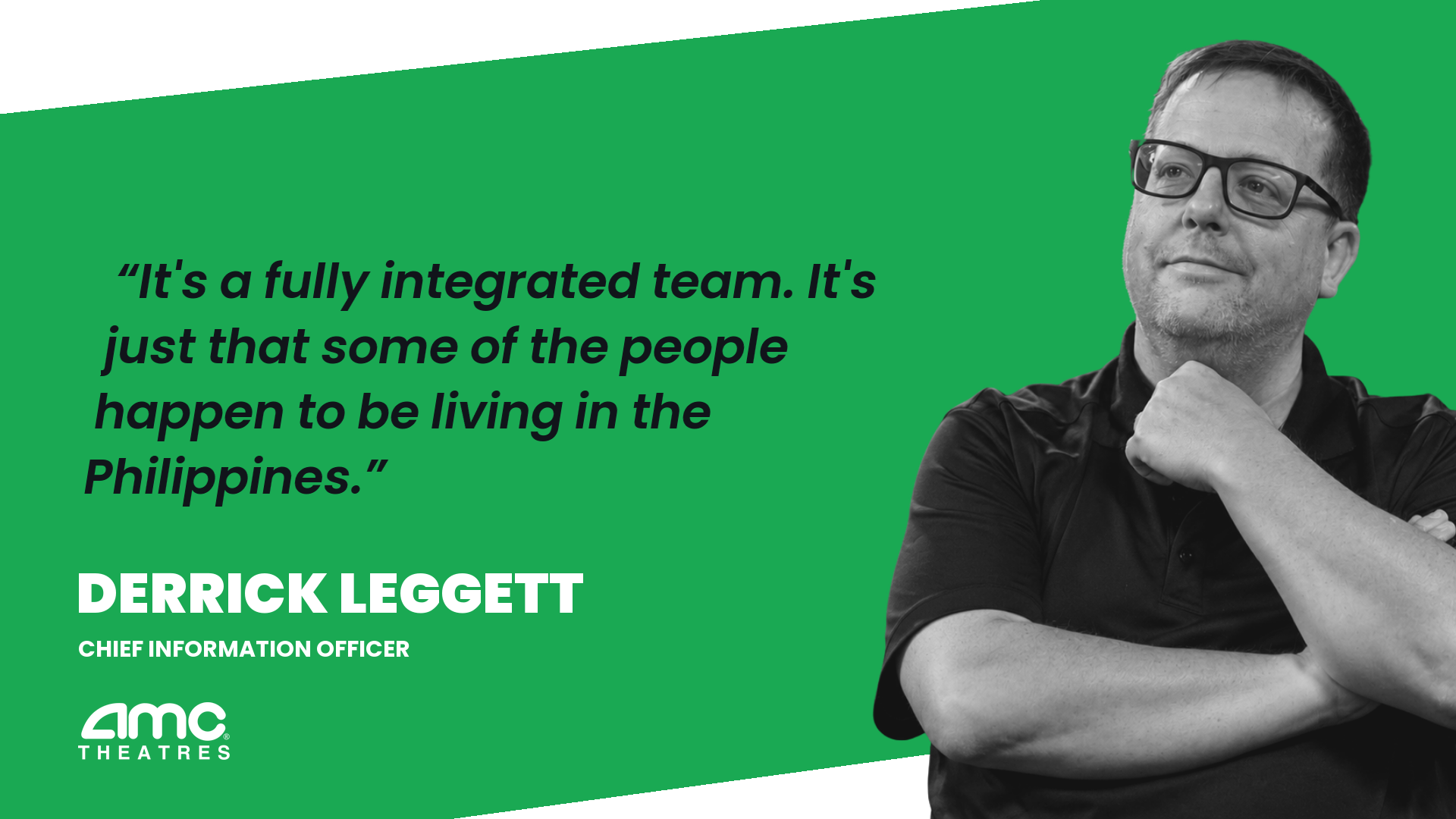
Full Scale is a Node.js development company that delivers custom Node builds, REST and GraphQL APIs, real-time systems, and legacy modernization through senior Filipino engineers who join your team. Founded by the team that built Stackify's Node.js APM agent, we have placed Express, NestJS, and TypeScript engineers, including the team powering enterprise systems at AMC Theatres. You direct the work; we handle hiring, payroll, and HR. First sprint in as little as 7 days.
@Controller('orders')
export class OrdersController {
  constructor(
    private readonly orders: OrdersService,
  ) {}

  @Post()
  async create(@Body() dto: CreateOrderDto) {
    return await this.orders.create(dto);
  }
}Node.js teams trusted by enterprises, scale-ups, and Fortune 500s

Previously founded VinSolutions ($150M+ exit) and Stackify
I shipped a Node.js APM agent that ran in production for thousands of teams
My first language was .NET, but at Stackify we built a Node.js agent that hooked into the event loop and tracked every HTTP request, database query, and external call across thousands of customer applications. That meant I spent years staring at production Node.js traces from real systems running at real scale, which is a faster education in what breaks in Node than any tutorial.
Full Scale is a Node.js development company built around senior Filipino developers and the Product Driven framework. We have hired Node.js engineers in the Philippines since 2018, we test them on real architecture problems rather than syntax quizzes, and we have built dedicated Node.js development teams for fast-growing SaaS companies and for AMC Theatres. When the engagement is a full SaaS build, see our SaaS development company page. If you need Node.js development services from a team that actually builds things, rather than a vendor that subcontracts the work, you are in the right place.
Five reasons Node.js is the right stack for high-concurrency software
If you've already committed to Node.js, you don't need to read this. If you're still evaluating whether Node is the right call for your project, or whether to migrate an existing system toward it, these are the technical arguments that hold up in production, not in a vendor slide deck.
Non-blocking IO built for high concurrency
Node's event loop handles tens of thousands of concurrent connections on a single thread without a thread-per-request model eating your memory. For IO-bound systems (APIs, real-time feeds, streaming, gateways), that is a genuine architectural advantage, not a benchmark talking point. The flip side is real too, and we'll tell you when a workload is CPU-bound enough that Node is the wrong call.
One language across the entire stack
TypeScript on the backend, the frontend, the build tooling, and the infrastructure code. Shared types flow end to end, so a change to an API contract surfaces as a compile error in the client instead of a runtime bug in production. For teams that want to minimize context-switching and share domain models across layers, the single-language stack is a real productivity advantage.
Serverless-native by default
Small bundles and fast startup make Node the best-supported runtime on AWS Lambda, Vercel Functions, Cloudflare Workers, and Google Cloud Run. When a workload fits serverless, Node gets you there with less cold-start pain and better framework support (Hono, Lambda Powertools, CDK in TypeScript) than most alternatives.
The largest package registry in software
npm gives you a mature library for nearly every problem, which means less wheel-reinventing and faster delivery. The risk is supply-chain and dependency bloat, so our engineers vet what they pull in, pin versions, and audit the tree rather than npm-installing their way into a security incident.
A support cadence you can plan around
Node ships an even-numbered LTS line every year with 30 months of support. Node 22 is the current LTS. That predictable cadence means your team has a clear upgrade path rather than chasing releases or getting stranded on an end-of-life runtime.
AI-powered Node.js engineers, trained on Product Driven principles
Most Node.js teams adopting AI are shipping more code without shipping better software. The slop volume climbs, production incidents follow, and engineers whose only skill is typing faster end up costing more in cleanup than they save in keystrokes.
Full Scale Node.js developers are trained on something different: the Product Driven approach from Matt's book, combined with the full modern AI toolkit (GitHub Copilot, Claude, Cursor). They think first, type second, and use AI for the parts where judgment doesn't add value. That combination is rare, and it is what serious Node.js teams should actually be hiring for in 2026. When the work shifts from Node.js services to LLM apps and agents, you can also hire AI engineers from the same bench.
Product Driven engineering
Our engineers are trained on the five pillars from Matt's book: Vision, Focus, Clarity, Ownership, and Courage. The result is developers who push back on bad product decisions, ask whether a ticket should exist before writing it, and own the outcome of what ships. They are not order takers.
Read Product Driven, the bookAI as a thinking partner
Every Node.js engineer on our bench works with GitHub Copilot, Claude, and Cursor every day. They use AI to explore options, scaffold the boring parts, generate test suites with Vitest or Jest, and review their own pull requests before a human ever sees them. Judgment stays with the engineer, the grunt work moves to the machine.
AI without product thinking is just an AI slop machine, and the Node.js engineers I want on my team don't get caught by that. They reason about the system before they reach for Copilot, and they use AI for the parts where judgment doesn't matter. That's who we hire and train at Full Scale.

Node.js development services we deliver across the full build lifecycle
Greenfield NestJS API, a real-time WebSocket layer, a serverless migration off a monolithic Express app, a memory leak nobody's been able to chase down for six months: our engineers ship across all of it. The difference is how we deliver. Every one of these Node.js development services runs through staff augmentation, so you get senior Node.js engineers embedded in your team and billed for engineering hours, not a fixed-bid project shop that disappears at handoff. Here are the Node.js development services we get hired for most often.
Custom Node.js application development
Custom Node.js development means greenfield builds on Node 22 with TypeScript, NestJS or Fastify, Prisma, and a real domain model. We don't scaffold a CRUD app and call it done, so the resulting codebase survives the first 18 months without a rewrite.
Read our Node.js development guideEnterprise Node.js development
Enterprise Node.js work is multi-tenant SaaS, role-based access, audit logging, and regulatory reporting: the unglamorous stuff that enterprise software lives or dies on. We have shipped Node backends that survive real production load with proper observability, retries, and idempotency.
Node.js API development & system integration
We build REST APIs with OpenAPI contracts, GraphQL with Apollo or Yoga, and gRPC for internal services. Third-party integrations get circuit breakers, exponential backoff, and idempotency keys, which gives you an API layer your downstream consumers don't curse at.
Hire dedicated API developersReal-time and event-driven Node.js
Node's superpower is high-concurrency IO, and our engineers ship Socket.IO and WebSocket apps, BullMQ and RabbitMQ workers, Kafka consumers, and Server-Sent Events for live dashboards. The patterns are different from a request-response API, and we hire engineers who know the difference.
Serverless and cloud-native Node.js
We build cloud-native Node on AWS Lambda, Vercel Functions, Cloudflare Workers, and Google Cloud Run. Cold starts, bundling, dependency size, and the right framework for serverless (Hono, Lambda Powertools, AWS CDK in TypeScript) are all part of the bench.
Node.js performance & debugging
Our Node.js performance work covers flame graph profiling with clinic.js or 0x, heap snapshot analysis for memory leaks, event loop lag instrumentation, and proper OpenTelemetry tracing. These are skills most offshore Node shops have never developed, so hire us when your service is slow and nobody knows why.
Architecture patterns our Node.js engineers apply in production
Most offshore Node.js shops deliver a working application at handoff. What determines whether it's still working and maintainable 18 months later is the architecture decisions made in the first sprint. These are the patterns our engineers reach for, and the reasoning behind when each one earns its complexity.
Clean / Layered Architecture
Domain logic at the center, framework and infrastructure at the edge. In NestJS this maps to modules, providers, and use cases that stay independent of Express, the ORM, and the transport layer. The codebase survives a database swap or a framework bump without a rewrite of the business logic.
Domain-Driven Design (DDD)
Bounded contexts, aggregates, value objects, and domain events. We reach for DDD when the domain is complex enough to justify it, not as a default but as a deliberate choice for systems where the business logic is the hard part, not the plumbing.
CQRS + Event-Driven
Read and write models split so each can be optimized independently, with async work pushed onto a queue. We implement this with BullMQ, RabbitMQ, or Kafka depending on the scale and the delivery guarantees the system actually needs.
Serverless & Cloud-Native
Applications built for the platform from the start: Lambda or Cloud Run with small bundles and fast cold starts, event-driven with SQS or Pub/Sub, and observable through OpenTelemetry from day one. Infrastructure as CDK or Terraform, secrets out of config.
Vertical Slices + Modular Monolith
Each feature is a self-contained slice: one handler, one request, one response, one test file. No horizontal layering that forces you to touch five files for a one-field change. A well-modularized monolith on Fastify or NestJS ships faster than premature microservices, and we'll say so.
Microservices & Distributed Systems
Service decomposition, sync vs async communication, distributed transactions via saga orchestration and the outbox pattern, and tracing across service boundaries. We don't recommend microservices when a modular monolith is the right call. The event loop and a queue get you surprisingly far first.
Opinionated takes on Node.js from engineers who ship it
Most vendors tell you Node.js is the right choice for everything. We'll tell you when it isn't. These are the actual opinions we hold based on building and maintaining Node systems in production, not talking points from a sales deck.
IO-bound systems that fan out to databases and third-party APIs, real-time features (WebSockets, SSE, live dashboards), API gateways and backends-for-frontends, serverless workloads, and any team already living in TypeScript that wants one language end to end. If you're building a high-concurrency API layer, Node is hard to beat on developer velocity per dollar.
CPU-bound work that blocks the event loop (heavy data crunching, image and video processing, ML inference) where Python, Go, or Rust earn their place. Pure data science and model training, where the Python libraries are genuinely ahead. And latency-critical systems at extreme scale where a compiled runtime's predictable performance beats a JIT. We'll tell you when to put that work behind a queue or in a different runtime instead of forcing it into Node.
We ship TypeScript everywhere, async/await with real error handling, validation at the boundary with zod or class-validator, and dependency injection so modules stay testable. We refuse callback pyramids, unhandled promise rejections, sync IO in a hot path, unbounded Promise.all over thousands of items, `any` sprinkled to silence the compiler, and business logic stuffed into route handlers. Blocking the event loop is a bug, not a style choice.
Big-bang rewrites that try to move an entire Express monolith to NestJS in one release instead of strangling it module by module. Half-finished CommonJS-to-ESM migrations that leave the build in a broken middle state. JavaScript-to-TypeScript conversions that lean on `any` so heavily there's no real type safety at the end. And service splits that keep a shared database, so you get the operational cost of microservices with none of the isolation benefit.
From first call to production: how a Node.js project runs at Full Scale
Staff augmentation without a delivery framework is just headcount. Here is what the engagement actually looks like from the first conversation to a deployed production system and the ongoing work that comes after.
We scope the engagement together: what to build first, what specializations to staff, what the first sprint should deliver. You walk away with a staffing plan and a candidate shortlist, not a 40-page requirements document.
You interview our pre-vetted candidates and select who starts. We handle employment, payroll, and equipment setup on the Philippines side. Your engineer gets access to your repo, your tools, and your standups. First commit typically happens within the first week.
Your engineer works in your sprint cadence, under your tech lead, committing to your repo. You see the work in progress, not at a scheduled demo. Architecture decisions happen in your standups, not behind a project management wall. The sprint velocity is yours to direct.
Our engineers write tests as part of delivery, not as a post-sprint cleanup task. Unit tests in Vitest or Jest, integration tests against real dependencies, E2E and contract tests for critical paths. AI-assisted PR review (Copilot, Cursor) before human review. Code that ships is code that's been tested.
Your engineers own the production deployment: infrastructure as code, observability from day one (OpenTelemetry, Datadog, or equivalent), and runbook documentation for the most likely failure modes. They stay on after launch. Post-launch bugs go into your backlog like any other work, not into a 'warranty period' clause in a contract.
How a Node.js development project starts at Full Scale
No discovery phase you pay for before a line is written. No 6-week RFP process. We scope in a single call, assemble pre-vetted engineers (here's how we screen engineers), and have code shipping in the first week.
Scoping call
30 minutes. We learn what needs to be built, what's already in the codebase (if anything), what the first sprint should deliver, and what specializations the project needs. We don't pitch on this call. We scope.
Team assembly
We pull 1–3 pre-vetted Node.js engineers whose skills, seniority, and prior project experience match what the project requires. You see their full profiles and actual project history before the interview.
Technical interview
You interview candidates the way you would any senior hire: live system design, async and event-loop questions, and Node.js-specific technical depth. Pass on anyone you don't believe in. We keep looking.
Contracts & setup
One contract with Full Scale. We handle all employment, payroll, equipment, and HR logistics in the Philippines. Your engineer gets repo access, tool access, and sprint 1 is planned.
First delivery
Your engineer joins your standups, commits to your repo, and ships code in the first week. Our delivery team stays in the loop through ramp-up to make sure velocity doesn't stall. They own the work through launch and beyond.
Signing a contract is not the same as shipping software
Most Node.js outsourcing failures aren't engineering failures. They are delivery model failures. The fixed-bid agency model creates incentives that work against you: speed over quality, handoffs over ownership, scope control over outcomes. Staff augmentation realigns those incentives. Here are the six ways the agency model breaks down on real Node.js projects.
Fixed-bid scope creep destroys budgets
Agencies win the bid with an optimistic estimate, then recover their margin through change orders. Every requirement that wasn't in the original spec becomes a billable revision. By go-live, the 'fixed' price has doubled and the relationship is adversarial.
The agency disappears after handoff
Fixed-bid projects end at deployment. The engineers who built your system move to the next bid. You own every production bug and architectural decision without the institutional knowledge of the people who made them. Post-launch support becomes a new contract negotiation.
No visibility until it's too late to change
Black-box delivery means you see the product at the end of a sprint cycle or, worse, at handoff. By the time you learn the architecture doesn't fit your use case, the codebase is already built around it. Staff aug keeps engineers in your repo and your standups from day one.
Speed incentives drive wrong architecture
Fixed-bid agencies are paid to ship fast, not right. That means a monolith where a queue should be, sync IO blocking the event loop, and business logic stuffed into route handlers. You inherit a Node codebase optimized for handoff velocity, not long-term maintainability.
Engineer rotation breaks continuity
Agencies staff projects with whoever is available, not whoever is best-matched. Project managers cycle. The developer who built your core auth module gets rotated to another engagement. New engineers read code they didn't write for onboarding, and the velocity cliff arrives around sprint 8.
Production failures become "out of scope"
Event loop stalls under real load, memory leaks that only surface after a week of uptime, security gaps that weren't in the spec. Agencies classify these as new work. With staff augmentation, your engineers own what they shipped and have incentive to build it right the first time.
Node.js expertise tuned to your industry
As a Node.js development company that has been around for over a decade, we have placed dedicated Node developers into nearly every industry that ships software. Domain knowledge cuts onboarding time in half, so we match developers to projects where they have already shipped real code.
SaaS & Scale-ups
B2B SaaS on Node.js is our home turf, with engineers who've shipped multi-tenant architecture, subscription billing through Stripe, role-based access, and webhook delivery infrastructure. They've worked on Node-based SaaS platforms at every scale, from seed-stage to public companies.
From NestJS APIs to serverless and the edge
Whether you want to hire backend Node engineers for a greenfield Fastify build, hire serverless specialists for an AWS Lambda migration, or outsource Node.js development on a legacy Express monolith, the bench covers every layer of the modern Node stack. Pick what you need. We will match a Node developer fluent in it.
Hire dedicated Node.js developers, two ways
Most clients start with a single dedicated Node.js developer and grow into a full team. Either way, you get full-time engineers who sit on your standups, work your hours, and ship code against your roadmap. Both options are the staff augmentation model at the core: dedicated, long-term engineers embedded in your team rather than freelancers, shared resources, or a project shop on the side. See the full breakdown of how we hire dedicated Node.js developers across every engagement we staff. When the same engineer needs to own both the Node API and the frontend, you can hire full stack developers from the same bench. And when the workload moves toward high-concurrency services or a gRPC platform, you can hire dedicated Golang developers under the same engagement model.
Dedicated developer
Full-time, exclusive, sits on your standups.
- Full-time Node.js engineer assigned only to your project
- Works your hours, your tools, your codebase
- Joins your standups, reports to your tech lead
- We handle payroll, HR, equipment, retention
- Two-week money-back guarantee
Dedicated team
Multiple engineers, embedded as a pod.
- 2-10 Node.js engineers staffed together as one pod
- Optional QA, DevOps, and tech lead included
- Operates as a team inside your engineering org
- Scale up or down by a head with 30 days notice
- Account manager you can escalate to in the US
Dedicated Node.js developers, starting at $35 an hour
That rate is fully loaded. Every engineer we staff on your Node.js project is a senior developer in the Philippines working full-time under your direction, and we cover the payroll, benefits, HR, and equipment. The same role hired locally in the US runs $150K to $200K a year for a senior backend Node engineer, more for NestJS or real-time experience, which is the delivery math that brings most teams to the table.
- Full-time, dedicated Node.js engineer
- Pre-vetted by senior Node.js reviewers
- Works your hours, your tools, your codebase
- Payroll, HR, equipment, benefits handled by us
- US-based account manager you can escalate to
- Two-week money-back guarantee if it isn't a fit
Full Scale has made the Inc. 5000 five years in a row and is Great Place to Work certified. We have been doing this since 2018, and pricing isn't the only reason clients stay with our Node.js development company, it's the easiest reason to call.
Why we deliver Node.js projects from the Philippines
Every Node.js project we deliver is staffed from the Philippines. You can also hire dedicated developers in the Philippines across every other stack we work in, with the same vetting bar, retention, and engagement model that Node.js clients get.
English-fluent by default
The Philippines is the third-largest English-speaking country in the world. Standups, code reviews, and customer calls work the way they do with any US team member.
Real time-zone overlap
Most of our Node.js engineers shift their hours toward the US business day, giving 3-4 hours of real-time overlap with East and West Coast teams, so decisions happen live during shared hours rather than crawling through 24-hour async handoffs.
Deep JavaScript talent pool
Cebu and Manila produce tens of thousands of CS and IT graduates a year, and JavaScript is the first language most of them learn, deep enough to staff a full Node.js project team without compromising on seniority. The country has been a JavaScript and Node.js outsourcing home for over a decade.
Cultural alignment with US teams
Filipino engineers grow up on US business norms, US TV, and US tech culture, so agile rituals, direct feedback, and collaborative workflows feel familiar from day one. These teams integrate fast rather than needing constant management.
Staff augmentation vs the other ways to get Node.js software built
Every Node.js delivery model has a different set of trade-offs. Fixed-bid agencies offer a contract; consultancies offer a proposal. Staff augmentation offers engineers who embed in your team and work under your direction from day one. Here is how those models compare on the things that actually determine whether a Node.js project succeeds.
| Factor | Full Scale (staff aug) | Fixed-bid agency | Consultancy / SI | Build in-house |
|---|---|---|---|---|
| Time to first sprint | 7 days | 4-8 weeks | 6-12 weeks | 3-6 months |
| You control architecture decisions | ||||
| Visibility into work in progress | ||||
| Engineers dedicated full-time to your project | ||||
| Scope flexibility when requirements change | ||||
| Budget predictability | ||||
| Engineers own what they ship post-launch | ||||
| You own all IP from day one | ||||
| Engineer continuity across the project | 93%+ retention | varies | low | varies |
| Fully-loaded cost vs US in-house team | ~40-50% | ~60-80% | ~100-150% | 100% |
The numbers behind a Node.js staffing partner that actually works
From the people we actually staff teams for
With Full Scale's developers, we transformed the commercial real estate landscape. Their team's proficiency in agile development and proactive communication accelerated our product release.
The team at Full Scale brought our vision to life with their development skills. They helped us navigate technical requirements with ease, resulting in a robust platform our users trust.
Deeper guides to Node.js development and architecture
Offshore Node.js development
When offshoring Node.js work is the right move, and how to do it well.
Outsource Node.js development
How to outsource Node.js development without losing control or quality.
Nearshore vs offshore
When each model wins, from a CEO who has run both.
Outsourcing vs offshoring
The distinction most CTOs get wrong, and why it matters.
What offshore development really costs
The real numbers behind offshore rates and total cost.
The ROI of offshore development
The math behind 50-70% development cost reductions.
Web development services
The full scope of our web development work, beyond just Node.js.
Everything you wanted to know about Node.js development services
Get Node.js development services from a team that has actually built Node systems before
30-minute discovery call with the Node.js development company that delivers custom builds, API migrations, and real-time systems through dedicated developers from the Philippines. We'll learn what you're building, walk you through which Node.js, NestJS, Express, or serverless engineers are on the bench, and you'll meet candidates within a week. You won't get pressure or a sales pitch on the call.