

iOS app development services that ship real apps, not prototypes
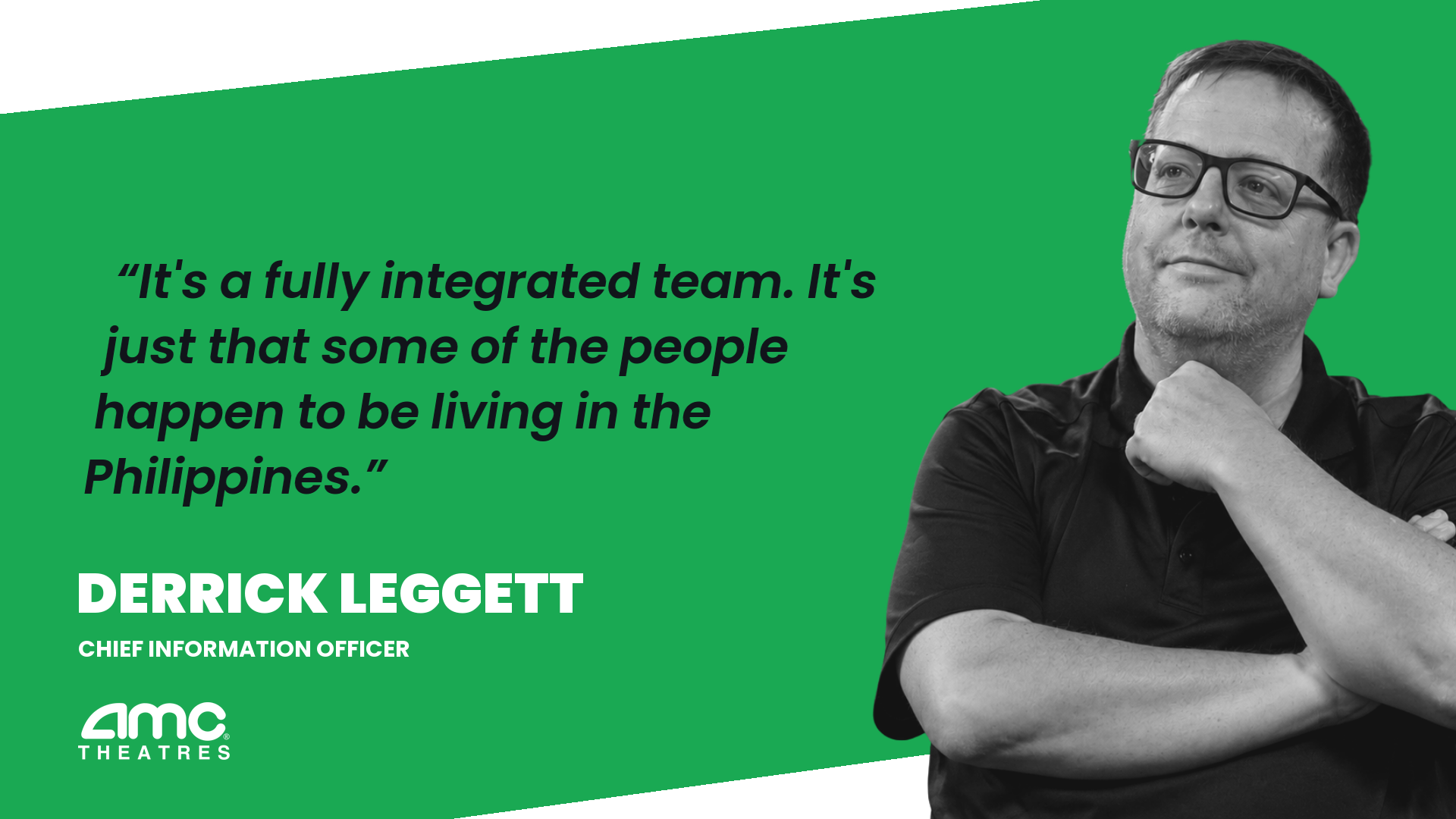
Full Scale is an iOS app development company that delivers custom iPhone and iPad builds, Objective-C to Swift modernization, App Store release engineering, and ongoing iOS support through senior Filipino developers via staff augmentation. The team behind enterprise systems at AMC Theatres. First sprint in as little as 7 days.
import SwiftUI

struct OrderListView: View {
  @StateObject var vm = OrdersVM()

  var body: some View {
    List(vm.orders) { order in
      OrderRow(order: order)
    }
    .task { await vm.load() }
  }
}iOS teams trusted by enterprises, scale-ups, and Fortune 500s

I have been building iOS apps for nearly twenty years
Back to the VinSolutions days, when we built a mobile app for car dealerships to capture customer interactions on the lot. iOS was part of the product before most car dealers had ever heard of an iPhone, and it has been part of every product I have shipped since.
I have shipped cross-platform work too, with React Native, Ionic, and Xamarin when one codebase across iOS and Android was the right call. The lesson has been consistent: if the app needs to feel like an iPhone app, it needs an engineer who actually understands the platform, the App Store review queue, and what Apple expects out of a real native experience.
Full Scale is an iOS app development company built around senior Filipino engineers and the Product Driven framework. We have hired iOS engineers in the Philippines, we test them on real iOS architecture problems rather than syntax quizzes, and we have delivered iOS app development services for fast-growing SaaS companies and Fortune 500s. If you need iOS development services from a team that actually ships to the App Store, you are in the right place.
Five reasons native iOS is the right call for this build
If you've already committed to native iOS, you don't need to read this. If you're still weighing native iOS against a cross-platform framework, or deciding whether to rebuild an aging app, these are the technical arguments that hold up in production, not in a vendor slide deck.
First-class access to Apple hardware and frameworks
Native iOS gives you direct access to the camera, ARKit, the Secure Enclave, HealthKit, the Neural Engine, and every new framework Apple ships at WWDC the day it lands. For apps that lean on the device or want to feel truly at home on iPhone and iPad, nothing matches what Swift compiled against the SDK can reach.
Performance and responsiveness you can tune
Swift compiles to native machine code with no rendering bridge, and Swift Concurrency gives you structured async/await control over threading. For apps that animate heavily, process media, or handle real-time data, you can profile in Instruments and tune in ways a cross-platform layer hides from you.
SwiftUI and a modern, Apple-backed toolkit
SwiftUI, Combine, and Swift Concurrency are mature and maintained by Apple. A declarative UI, first-class navigation, Core Data or SwiftData for persistence, and the Xcode toolchain mean a large iOS codebase stays legible as it grows instead of collapsing into massive view controllers.
The audience that spends
iOS users monetize at a far higher rate than the platform's install-base share suggests, and in North America, Western Europe, and Japan iPhone is the dominant phone. If your revenue model is in-app purchase, subscription, or premium, native iOS is usually where the money is, and building native says you take that audience seriously.
The honest trade-offs
Native iOS means a separate codebase from Android, so a two-platform product needs two teams or a cross-platform call. App Store review adds a real gate to your release cadence. When budget is tight and the app is simple on both platforms, Flutter or React Native may be the smarter spend. We will tell you when that is the case rather than sell you two native builds.
AI-powered iOS engineers, trained on Product Driven principles
Most iOS teams adopting AI are shipping more code without shipping better apps. The slop volume climbs, App Store reviews get worse, and engineers whose only skill is typing faster end up costing more in cleanup than they save in keystrokes.
Full Scale iOS developers are trained on something different: the Product Driven approach from Matt's book, combined with the full modern AI toolkit ( GitHub Copilot, Claude, Cursor, and the AI features baked into Xcode). They think first, type second, and use AI for the parts where judgment doesn't add value. That combination is rare, and it is what iOS teams should actually be hiring for in 2026.
Product Driven engineering
Our iOS engineers are trained on the five pillars from Matt's book: Vision, Focus, Clarity, Ownership, and Courage. The result is iOS developers who push back on bad product decisions, ask whether a feature should ship before building it, and own what users see on the App Store. They are not order takers.
Read Product Driven, the bookAI as a thinking partner
Every iOS engineer on our bench works with GitHub Copilot, Claude, Cursor, and Xcode's built-in AI tools every day. They use AI to explore SwiftUI options, scaffold the boring parts, generate XCTest suites, and review their own pull requests before a human ever sees them. Judgment stays with the engineer, the grunt work moves to the machine.
An iOS engineer who reaches for Copilot before thinking about the tap flow is going to ship a worse app, faster. The iOS developers I want on my team reason about the screen and the Apple platform conventions before they reach for AI, and they use AI for the parts where judgment doesn't matter. That is who we hire and train at Full Scale.

The iOS app development services we deliver across the full build lifecycle
Greenfield Swift and SwiftUI development, an Objective-C to Swift migration, App Store release engineering, Apple platform integrations, a performance fix that has been open for six months: our engineers ship across all of it. The difference is how we deliver. Every one of these iOS app development services runs through staff augmentation, so you get senior iOS engineers embedded in your team and billed for engineering hours, not a fixed-bid agency that disappears at handoff. Need Android too? See our mobile app development services. Here are the iOS development services we get hired for most often.
Custom iOS app development
Custom iOS development means greenfield iPhone and iPad builds in Swift and SwiftUI. We start with a real product model rather than a screen scaffold, so the resulting app survives the first 18 months without a rewrite and ships clean through App Store review.
Read our iOS development guideiPhone and iPad app development services
We build iPhone-first apps, iPad-first apps, and universal apps that adapt across both. Adaptive layouts, size-class handling, multitasking, and Apple Pencil support get treated as first-class problems rather than afterthoughts bolted onto an iPhone build.
Apple platform integrations
watchOS companions, App Clips, iOS widgets, Live Activities, Siri shortcuts, Sign in with Apple, Apple Pay, StoreKit subscriptions, and CloudKit sync. Our iOS engineers know which features earn their integration cost and which ones look great in a demo but die in production.
iOS DevOps and App Store release engineering
Fastlane, Xcode Cloud, Bitrise, TestFlight, signing certs, provisioning profiles, App Store Connect automation, and staged rollouts. We make App Store releases boring in the good way, with no surprise rejections on the morning of a launch.
Objective-C to Swift modernization
We run production iOS migration projects from Objective-C to Swift, and from UIKit-only apps to mixed SwiftUI and UIKit codebases. We know which third-party SDKs break in a migration, where the deprecated APIs sneak in, and how to stage the cutover without losing users.
iOS performance and debugging
Our iOS performance work covers Instruments for profiling memory, time, and rendering, MetricKit for production traces, Firebase Performance for real-user metrics, and Crashlytics deep dives when things get weird. These are skills most offshore iOS shops have never developed, so hire us when your app is slow and nobody knows why.
Mobile patterns our iOS engineers apply in production
Most offshore iOS shops deliver an app that runs in a simulator at handoff. What determines whether it survives App Store review, real devices, and 18 months of iteration is the decisions made in the first sprint. These are the patterns our engineers reach for, and the reasoning behind when each one earns its complexity.
MVVM / TCA with a Clear Domain Layer
ViewModels (or a Composable Architecture store) that hold UI state, a domain layer for business logic, and repositories that abstract the data source, so logic doesn't live inside SwiftUI views. This is the single biggest maintainability decision in an iOS app, and it survives a backend or framework change without a UI rewrite.
State & Swift Concurrency
Unidirectional state, async/await with structured concurrency, and actors to keep shared mutable state safe from data races. No nested completion handlers, no work running after a view disappears. This is how a modern iOS app stays predictable under load and passes the strict-concurrency bar.
Modularization & Dependency Injection
Swift Package Manager modules with clear boundaries and dependency injection so features stay isolated and build times stay sane as the app grows. Modules let a team work in parallel without stepping on each other, and they keep the app testable.
Navigation & Deep Linking
Type-safe navigation with NavigationStack, deep and universal links wired to the right screens, and auth and onboarding flows that survive a cold start from a push notification. Navigation is where a lot of iOS apps quietly break, so we engineer it deliberately.
Performance: Rendering, Lists, Launch
Stable identifiers and scoped view updates so a keystroke doesn't redraw the screen, lazy stacks for large lists, launch-time budgets, and Instruments for hangs and memory. Native is fast by default, but only if you respect the rendering model, so we treat it as a discipline.
Testing & Release Pipeline
XCTest unit and UI tests, snapshot tests to catch UI regressions, and tests on a real-device cloud, with Fastlane and Xcode Cloud for builds, code signing, and TestFlight to App Store delivery. Release engineering is half the work in mobile, so we build it in from the first sprint.
Opinionated takes on iOS from engineers who ship it
Most vendors tell you native iOS is the right choice for every app. We'll tell you when it isn't. These are the actual opinions we hold based on building and shipping iOS apps to the App Store, not talking points from a sales deck.
Apps that lean on Apple hardware and frameworks, camera, ARKit, HealthKit, the Secure Enclave, widgets, Live Activities. Products whose revenue comes from a premium iPhone audience. And apps where animation, responsiveness, and battery have to be tuned, not hoped for. When the platform is the product, native Swift is hard to beat.
When you need iOS and Android from one budget and the app is mostly standard screens and forms, Flutter or React Native ship both platforms from one codebase and one team. We'll tell you when a second native build is money you don't need to spend, rather than quietly bill you for two teams because that's what we staff.
We ship SwiftUI with MVVM or TCA, a real domain layer, Swift Concurrency with actors, SPM modularization, and tests on a real-device cloud. We refuse massive view controllers that hold all the logic, business rules buried in SwiftUI views, force-unwrapped optionals scattered through new code, ignoring strict concurrency until data races crash the app, and shipping with no UI tests so every App Store release is a gamble.
Objective-C-to-Swift conversions left half-finished, so the codebase straddles both languages for years. UIKit-to-SwiftUI rewrites that stall partway and leave two UI systems fighting each other. Completion-handler-to-async/await refactors abandoned midstream. And teams that let a single massive app target grow until the build takes twenty minutes and nobody will touch the navigation layer.
From first call to the App Store: how an iOS project runs at Full Scale
Staff augmentation without a delivery framework is just headcount. Here is what the engagement actually looks like from the first conversation to a shipped app and the ongoing work that comes after.
We scope the engagement together: what to build first, what specializations to staff, what the first sprint should deliver. You walk away with a staffing plan and a candidate shortlist, not a 40-page requirements document.
You interview our pre-vetted candidates and select who starts. We handle employment, payroll, and equipment setup on the Philippines side. Your engineer gets access to your repo, your tools, and your standups. First commit typically happens within the first week.
Your engineer works in your sprint cadence, under your tech lead, committing to your repo with a build on every PR. You see the work in progress on a real device, not at a scheduled demo. Architecture decisions happen in your standups, not behind a project management wall. The sprint velocity is yours to direct.
Our engineers test as part of delivery, not as a post-sprint cleanup task. XCTest unit and UI tests, snapshot tests for UI regressions, and tests on a real-device cloud, with crash reporting wired in. AI-assisted PR review (Copilot, Cursor) before human review. Code that ships is code that's been tested on real hardware.
Your engineers own App Store submission and the release pipeline: code signing, Fastlane or Xcode Cloud builds, TestFlight beta, phased rollout, and crash monitoring with Crashlytics or Sentry. They stay on after launch. Post-launch bugs go into your backlog like any other work, not into a 'warranty period' clause in a contract.
How an iOS development project starts at Full Scale
No discovery phase you pay for before a line is written. No 6-week RFP process. We scope in a single call, assemble pre-vetted engineers (here's how we vet engineers), and have a build running in the first week.
Scoping call
30 minutes. We learn what needs to be built, what's already in the codebase (if anything), what the first sprint should deliver, and what specializations the project needs. We don't pitch on this call. We scope.
Team assembly
We pull 1–3 pre-vetted iOS engineers whose skills, seniority, and prior project experience match what the project requires. You see their full profiles and actual project history before the interview.
Technical interview
You interview candidates the way you would any senior hire: live Swift and SwiftUI design, concurrency and performance questions, and iOS-specific technical depth. Pass on anyone you don't believe in. We keep looking.
Contracts & setup
One contract with Full Scale. We handle all employment, payroll, equipment, and HR logistics in the Philippines. Your engineer gets repo access, tool access, and sprint 1 is planned.
First delivery
Your engineer joins your standups, commits to your repo, and ships a build in the first week. Our delivery team stays in the loop through ramp-up to make sure velocity doesn't stall. They own the work through launch and beyond.
Signing a contract is not the same as shipping an app
Most iOS outsourcing failures aren't engineering failures. They are delivery model failures. The fixed-bid agency model creates incentives that work against you: speed over quality, handoffs over ownership, scope control over outcomes. Staff augmentation realigns those incentives. Here are the six ways the agency model breaks down on real mobile projects.
Fixed-bid scope creep destroys budgets
Agencies win the bid with an optimistic estimate, then recover their margin through change orders. Every requirement that wasn't in the original spec becomes a billable revision. By go-live, the 'fixed' price has doubled and the relationship is adversarial.
The agency disappears after handoff
Fixed-bid projects end at App Store submission. The engineers who built your app move to the next bid. You own every crash, every iOS version that breaks a framework, and every App Store rejection without the institutional knowledge of the people who built it. Post-launch support becomes a new contract negotiation.
No visibility until it's too late to change
Black-box delivery means you see the app at the end of a cycle or, worse, at handoff. By the time you learn it only really works in the simulator, the architecture is already built around it. Staff augmentation keeps engineers in your repo and your standups, building on real devices, from day one.
Speed incentives drive wrong architecture
Fixed-bid agencies are paid to ship fast, not right. That means a massive view controller that holds all the logic, business rules buried in SwiftUI views, no UI tests, and force-unwrapped optionals that crash in production. You inherit an app optimized for handoff, not for the App Store.
Engineer rotation breaks continuity
Agencies staff projects with whoever is available, not whoever is best-matched. Project managers cycle. The developer who built your navigation and state layer gets rotated to another engagement. New engineers inherit code they didn't write, and the velocity cliff arrives around sprint 8.
Production failures become "out of scope"
A hang on older iPhones, a crash after an iOS update, an App Store rejection nobody planned for, agencies classify these as new work. With staff augmentation, your engineers own what they shipped and have incentive to build it right the first time.
iOS expertise tuned to your industry
As an iOS app development company that has been around for over a decade, we have placed dedicated iOS developers into nearly every industry that ships an iPhone or iPad app. Domain knowledge cuts onboarding time in half, so we match developers to projects where they have already shipped real code.
Media & Entertainment
Media and entertainment iOS apps are high-traffic, customer-facing, and unforgiving of bad releases. We staff iOS teams behind ticketing apps, streaming clients, loyalty apps, and second-screen experiences, where a one-star App Store review on launch day is a real business problem.
From SwiftUI to StoreKit to watchOS and App Clips
Whether you want to hire iOS developers for a greenfield SwiftUI build, hire Swift engineers for a legacy Objective-C modernization, or outsource iOS development on a watchOS companion app, the bench covers every layer of the Apple stack. Pick what you need. We will match an iOS developer fluent in it.
Hire dedicated iOS developers, two ways
Most clients start with a single dedicated iOS app developer and grow into a full team. Either way, you get full-time engineers who sit on your standups, work your hours, and ship Swift code against your roadmap. Both options are our staff augmentation model at the core: dedicated, long-term engineers embedded in your team rather than freelancers, shared resources, or a project shop on the side. See the full breakdown of how we hire dedicated iOS developers across every engagement we staff.
Dedicated developer
Full-time, exclusive, sits on your standups.
- Full-time iOS engineer assigned only to your project
- Works your hours, your tools, your codebase
- Joins your standups, reports to your tech lead
- We handle payroll, HR, equipment, retention
- Two-week money-back guarantee
Dedicated team
Multiple engineers, embedded as a pod.
- 2-8 iOS engineers staffed together as one pod
- Optional QA, DevOps, backend, and tech lead included
- Operates as a team inside your engineering org
- Scale up or down by a head with 30 days notice
- Account manager you can escalate to in the US
Dedicated iOS developers, starting at $35 an hour
That rate is fully loaded. Every engineer we staff on your mobile project is a senior iOS developer in the Philippines working full-time under your direction, and we cover the payroll, benefits, HR, and equipment. The same role hired locally in the US costs $150K to $200K a year, which is the delivery math that brings most teams to the table.
- Full-time, dedicated iOS engineer
- Pre-vetted by senior iOS reviewers
- Works your hours, your tools, your codebase
- Payroll, HR, equipment, benefits handled by us
- US-based account manager you can escalate to
- Two-week money-back guarantee if it isn't a fit
Full Scale has made the Inc. 5000 five years in a row and is Great Place to Work certified. We have been doing this since 2018, and pricing isn't the only reason clients stay with our iOS app development company, it's the easiest reason to call.
Why we deliver iOS apps from the Philippines
Every iOS app we deliver is staffed from the Philippines. You can also hire dedicated developers in the Philippines across every other stack we staff, with the same vetting bar, retention numbers, and engagement model that iOS clients get.
English-fluent by default
The Philippines is the third-largest English-speaking country in the world. Standups, code reviews, and product calls work the way they do with any US team member.
Real time-zone overlap
Most of our iOS engineers shift their hours toward the US business day, giving 3-4 hours of real-time overlap with East and West Coast teams, so decisions happen live during shared hours rather than crawling through 24-hour async handoffs.
Deep iOS talent pool
Cebu and Manila produce tens of thousands of CS and IT graduates a year, and a substantial share of them go straight into Swift, SwiftUI, and iOS work. The country has been a serious iOS development hub since the App Store opened.
Cultural alignment with US teams
Filipino engineers grow up on US business norms, US TV, and US tech culture, so agile rituals, direct feedback, and collaborative workflows feel familiar from day one. These teams integrate fast rather than needing constant management.
Staff augmentation vs the other ways to get an iOS app built
Every mobile delivery model has a different set of trade-offs. Fixed-bid agencies offer a contract; consultancies offer a proposal. Staff augmentation offers engineers who embed in your team and work under your direction from day one. Here is how those models compare on the things that actually determine whether an iOS app succeeds.
| Factor | Full Scale (staff aug) | Fixed-bid agency | Consultancy / SI | Build in-house |
|---|---|---|---|---|
| Time to first sprint | 7 days | 4-8 weeks | 6-12 weeks | 3-6 months |
| You control architecture decisions | ||||
| Visibility into work in progress | ||||
| Engineers dedicated full-time to your project | ||||
| Scope flexibility when requirements change | ||||
| Budget predictability | ||||
| Engineers own what they ship post-launch | ||||
| You own all IP from day one | ||||
| Engineer continuity across the project | 93%+ retention | varies | low | varies |
| Fully-loaded cost vs US in-house team | ~40-50% | ~60-80% | ~100-150% | 100% |
The numbers behind an iOS staffing partner that actually works
From the people we actually staff teams for
With Full Scale's developers, we transformed the commercial real estate landscape. Their team's proficiency in agile development and proactive communication accelerated our product release.
The team at Full Scale brought our vision to life with their development skills. They helped us navigate technical requirements with ease, resulting in a robust platform our users trust.
Deeper guides to iOS development and architecture
Offshore iOS development
When offshoring iOS work is the right move, and how to do it well.
Outsource iOS development
How to outsource iOS development without losing control or quality.
Nearshore vs offshore
When each model wins, from a CEO who has run both.
Outsourcing vs offshoring
The distinction most CTOs get wrong, and why it matters.
What offshore development really costs
The real numbers behind offshore rates and total cost.
The ROI of offshore development
The math behind 50-70% development cost reductions.
Everything you wanted to know about iOS app development services
Get iOS app development services from a team that has actually shipped to the App Store before
30-minute discovery call with the iOS app development company that delivers custom iPhone and iPad builds, Objective-C to Swift migrations, and App Store release engineering through dedicated developers from the Philippines. We'll learn what you're building, walk you through which Swift, SwiftUI, and UIKit engineers are on the bench, and you'll meet candidates within a week. You won't get pressure or a sales pitch on the call.