
The Real Benefits of IT Outsourcing (and the One Mistake That Kills Them)

In this article
- What IT outsourcing actually buys you
- The cost benefit, with real numbers
- The one mistake that kills every benefit
- The benefit most lists miss: a team that stays
- Project vs. team: the model decides whether the benefits compound
- How to actually capture the benefits
- Frequently asked questions
- Ready to outsource the right way?
Quick Answer: The real benefits of IT outsourcing are cost, access to talent you can’t hire locally, speed, scale, and the focus that comes from not managing every hire yourself. Those benefits only compound when the engagement is set up as a real team relationship, not a project handed off and forgotten. The one mistake that kills all of them is picking a partner on price alone; Full Scale has seen an $8-an-hour “steal” turn into more expensive rework than a vetted $35-an-hour developer would have cost from the start.
I have sat on all three sides of IT outsourcing, and I can tell you the benefits are real.
I have been the buyer, hiring out WordPress builds and an Elasticsearch project because they were small and well-scoped and I didn’t want to learn that stack myself. I have been the founder who needed engineers fast and ended up building a team in the Philippines that helped get Stackify to an exit. And now I run Full Scale, one of the IT solutions companies in the Philippines, where we have placed more than 700 developers with clients since 2018 and keep 93% of them year over year. For a .NET shop, that is how you hire dedicated C# developers at a fraction of US cost without losing retention.
So when I read the usual “9 benefits of IT outsourcing” listicle, I don’t disagree with the list: cost, talent, scalability, focus. Those benefits are genuine. If you are comparing an IT staffing agency against building a dedicated team, the cost over two years usually favors the team.
They are also conditional. Every one of them can evaporate if you make a single mistake, and most of the companies that tried outsourcing once and swore it off made exactly that mistake. This post covers the benefits that are real, and the one thing that quietly kills all of them.
What IT outsourcing actually buys you
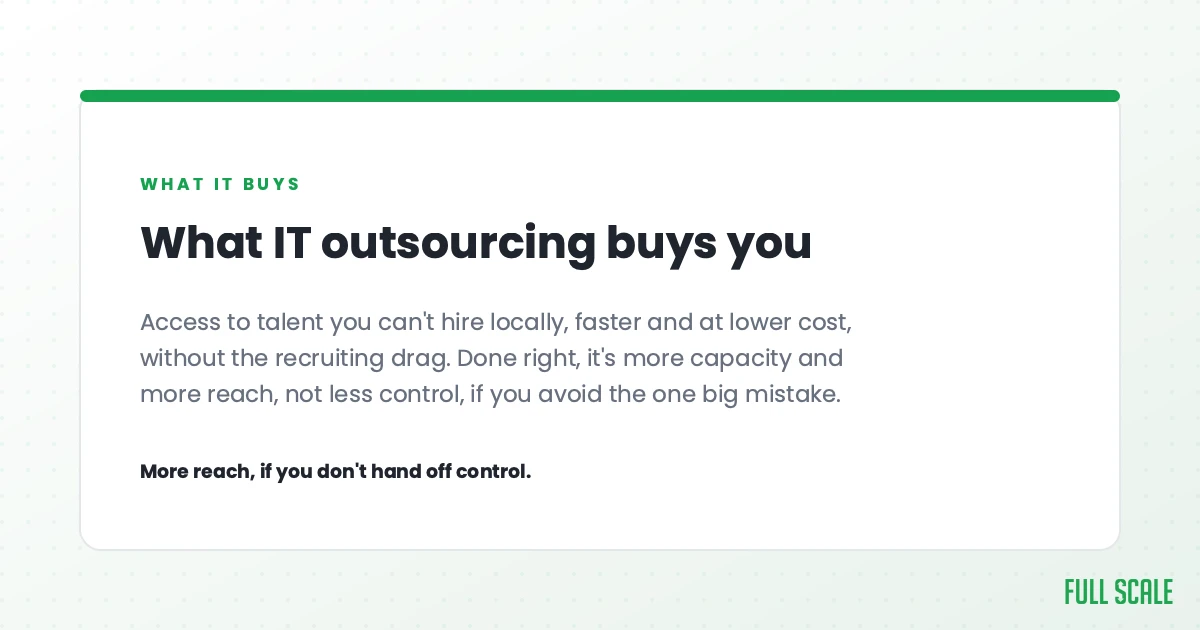
Strip away the marketing and the real benefits of IT outsourcing come down to five things. Each one is true. Each one also comes with a condition that the brochures leave out.
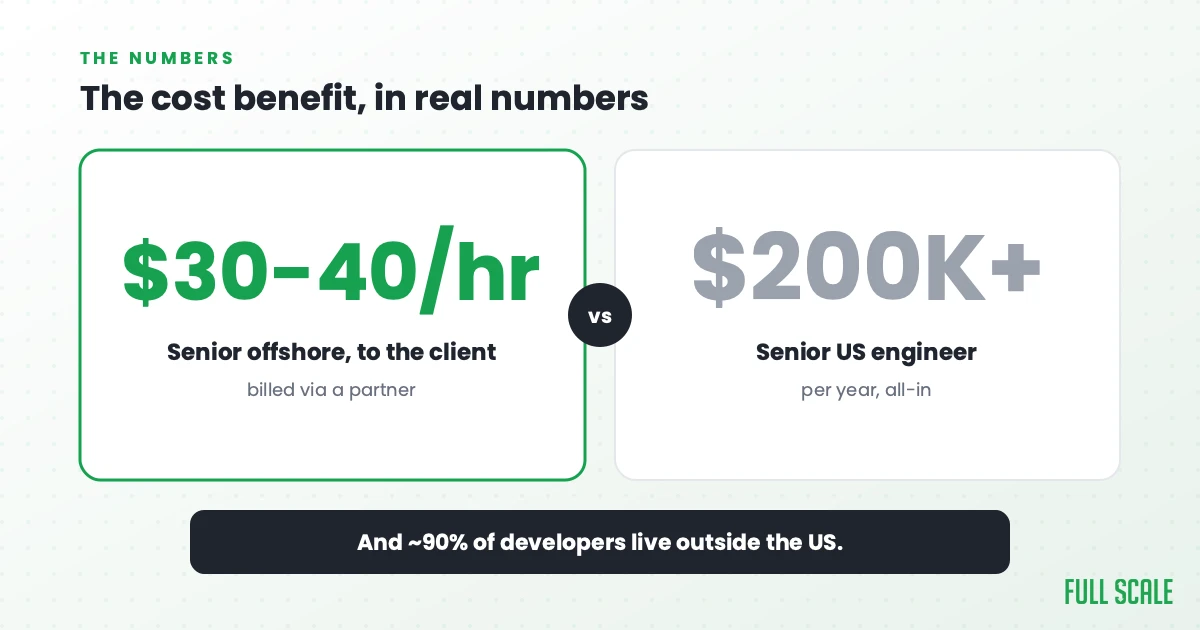
Lower cost. This is the reason most companies start looking, and the savings are large. A senior US engineer runs you well over $200,000 a year once you add benefits, payroll taxes, equipment, and recruiting on top of base salary. A senior engineer in the Philippines doing the same work costs a fraction of that. The condition: this is cost-of-living arbitrage, not skill arbitrage. You are not buying a worse developer for less money. You are buying an equally good developer who lives somewhere cheaper. I dig into the full math in our piece on offshore ROI.
Access to talent you can’t hire locally. Roughly 90% of the world’s software developers live outside the United States, per GitHub’s Octoverse data and SlashData’s global developer counts. If you only recruit inside your zip code, you are fishing in the smallest pond there is. Outsourcing opens up the other 90%. That shift from cost to talent is the biggest of the IT outsourcing trends I’m watching in 2026.
Speed. Hiring a senior developer in the US can take months between the search, the interviews, and the notice period. We put vetted senior engineers in front of clients in days and onto the team in about two to three weeks. When you need to ship, that gap matters more than the hourly rate.
Scalability. You can add three engineers for a six-month push and not carry that payroll forever. You can also grow a team steadily as the product grows, without running a recruiting department to do it.
Focus. Handing the work you don’t want to own to people who do own it frees your core team to spend time on the product only you can build. That is the whole point.
Notice that none of these benefits is automatic. They show up when the engagement is set up right, and they disappear when it isn’t.
The cost benefit, with real numbers
Cost is the headline, so it’s worth getting specific instead of waving at “savings.”
Here is the math I actually use. The US Bureau of Labor Statistics puts the median software developer salary around $133,000, with senior engineers landing closer to $150,000 to $185,000 in base pay. Then you load it. MIT’s rule of thumb is that a real employee costs 1.25 to 1.4 times base salary once you add benefits, taxes, equipment, and overhead. Run a senior engineer through that and you are at roughly $200,000 a year, all in.
A senior Filipino engineer earns somewhere around $15 to $30 an hour in local pay. We bill clients $30 to $40 an hour for that engineer’s time. Compare that to the $80 to $150 an hour a loaded US senior hire effectively costs you and the gap is obvious.
| Senior engineer | Effective cost to you |
|---|---|
| US hire, fully loaded | $80–$150 / hour (roughly $200,000+ / year all-in) |
| Filipino engineer through a partner | $30–$40 / hour |
| What the Filipino engineer is paid locally | $15–$30 / hour |
That is 50 to 70% less for the same caliber of work. Not because the developer is worth less, but because their rent, their groceries, and their cost of living are a fraction of yours. My brother-in-law in the Philippines works at Jollibee, the country’s biggest fast food chain, for about $1.25 an hour. A salary that looks low on a US spreadsheet is life-changing where the developer actually lives.
The one mistake that kills every benefit
Here is the mistake. You let cost become the only reason you outsource.
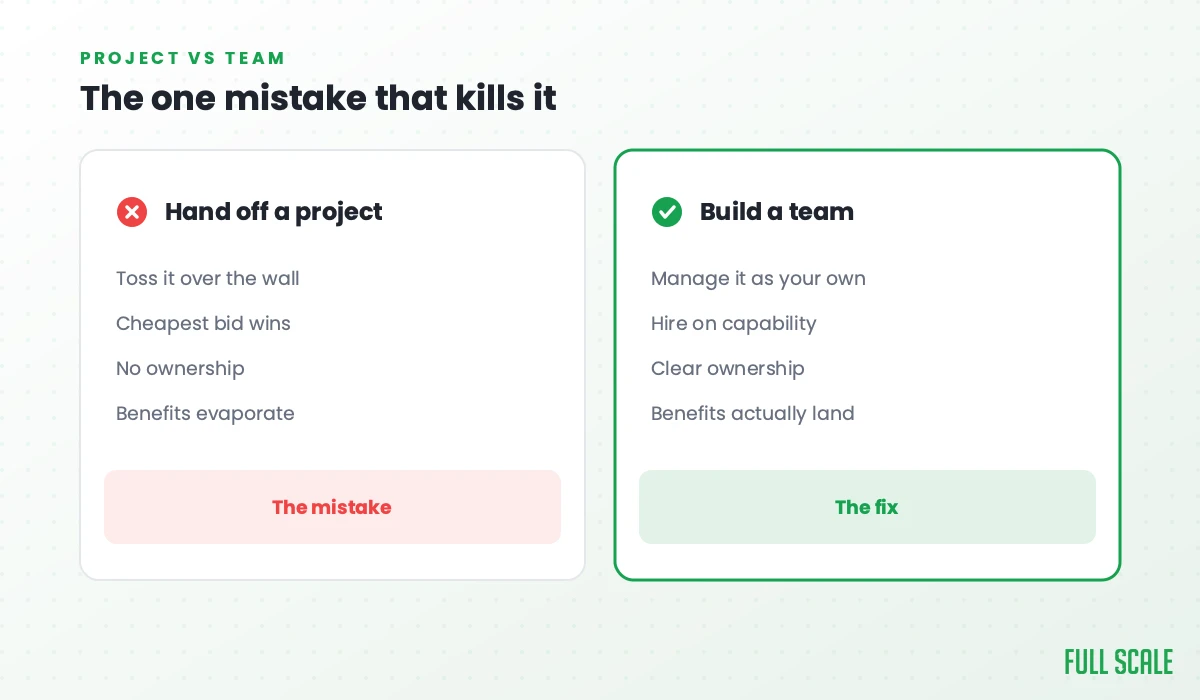
I call this cheapshoring, and it is the fastest way to lose every benefit I just listed. If cheap is the only thing you are optimizing for, you will buy the cheapest thing available, which is a freelancer who vanishes mid-sprint or a project shop that bills for ten people while three do the work. You will get burned once, and then you will join the long line of people who tried offshore, hated it, and decided the whole model is broken.
The model isn’t broken. The buying decision was. I wrote a whole piece on cheapshoring because I watch companies make this exact mistake every year.
Think about what happens to the five benefits when cost is your only filter. The cost savings get eaten by rework. The talent you hoped for turns out to be a junior pretending to be senior. The speed disappears because you are managing chaos. The scalability becomes a revolving door of people who don’t know your code. And your focus is gone, because now you are spending every morning untangling what the cheap option broke overnight.
Cost is a real and legitimate reason to outsource. It just can’t be the only one. The order that works is communication first, then cost, then country. Get a team that communicates well, at a cost that makes sense, in a place that overlaps your hours enough to work together. Lead with cost alone and you optimize for the wrong thing.
The benefit most lists miss: a team that stays
Walk down any “benefits of IT outsourcing” article and you will see cost, talent, and scalability. You will almost never see the benefit that matters most over the life of a real product: people who stick around.
Software is not a one-time project for most companies. It is an ongoing thing that needs people who know how it works, why it was built that way, and where the bodies are buried. Every time a developer leaves, that knowledge walks out with them, and the next person spends months relearning it. Constant churn is expensive in a way that never shows up on the invoice.
This is where the right partner earns its keep. Our developer retention runs 93%, in a country where call-center and outsourcing attrition is famously brutal, often 30% or higher. We hold onto people through real recruiting, mentoring, and treating them like employees instead of disposable headcount. A team that stays is also a security benefit. The fewer hands rotating through your codebase, the fewer chances something leaks or breaks.
There is a contract benefit here too that nobody talks about. When you work with a real US-based partner, your agreement is with a US company under US law. If anything ever goes wrong with your code or your data, you are dealing with a reachable, accountable entity, not trying to figure out which country a freelancer disappeared to. That is more legal protection than you get handing your source to a stranger, not less.
Project vs. team: the model decides whether the benefits compound
The single biggest factor in whether outsourcing pays off is the model you choose, and most people never consciously choose one.
Project outsourcing means you hand a vendor a spec and they hand you back software. It works for the small, well-defined stuff. The WordPress and Elasticsearch projects I outsourced years ago were perfect for it, because the scope was clear and I never had to touch them again.
Staff augmentation is the other model, and it is the one that makes the benefits compound. Instead of throwing work over a wall, you add developers directly to your own team. They join your standups, your code reviews, your Slack, your roadmap. You manage them like your own engineers, because functionally they are.
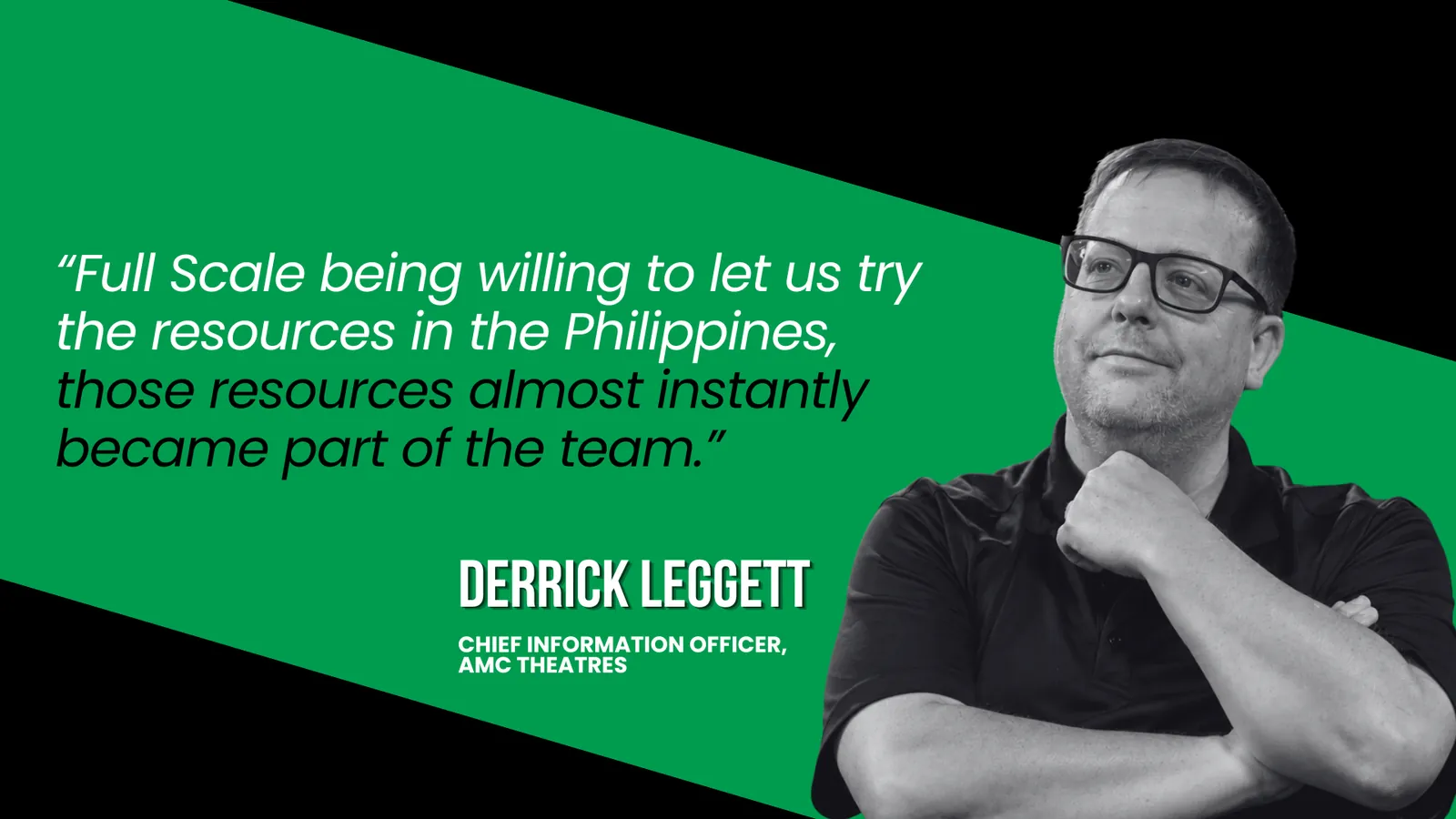
The difference is night and day for ongoing product work. AMC Theatres has run this way with us for years, and their CIO Derrick Leggett put it better than I can: “It’s a fully integrated team. It’s just some of the people happen to be living in the Philippines.” That is the whole idea. There is no vendor wall, no account manager translating between your team and the developers, no parallel project-management layer adding 30% overhead for nothing.
If you want the cost savings without the integration headache, staff augmentation is almost always the answer. If you have a genuinely scoped, hand-it-off project, the project model is fine. What you don’t want is to hire a project shop and then expect it to behave like an integrated team, because that mismatch is where the benefits go to die.
How to actually capture the benefits
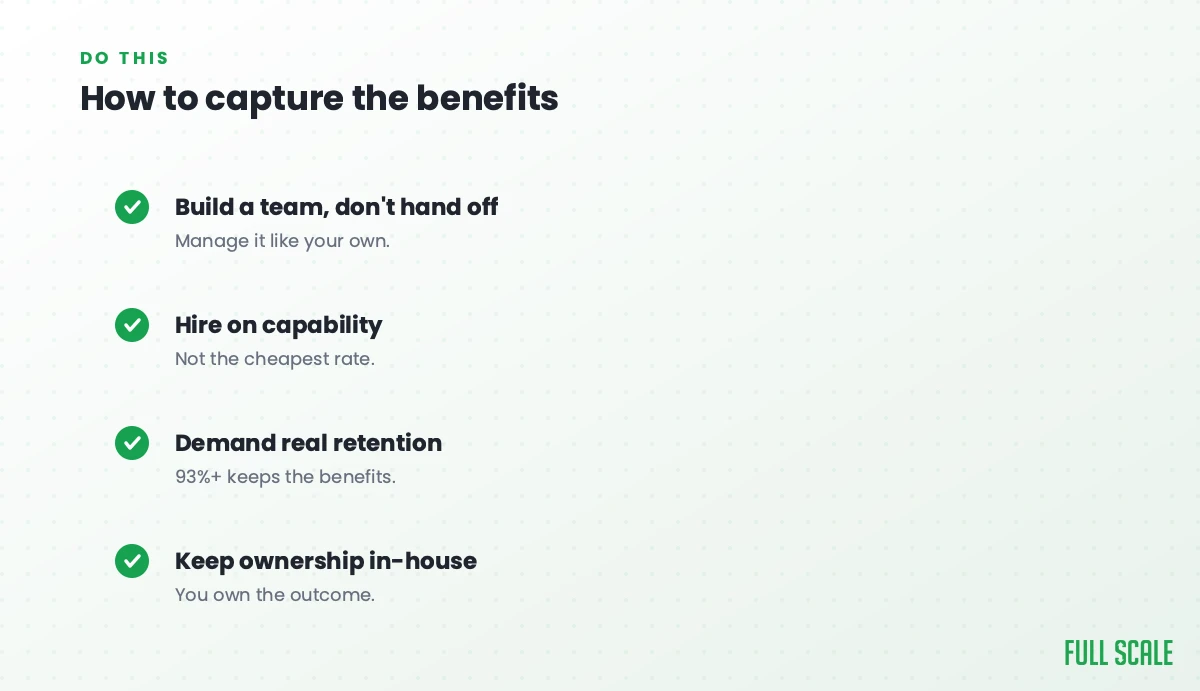
The benefits of IT outsourcing are not a gift you receive for signing a contract. They are an outcome you earn by setting the engagement up right. A few things to look for in a partner:
- They recruit the people you can’t reach. The best developers already have jobs and don’t answer job postings. A good partner has real recruiters who pull passive candidates away from their current employers. That is the difference between a senior engineer and whoever happened to apply.
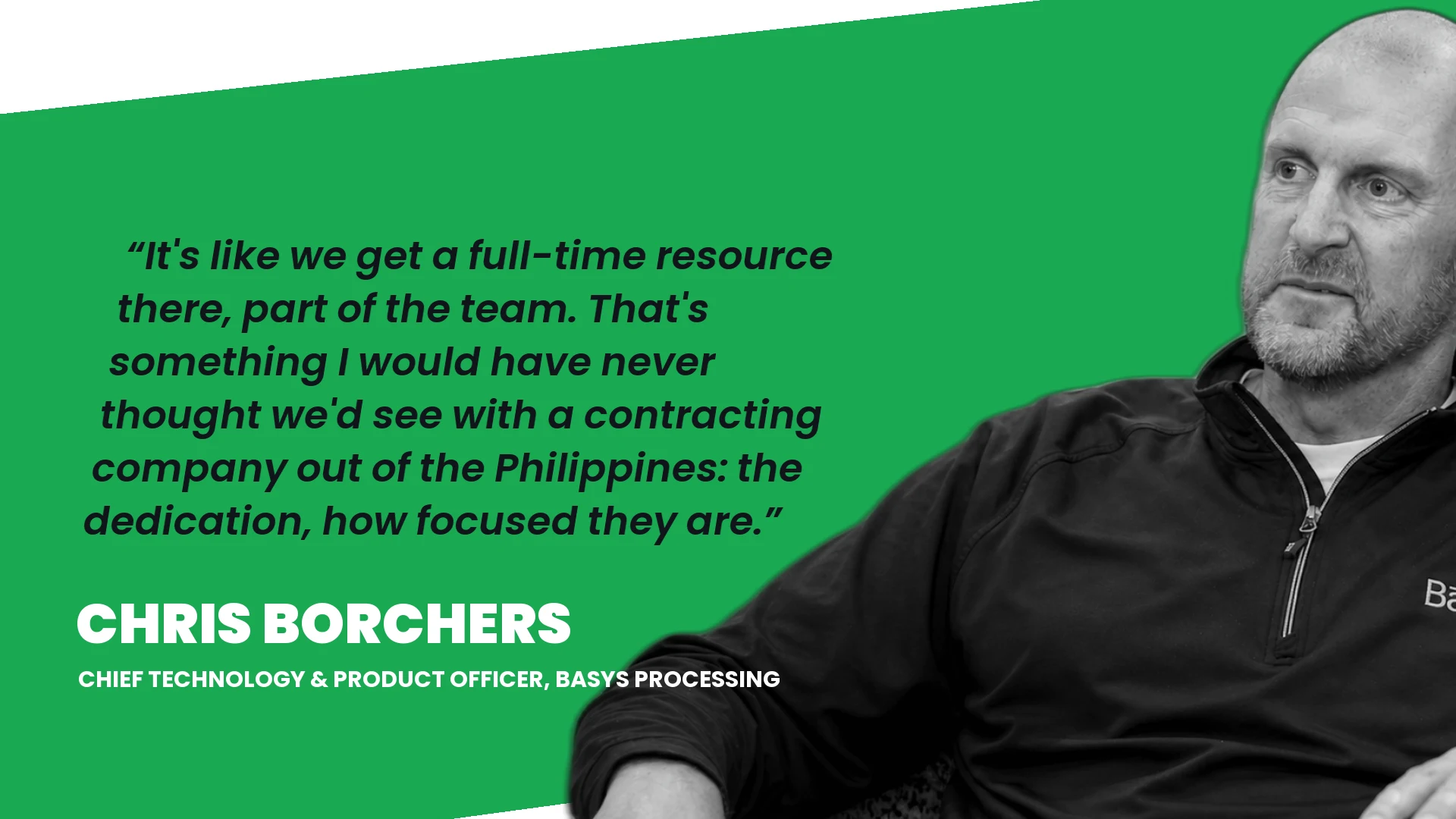
- They manage and retain. Ask what their retention rate is and how they get it. Hiring is the easy part. Keeping good people on your team for years is the part that actually saves you money.
- They communicate. This is first on the list for a reason. Test it in the first conversation. If you struggle to follow a sales call, you will struggle to run a sprint.
- They put a real entity behind the work. Contracts, background checks, IP assignment, a legal presence where the developers actually are. This is what turns offshore from a risk into a managed one.
Do this and the cost savings, the talent, the speed, the scale, and the focus all show up together. Skip it and you get the cautionary tale.
If you want to think this through against your own situation, the honest pros and cons of outsourcing are worth a read, and a lot of the same thinking runs through my book, Product Driven.
Frequently asked questions
What are the main benefits of IT outsourcing?
The core benefits are lower cost, access to a much larger talent pool, faster hiring, the ability to scale a team up or down, and freeing your core people to focus on the work only they can do. All of them are real, but they depend on choosing the right engagement model and a partner who recruits, manages, and retains good people rather than just selling you the cheapest hours.
Is IT outsourcing actually cheaper than hiring in-house?
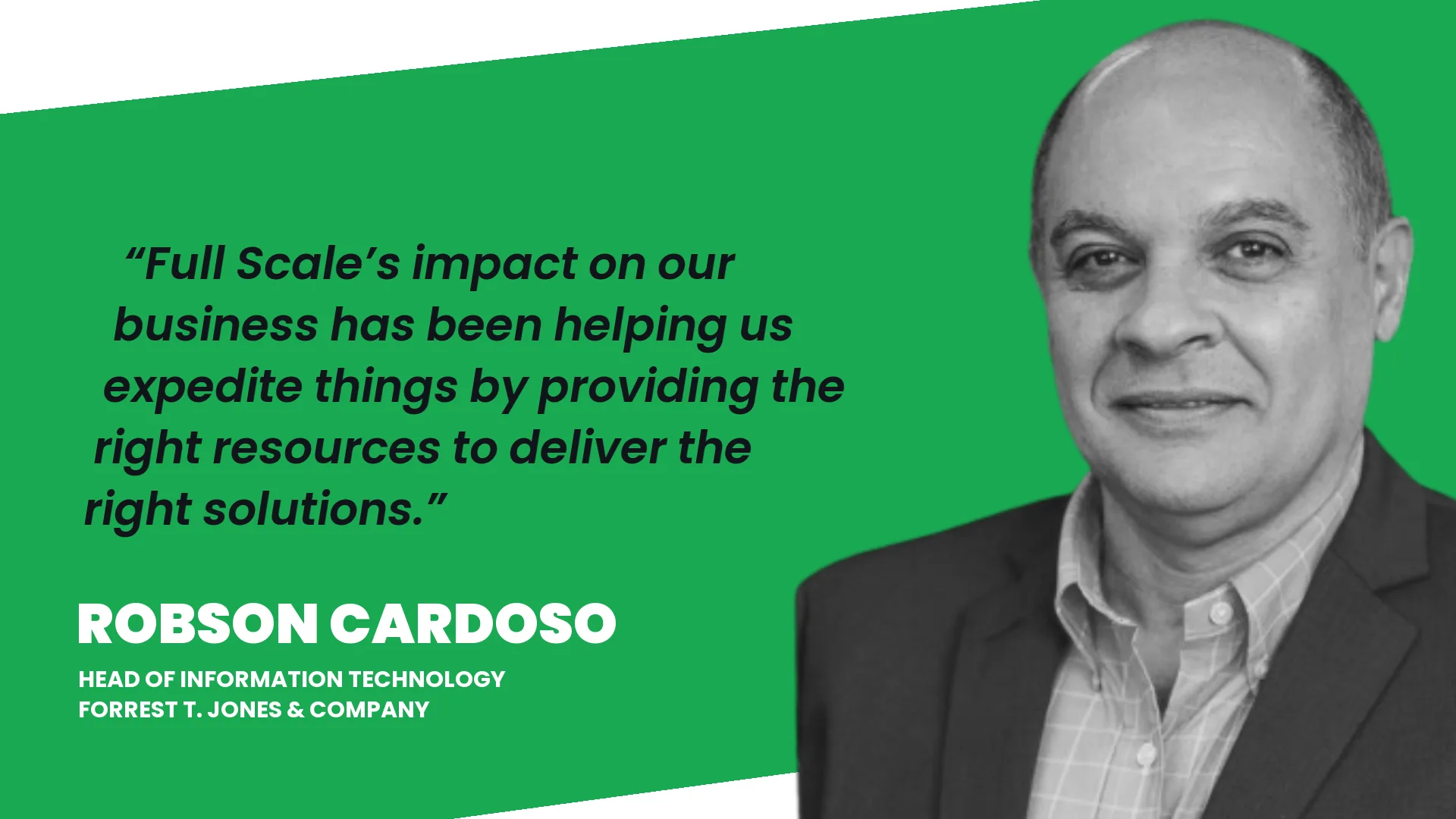
Yes, usually by a wide margin. A loaded senior US developer costs over $200,000 a year, while a senior engineer in the Philippines doing the same work costs a fraction of that, roughly 50 to 70% less. The savings come from cost-of-living differences, not from hiring a less capable developer. The savings only hold up if rework and turnover don’t eat them, which is why the cheapest option is rarely the actual bargain.
What is the biggest risk of IT outsourcing?
Choosing a partner on price alone. When cost is your only filter, you end up with freelancers who disappear or project shops that overbill, and the failed engagement costs you far more than you saved. The fix is to weigh communication and the partner’s ability to retain talent ahead of the hourly rate.
What’s the difference between IT outsourcing and staff augmentation?
Traditional outsourcing hands a vendor a project and waits for the result. Staff augmentation adds developers directly to your existing team, where they work under your direction inside your tools and process. For ongoing product work, staff augmentation gives you far more control and is usually the model that makes the benefits last.
Do the benefits and risks of outsourcing change at different stages of a company?
Yes. An early-stage startup gets the most from speed and talent access, since it usually cannot afford or attract senior engineers locally, and the biggest risk is losing product context to a vendor who does not understand what you are building. A growing company leans harder on cost and scale as headcount needs climb, with the main risk being a team that never gets integrated into how you actually work. A mature or enterprise team benefits most from focus, freeing internal engineers for the work only they can do, and the risk shifts to vendor lock-in and quality control across a larger, harder-to-audit relationship. The model does not change with stage. The failure mode, treating outsourcing as a transaction instead of a team, does not either.
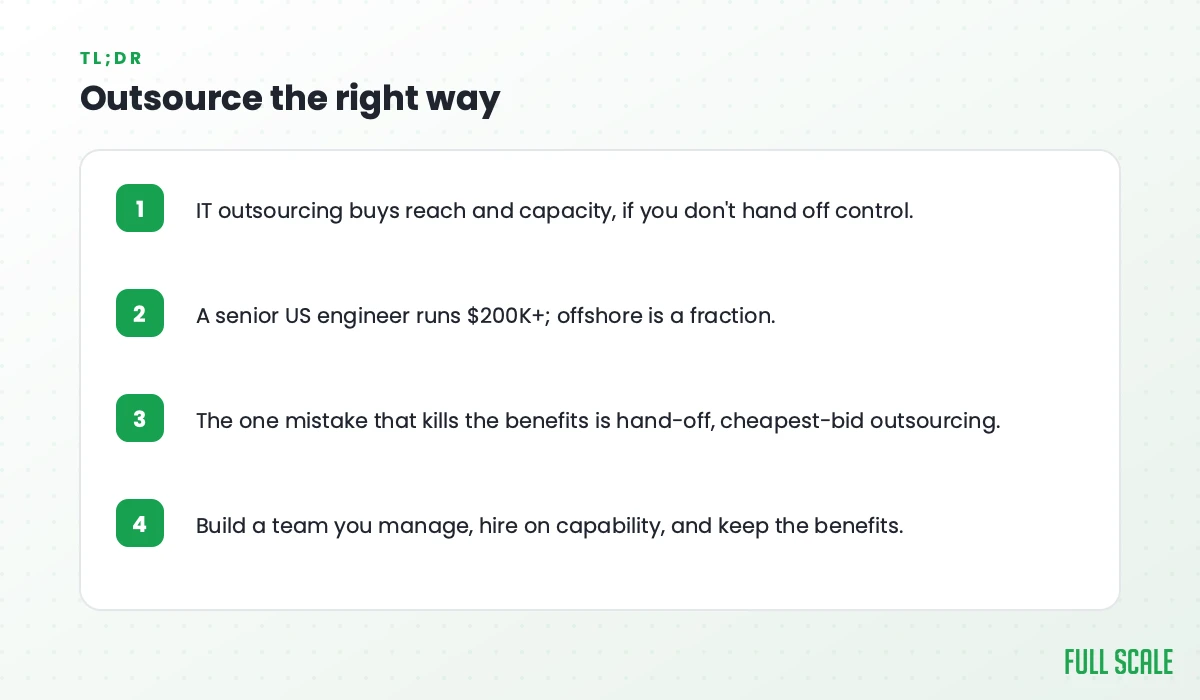
Ready to outsource the right way?
The benefits of IT outsourcing are real, and they are also yours to lose. Get the model and the partner right and you get senior talent, real savings, and a team that sticks around. Get them wrong and you get the horror story.
If you want senior engineers who join your team instead of hiding behind a vendor wall, book a 15-minute discovery call and we’ll talk through what you’re trying to build.