What Does a Chief Information Officer Do?

In this article
- What is a Chief Information Officer?
- What does a Chief Information Officer do?
- CIO vs CTO: what’s the difference?
- Chief Information Officer salary
- When does your company actually need a CIO?
- The skills that separate a great CIO
- How to become a CIO
- What a modern CIO actually looks like
- FAQ
- If your tech leaders are buried, fix capacity first
Almost every company runs on technology now, and at some point a founder or CEO asks the same question: who actually owns all of it? Who is accountable when the systems break, the data leaks, or the tooling can’t keep up with the business?
That person is usually the chief information officer (CIO).
I’ve spent twenty-plus years on the technology side of companies, as the co-founder and CTO of VinSolutions, the founder of Stackify, and now the CEO of Full Scale. I’ve watched the CIO role get redefined more than once, and I’ve watched plenty of companies hire one before they needed one, or lean on a CTO to do the job for years longer than they should have. So this is both a plain answer to “what does a CIO do” and a practical take on when your company needs one.
Quick Answer: A chief information officer (CIO) is the senior executive who owns a company’s internal technology and information systems: the infrastructure, the data, the security, and the tools the business runs on every day. The CIO keeps that technology aligned with where the company is going and protects it from outages, breaches, and data loss. Most early-stage companies don’t need one; a CTO or VP of Engineering usually covers it until internal systems and compliance get complex enough to need a dedicated owner. Full Scale helps technology leaders add engineering capacity so they can focus on that strategic work instead of getting buried in hiring and ticket triage.
What is a Chief Information Officer?
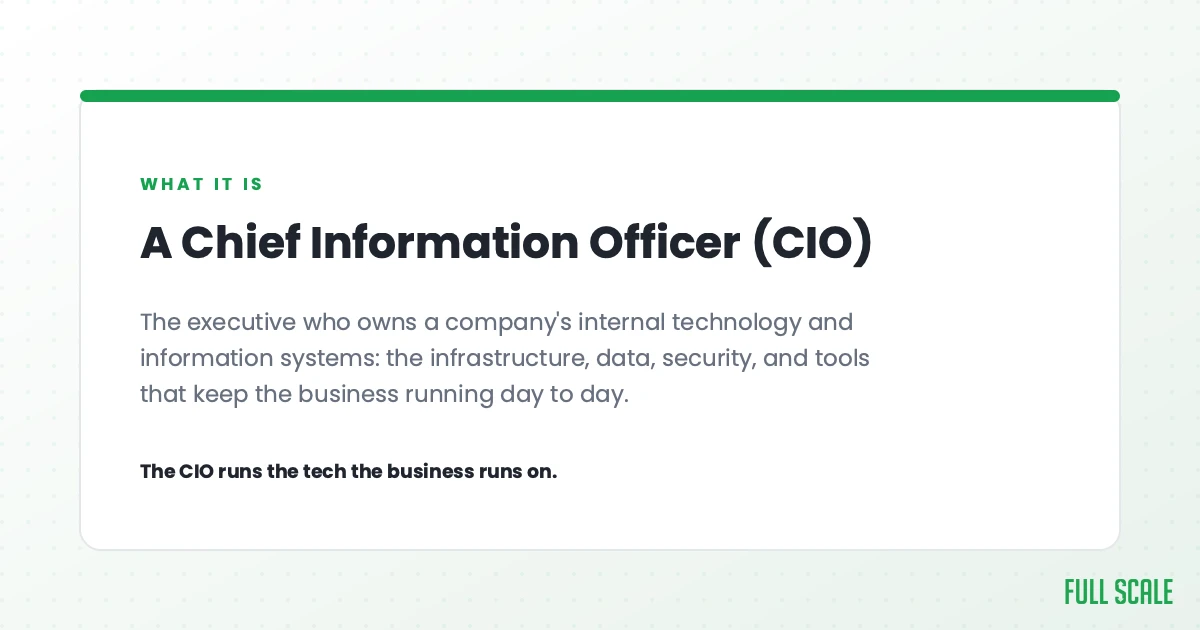
The chief information officer is the senior executive who owns a company’s internal technology and information systems: the infrastructure, the data, the security, and the tools the business runs on every day. The CIO makes sure all of that supports where the company is trying to go, and adapts it when the business changes direction.
The position bridges the gap between what customers and the business need and what technology can deliver. The CIO also controls IT costs and protects the organization from the risks that come with running on software: outages, breaches, and data loss.
The role first appeared in the 1980s, when the job was mostly technical: maintaining databases, internal computers, and local networks. As cloud computing, mobile, data analytics, and now artificial intelligence reshaped how companies operate, the CIO’s mandate grew from “keep the systems running” to “use technology to move the business forward.”
What does a Chief Information Officer do?
The exact job description varies from one company to the next, but the core responsibilities are consistent. A CIO usually owns:
- The planning and rollout of the company’s information and communications technology (ICT)
- IT systems and operations, including uptime, so that outages and downtime don’t stall the business
- The IT budget and how technology dollars get spent
- IT staff: hiring, developing, and keeping the team’s skills competitive
- Security policies, data governance, and the procedures that keep company systems functional and protected
- Vendor and contract relationships with the third parties that supply IT systems
- Staying current on business technology trends and deciding which ones are worth adopting
What’s changed most is where the CIO spends their attention. Three responsibilities that were once footnotes are now the center of the job. The first is cybersecurity and data governance: the CIO is accountable for protecting company and customer data, and a breach lands on their desk. The second is digital transformation, the work of modernizing old systems and processes so the company can move faster. The third is artificial intelligence: deciding where AI belongs in the business, what’s safe to adopt, and how to keep the organization from falling behind. By 2026 that AI mandate has become so central that some companies now split off a chief AI officer, and CIOs are increasingly judged on whether AI produces real business results, not pilots. In most companies the CIO reports directly to the CEO and works alongside the other C-suite executives, especially the chief financial officer and the chief technology officer.
CIO vs CTO: what’s the difference?
People mix these up constantly, and in a small company they’re often the same person. The clean way to separate them: the chief technology officer (CTO) usually owns the technology you sell, the product and the engineering behind it, while the CIO owns the technology you run on internally, the systems, data, and tooling that keep the company operating. At a software company the CTO is building the product; at a hospital or a retailer the CIO is running everything from the point-of-sale systems to the data warehouse. If you want the full breakdown, we cover it in CIO vs CTO, and the chief technology officer role has its own guide.
Chief Information Officer salary
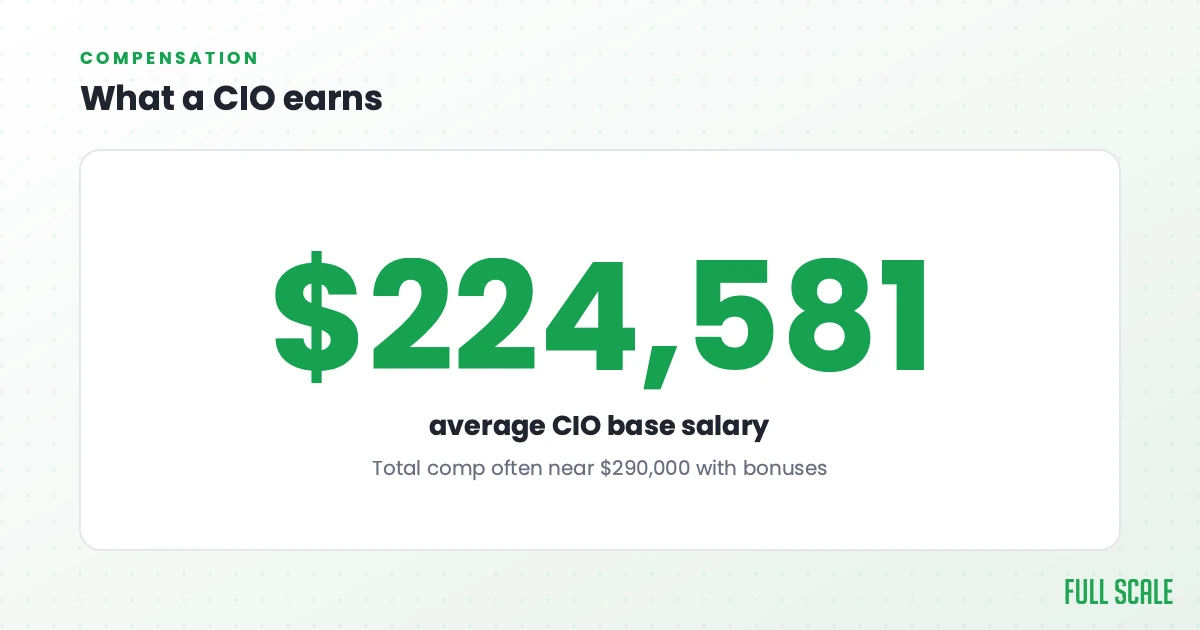
CIO pay lands high, but the published averages vary because they measure different things. Base pay clusters in the low-to-mid $200,000s, and total compensation climbs toward $290,000 to $300,000 once bonuses and cash incentives are added. Built In puts the average base between about $216,000 and $228,000 depending on how the role is grouped, with roughly $63,000 more in additional cash. Comparably lands near $295,000, and Glassdoor runs higher still, with large-enterprise CIOs clearing $400,000.
The spread comes down to the usual factors: company size, industry, location, and how much of the business actually runs on technology. A CIO at a 5,000-person hospital system is a very different job, and a very different paycheck, than a CIO at a 200-person services firm.
When does your company actually need a CIO?
Most early-stage companies don’t need a CIO. That’s the part most articles skip, and it’s the one that matters if you’re the one writing the job posting.
If you’re a startup or a product company, your CTO (or even a strong VP of Engineering) is almost certainly covering internal IT alongside the product, and that’s fine for a long time. I ran technology at VinSolutions as a CTO for years, and the line between “the product we sold” and “the systems we ran on” was blurry by design. You bring in a dedicated CIO when internal technology gets complex and risky enough that it deserves its own owner: when you have real compliance and security obligations, a sprawl of internal systems and vendors, hundreds of employees relying on internal tooling, or a digital-transformation effort too big for the CTO to run on the side.
The trap I see most often is the opposite mistake: a company hires a CIO to fix a problem that’s really just a capacity problem. The systems aren’t badly run, there just aren’t enough engineers to do the work. If your would-be CIO is going to spend their first year buried in hiring and ticket triage instead of strategy, you may not need a CIO yet. You may need more engineering capacity, not another executive. That’s a big part of what we do at Full Scale: teams use staff augmentation to add senior engineers fast so their technology leaders can get back to leading.
The skills that separate a great CIO
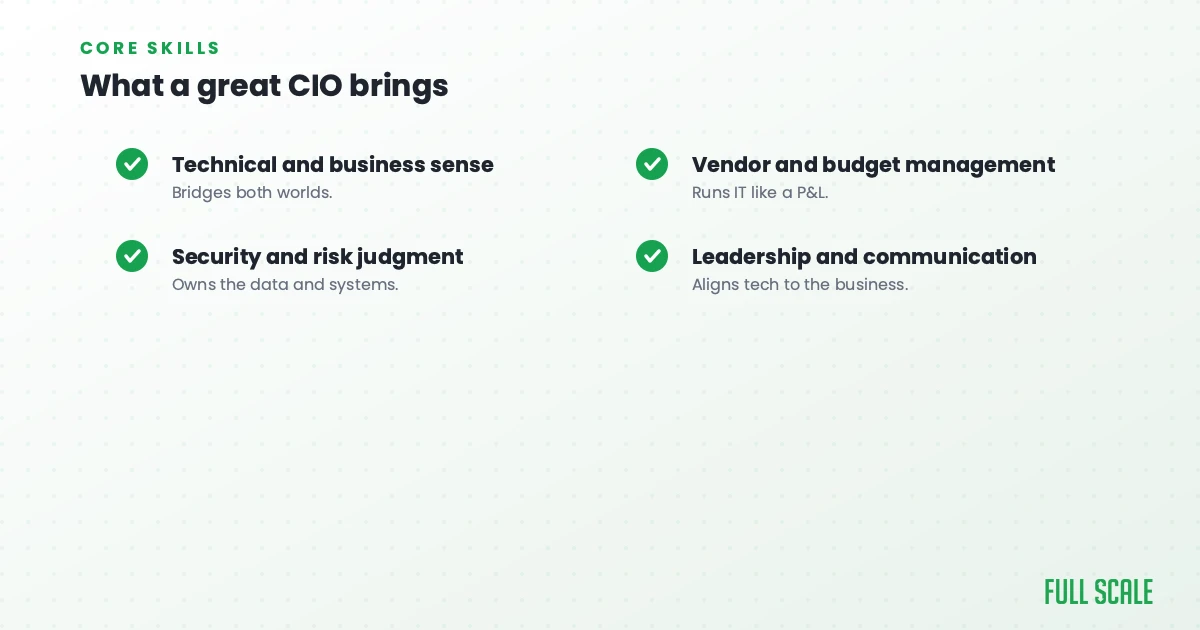
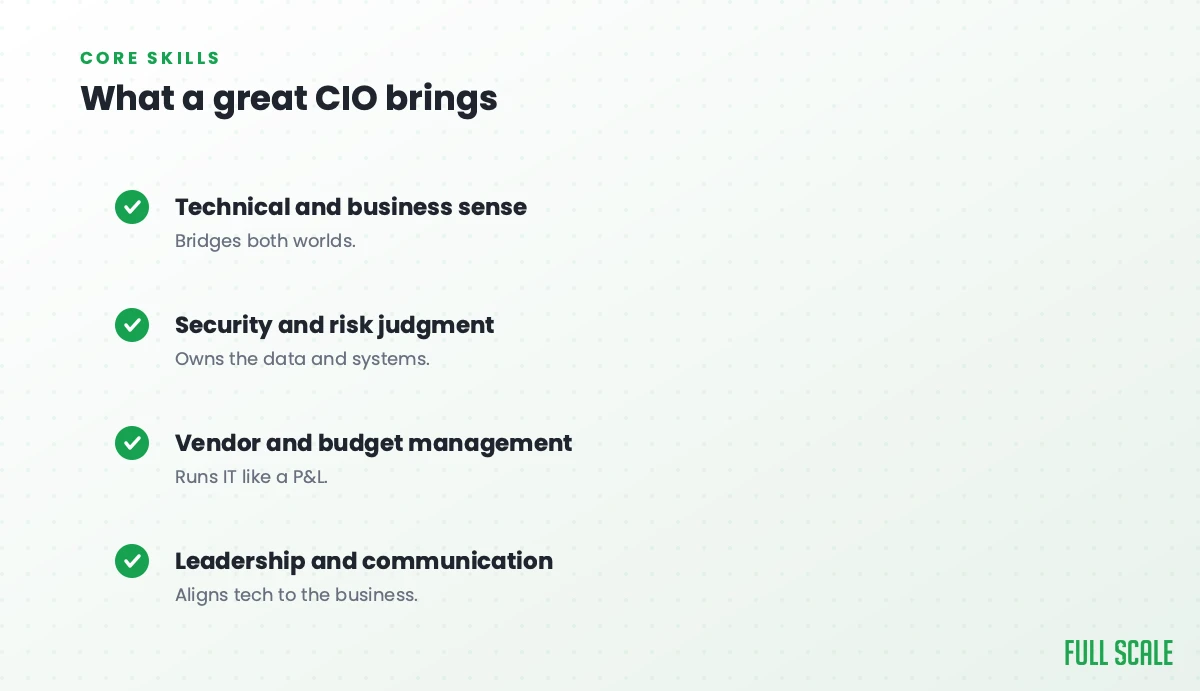
On paper, companies want a bachelor’s degree in computer science or IT, often a master’s or an MBA on top. But the degree is the floor, not the differentiator. The CIOs who are good at the job are strong across four dimensions.
The first is business sense paired with technical depth. A great CIO understands the technology well enough to make real architecture and security calls, and understands the business well enough to tie every one of those calls back to revenue, cost, or risk. The second is people and vendor management: the CIO leads a cross-functional team and negotiates the contracts and service-level agreements (SLAs) that govern the company’s IT vendors. The third is communication, specifically the ability to explain why a piece of technology matters to people who don’t think in technical terms, because that’s how change actually gets bought into. The fourth is change management and a habit of learning. Technology shifts fast, and a CIO who stops keeping up is the one still defending the on-prem data center nobody else wants.
How to become a CIO
There’s no single path, but the shape is consistent. It starts with a degree in computer science or IT, then a long run of experience, usually eight years or more, either climbing inside one company or going deep in a specialty like infrastructure or information security and building credibility there. A lot of CIOs pick up an MBA or executive certifications along the way to round out the business side. The pattern that matters most is range: almost everyone who reaches the chair has seen technology from both the engineering side and the business side.
What a modern CIO actually looks like
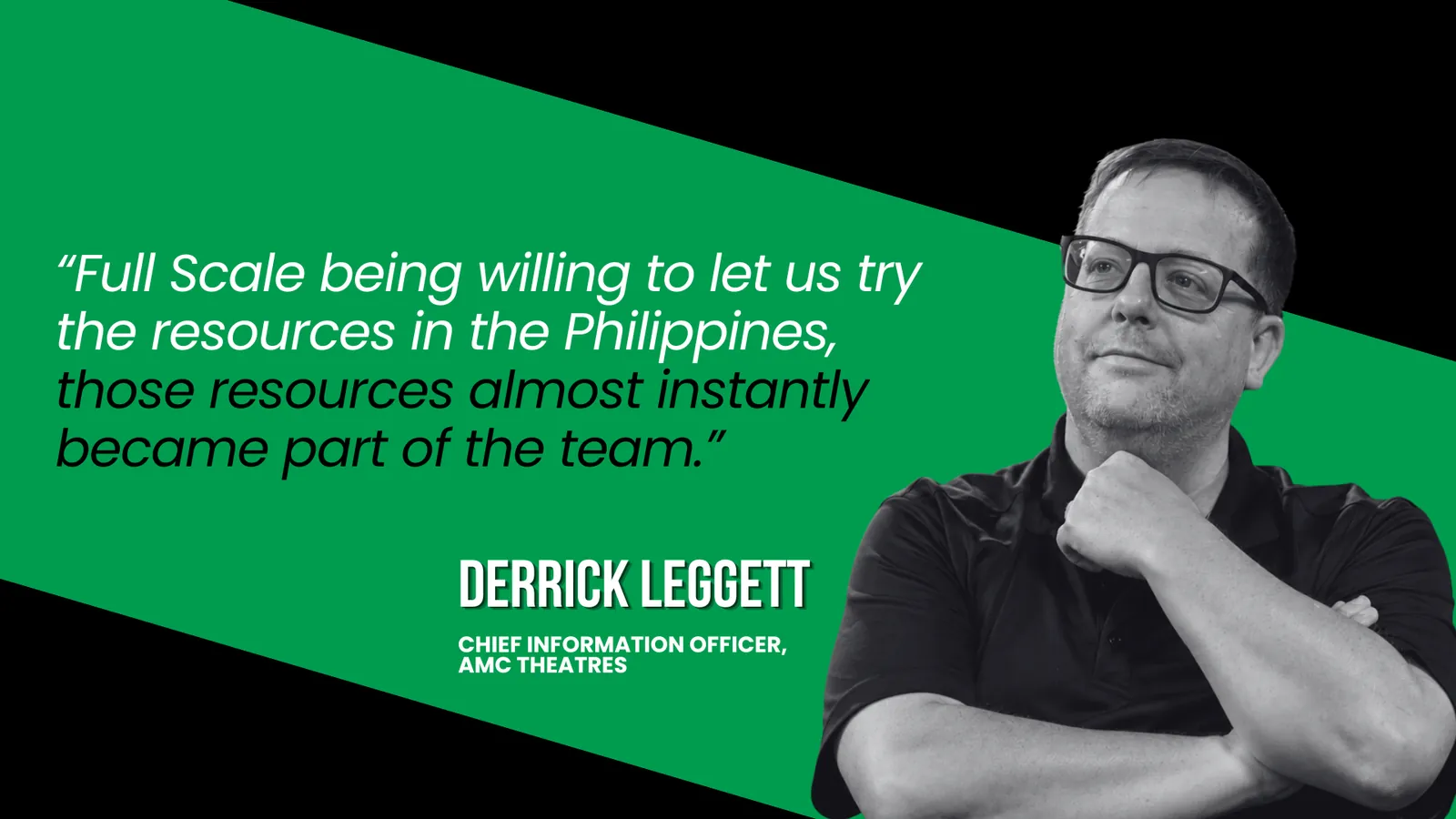
For a real example, look at Derrick Leggett, the CIO of AMC Theatres. He’s spent two decades at AMC, where the engineering organization scaled from around 170 theatres with no website or app to more than 900 theatres running the world’s largest movie-ticketing platform. His take on where the role sits now says a lot about the modern CIO:
“Technology’s gone from being a sideshow to being the center of almost everything we do at AMC.”
Derrick Leggett, CIO, AMC Theatres
Part of how he scaled was rejecting the traditional outsourcing model, where engineers sit walled off behind a vendor’s account manager. AMC’s engineers in the Philippines work as full members of the team:
“It’s a fully integrated team. It’s just some of the people happen to be living in the Philippines.”
Derrick Leggett, CIO, AMC Theatres
That is what good technology leadership looks like. AMC didn’t ship its engineering offshore to chase the lowest rate; it built one team that happens to span several countries. The cost-only version of offshoring, the one I call cheapshoring, is the opposite of what AMC built, and it’s a big reason so many offshore efforts fail.
FAQ
What does a CIO do in simple terms?
A chief information officer owns the technology a company runs on internally: its systems, data, security, IT budget, and vendor relationships. The job is to make sure all of that supports the business and to keep it secure and reliable.
What is the difference between a CIO and a CTO?
A CTO typically owns the technology a company sells (the product and engineering), while a CIO owns the technology the company uses to operate internally. In smaller companies, one person often does both jobs.
What is the difference between a CIO and a CISO?
The chief information security officer (CISO) runs the day-to-day security program and, in many companies, reports to the CIO. The CIO keeps board-level accountability for technology and data overall, including a breach, even when a CISO owns the security execution.
How much does a CIO make?
Base pay generally falls in the low-to-mid $200,000s, with total compensation often near $290,000 to $300,000 once bonuses are included. At large enterprises it can exceed $400,000.
Does every company need a CIO?
No. Most startups and smaller product companies are well served by a CTO or VP of Engineering who covers internal IT too. A dedicated CIO makes sense once internal systems, compliance, and security grow complex enough to need a full-time owner.
What does CIO stand for?
CIO stands for chief information officer, the senior executive who owns a company’s internal technology and information systems. It’s a different role from a CTO, who typically owns the technology a company sells rather than the systems it runs on internally.
What does a CIO job description typically include?
A CIO job description usually covers planning and rolling out the company’s information and communications technology, owning IT systems and uptime, managing the IT budget, hiring and developing IT staff, setting security policies and data governance, managing vendor and contract relationships, and staying current on business technology trends worth adopting.
If your tech leaders are buried, fix capacity first
A good CIO or CTO is most valuable when they’re doing the strategic work only they can do, not spending their week interviewing developers or clearing a backlog. If that’s where your technology leadership is stuck, the fastest fix usually isn’t another executive hire.
At Full Scale, we help tech companies add senior, pre-vetted engineers from the Philippines, integrated into your team and your tools, with predictable monthly billing and your IP fully protected. You can add engineers through a dedicated offshore team and free your technology leaders to lead.
If you lead an engineering organization and want the playbook for keeping a busy team focused on what actually matters, my book Product Driven is free to download.