
Software Development Collaboration Is a Communication Problem, Not a Tooling Problem

In this article
- What software development collaboration actually is
- The tooling trap that quietly wastes your budget
- Nobody feels any urgency to actually talk
- People don’t feel safe enough to speak up
- Where software development collaboration gets hardest: distributed teams
- How to actually build collaboration into your team
- Frequently asked questions
Every team I talk to thinks they have a tooling problem. Their software development collaboration feels broken, so they go shopping for a new chat app, a better issue tracker, maybe one more standup on the calendar. Six weeks later the same work is stuck in the same places, and now there’s another tab nobody opens.
I’ve run engineering teams for more than twenty years, both in-house and spread across several countries. The pattern almost never changes.
Software development is about communication more than anything else.
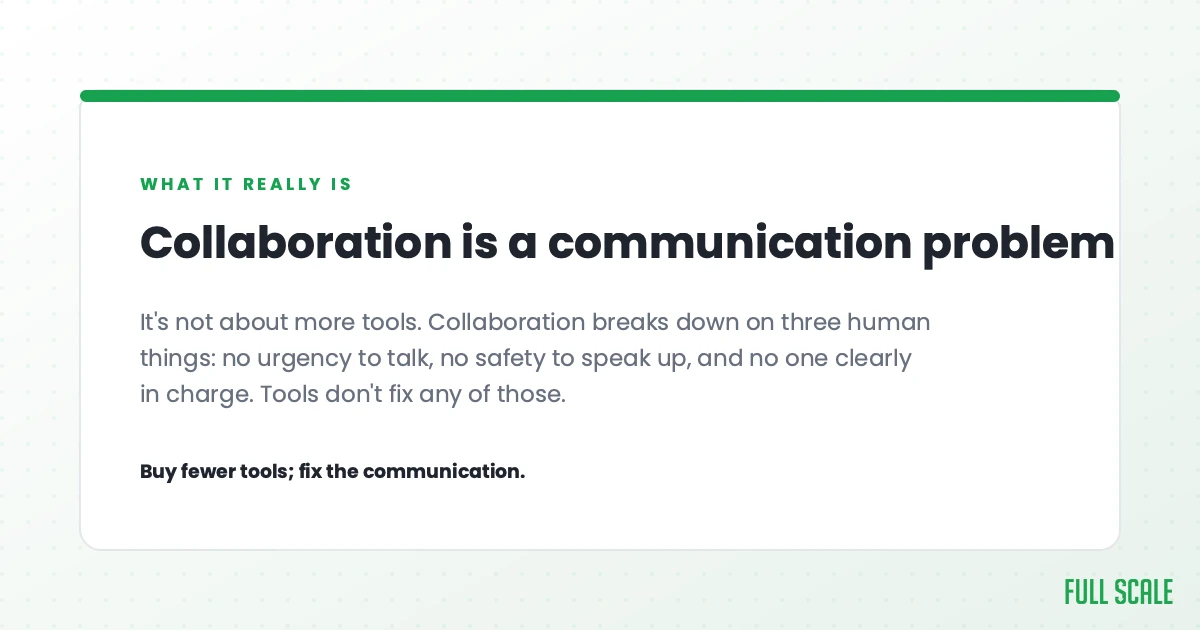
Good tools help around the edges. But when collaboration breaks down, it’s usually because people aren’t talking often enough, or they don’t feel safe saying what they actually think. No app fixes either of those.
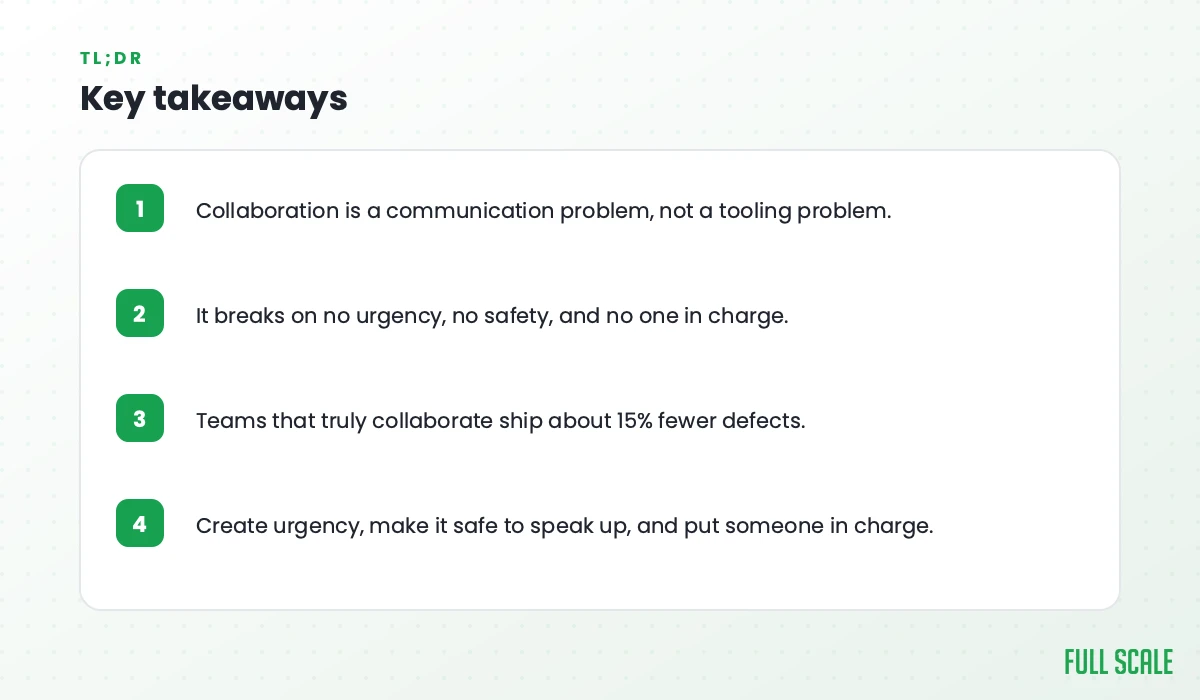
Quick Answer: Software development collaboration is the practice of a team building software together through shared communication, code review, and open decisions, not only the tools they share. Most collaboration problems aren't solved by new software. They come from low communication cadence and a culture where people don't speak up. Fix the habits and the safety first, and the tools start to matter.
What software development collaboration actually is
Strip away the buzzwords and software development collaboration is simple to describe. It’s a group of engineers building one product together, sharing code, sharing context, and making decisions out loud instead of in private.
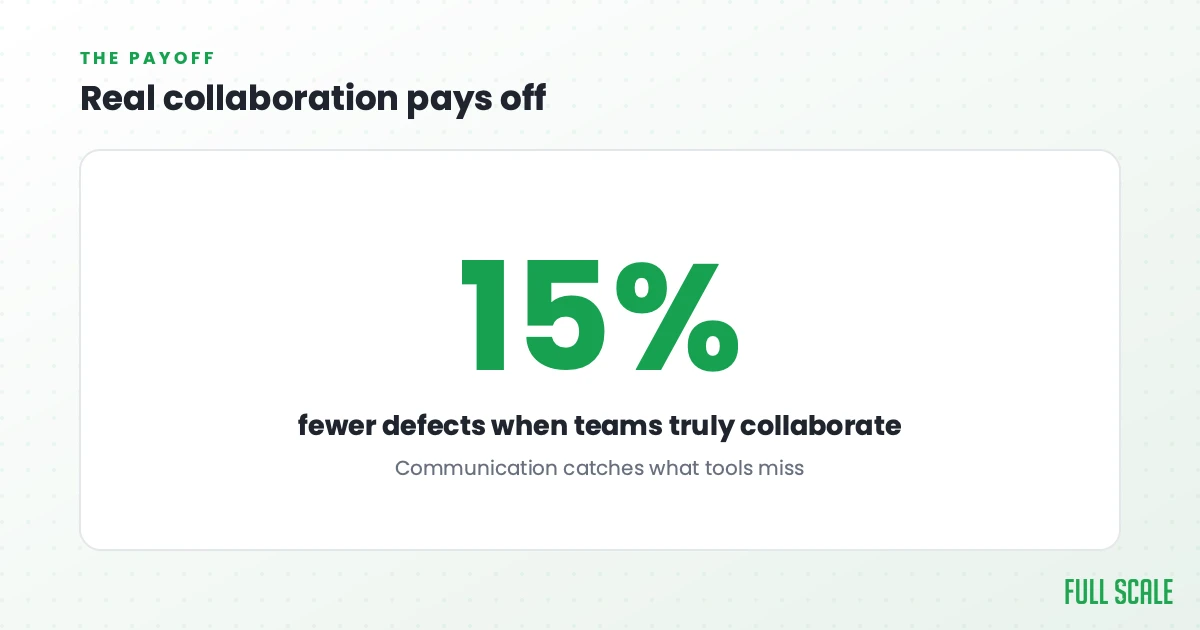
When it works, you can see it. Code reviews catch bugs before customers do, and pair programming spreads knowledge so no single person is the only one who understands a service. Older research still holds up here: pairs writing code produce roughly 15% fewer defects than developers working alone, even though the pair spends a bit more time on the code. Junior engineers pick things up from seniors without anyone scheduling a class, and work moves faster because less of it gets redone.
None of that is controversial. Every article on collaboration in software development lists the same benefits, and they’re all real.
The hard part isn’t knowing collaboration is good. It’s that knowing doesn’t make it happen.
The tooling trap that quietly wastes your budget
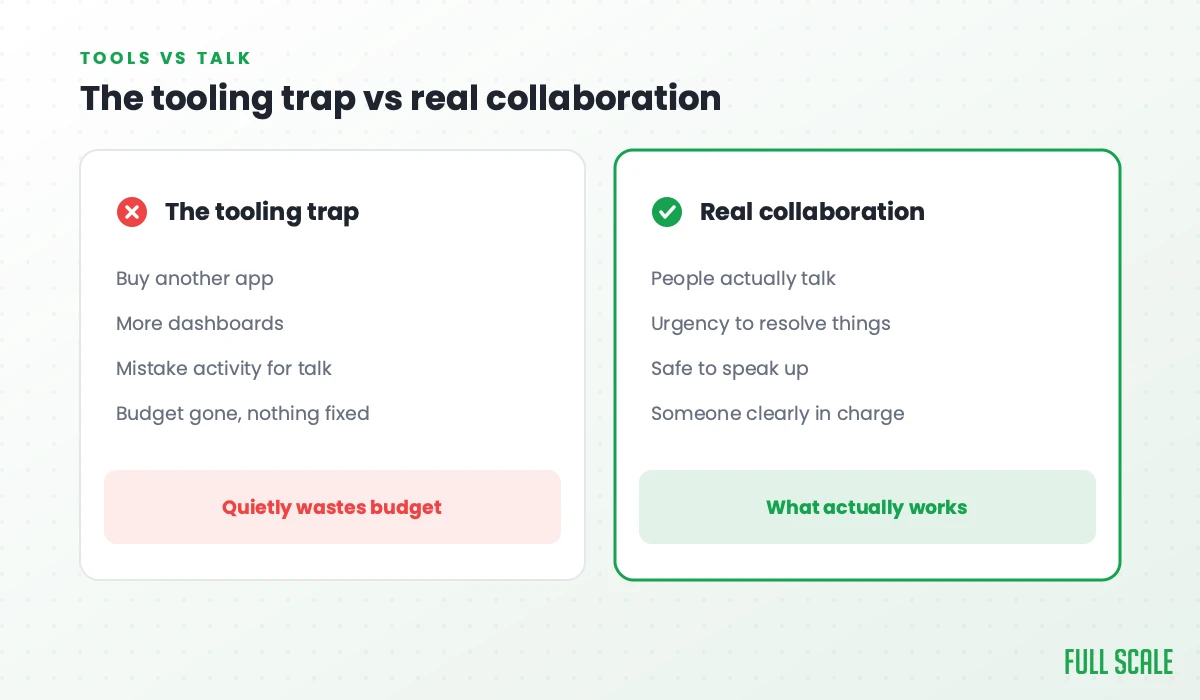
Here’s where most teams go wrong. They treat software development collaboration as a shopping list.
I’ve watched companies buy Slack and then send almost nothing in it. The channels sit empty, or three people talk while everyone else lurks. The software was working fine. People didn’t post because it wasn’t normal on their team to think out loud, or because they were nervous about saying something half-formed in front of the boss. You can hand a quiet team the best collaborative software development tools on the market and they’ll stay quiet.
The research backs this up. Google’s DORA program keeps finding that new technology doesn’t automatically lift how much a team ships. Its 2025 report on AI-assisted development, built on responses from nearly 5,000 engineers, calls AI an amplifier: it makes strong teams faster and makes struggling teams more dysfunctional, because the tool magnifies the communication habits you already have. In 2026 the thing teams reach for is usually an AI coding assistant, and the rule hasn’t changed. McKinsey made a similar point years earlier in its work on developer velocity, where strong tools were only one of four things separating fast teams from slow ones. The others were culture, product management, and talent.
You still need good tools. They just won’t carry a team that isn’t talking.
Nobody feels any urgency to actually talk
When I look back at my own collaboration failures as a leader, almost none came from a missing tool. They came from a lack of urgency.
We didn’t meet often enough. Problems sat for days because nobody felt the pull to get in a room and settle them. Out of sight, out of mind. A decision that needed ten minutes of conversation would instead wait a week for a meeting that kept getting moved.
This is why cadence matters more than any app. In Product Driven, the leadership book I wrote, I argue that rituals are where leadership actually happens. Standups, demos, and one-on-ones are your clearest chances to model how the team should think and talk. Run them on autopilot, or skip them, and collaboration quietly starves.
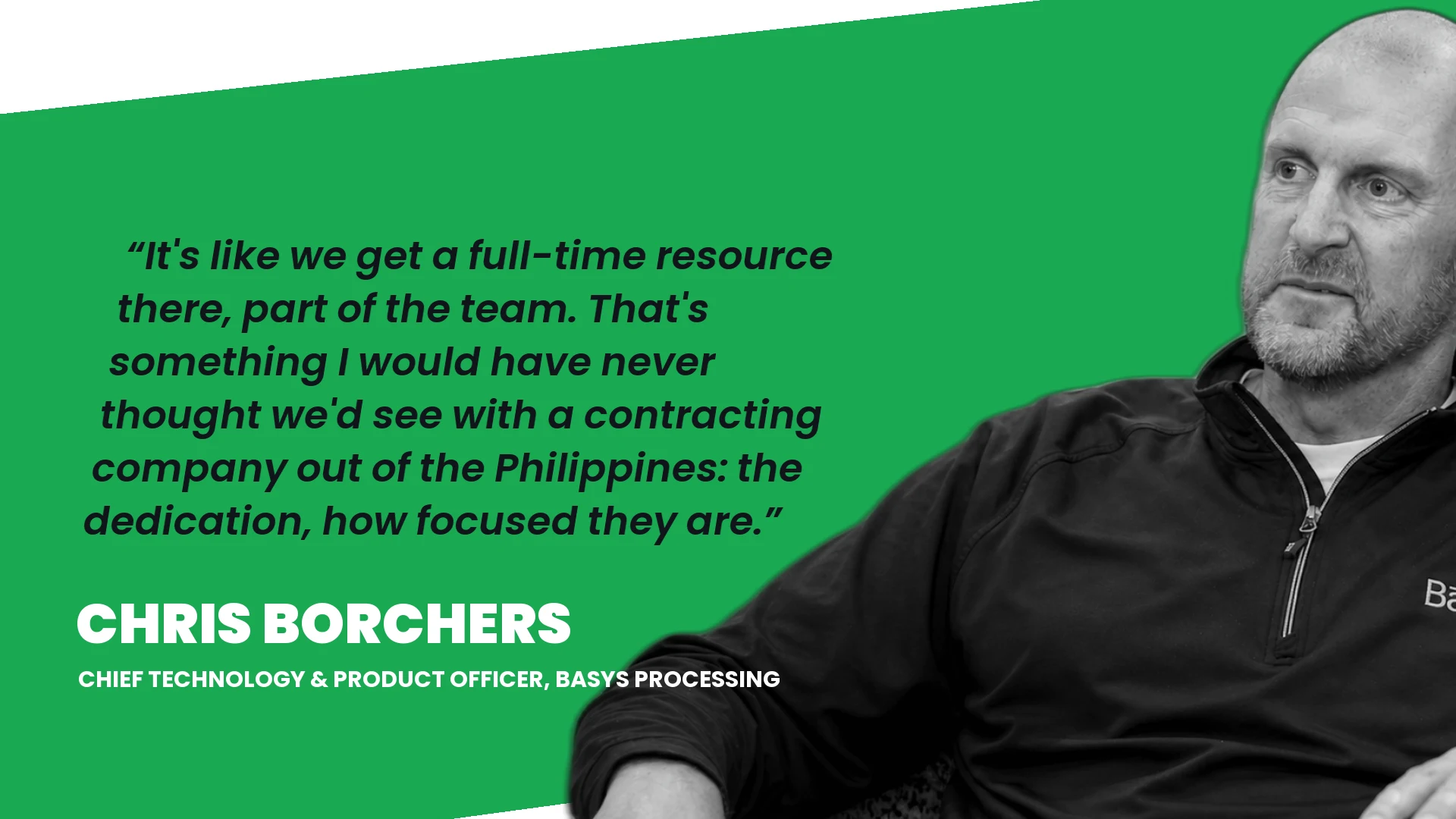
A good ritual can change a whole company. One product leader I worked with, Chris Borchers at Basys, started a simple weekly demo day where engineers showed what they’d built that week.
It grew on its own. People began inviting other departments, and after a while the company’s CEO called it the best meeting he’d ever been in. Nobody bought software to make that happen. They just created a standing reason to show their work and talk about it.
Cadence is the cheapest collaboration upgrade you will ever make.
People don’t feel safe enough to speak up
The second failure mode is quieter and more dangerous. People know what’s wrong and don’t say it.
An engineer sees a spec that makes no sense and builds it anyway, because pushing back feels risky. A developer doesn’t understand a requirement and nods instead of asking, because asking might look slow. No tool touches this. It’s culture.
I’ve come to believe fear kills ownership faster than failure does. If people don’t feel safe to speak up, they stop trying altogether, and you’re left with a team that does exactly what the ticket says and nothing more.
The fix has to start at the top, because courage has to be modeled before it can scale. If you want your engineers to challenge a bad decision, you have to let them watch you take feedback without punishing the person who gave it. You go first. The best developers ask the best questions, and they only ask them when the room is safe.
This is one of the things I think will separate strong engineering teams as the mechanical parts of the job get automated: communication, curiosity, and courage. None of the three live inside a piece of software.
Where software development collaboration gets hardest: distributed teams
Everything above gets harder the moment your team isn’t in one room. And most teams now aren’t. In Stack Overflow’s 2025 developer survey, only about a fifth of developers work fully in person, with the rest hybrid or remote. Distributed teams are the default now.
I’ve hired and run developers in Russia, Uruguay, and the Philippines over the years, with different levels of success in all of them. The teams that worked were the ones we talked to every day, fancy tooling or not.
The over-the-wall trap
The most common way distributed work breaks down is depressingly predictable. Most offshore collaboration fails because people simply hand a bunch of requirements over to an outsourcing firm. Then they expect to get back a successful project. You end up with a team you can’t actually communicate with, and a middleman in the way of every decision.
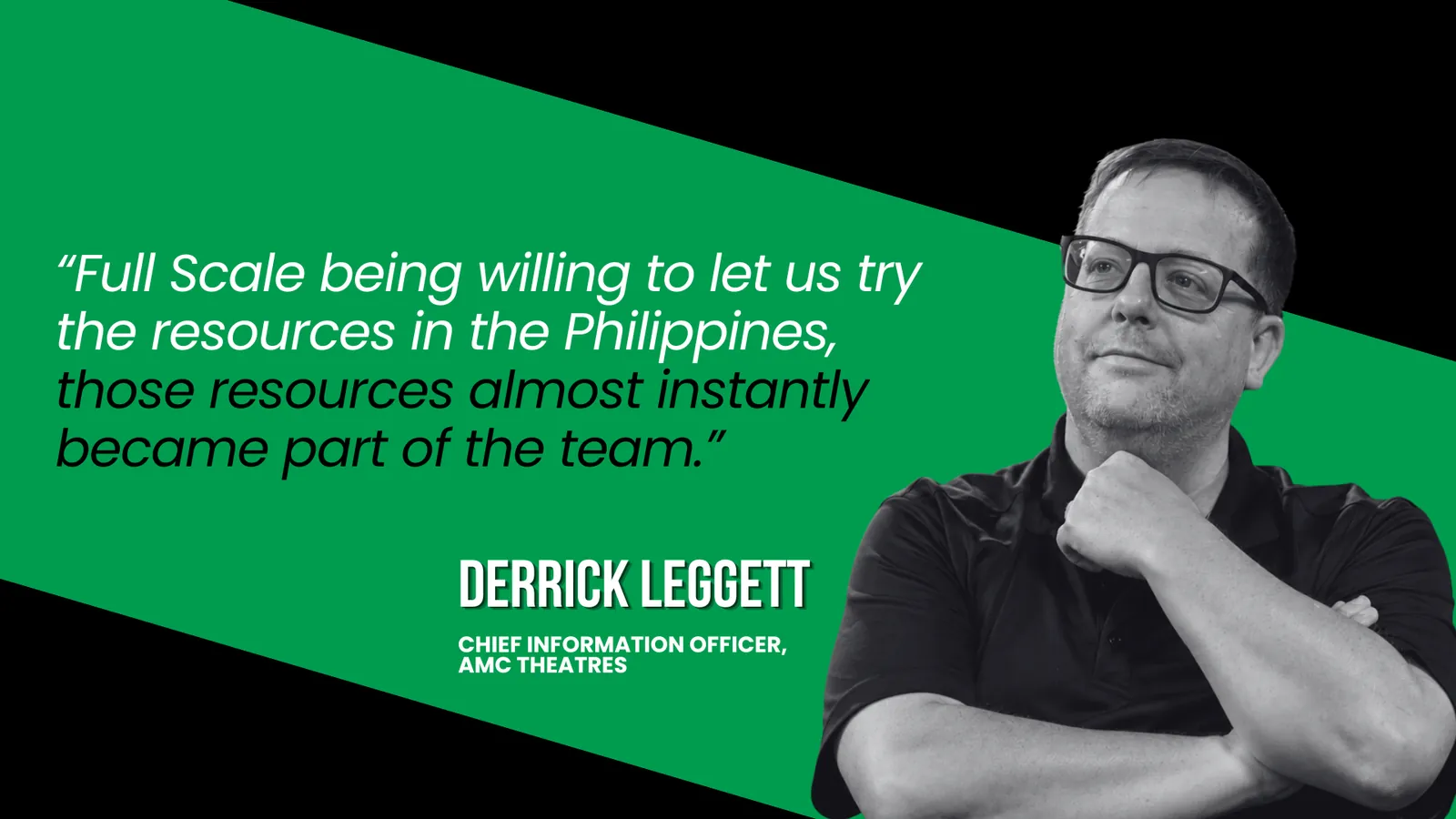
The alternative is to treat distant engineers as part of one team instead of a vendor at the other end of a contract. Derrick Leggett, the CIO of AMC Theatres, described his engineers in the Philippines this way: “It’s a fully integrated team. It’s just some of the people happen to be living in the Philippines.” Same code reviews, same chat, same standards as everyone else.
Protect communication on purpose
That integrated setup only works if you guard communication deliberately. Video calls are non-negotiable on a distributed team, because you need to see whether someone actually understood you, not just heard a yes. You also need a real overlap window. A team split across a fourteen-hour time gap can still collaborate well, but only if you carve out a few hours when everyone is awake at once.
Cadence does not mean stacking up more meetings. The async-first crowd is right that piling on synchronous calls is its own failure mode, especially across time zones. Most coordination should happen in writing, where anyone can catch up on their own clock. Protect the overlap window for the conversations that genuinely need to be live, the real decisions and the disagreements, and write down the rest.
Communication is also where the money is. The Project Management Institute found that ineffective communication is the primary reason projects fail about a third of the time, and that it puts more than half of project budgets at risk. That study is from 2013, well before remote work was common. Distance only raises the stakes.
How to actually build collaboration into your team
Strip this down to what moves the needle and almost none of it needs a purchase order. There are two honest exceptions. If your team has no version control or no continuous integration, buy those, because that’s a real floor. And some collaboration pain is structural rather than human, unclear ownership or tangled boundaries between teams that no amount of talking fixes. But above that floor, and more often than most leaders expect, the constraint is whether people are actually communicating. Here’s where I’d start.
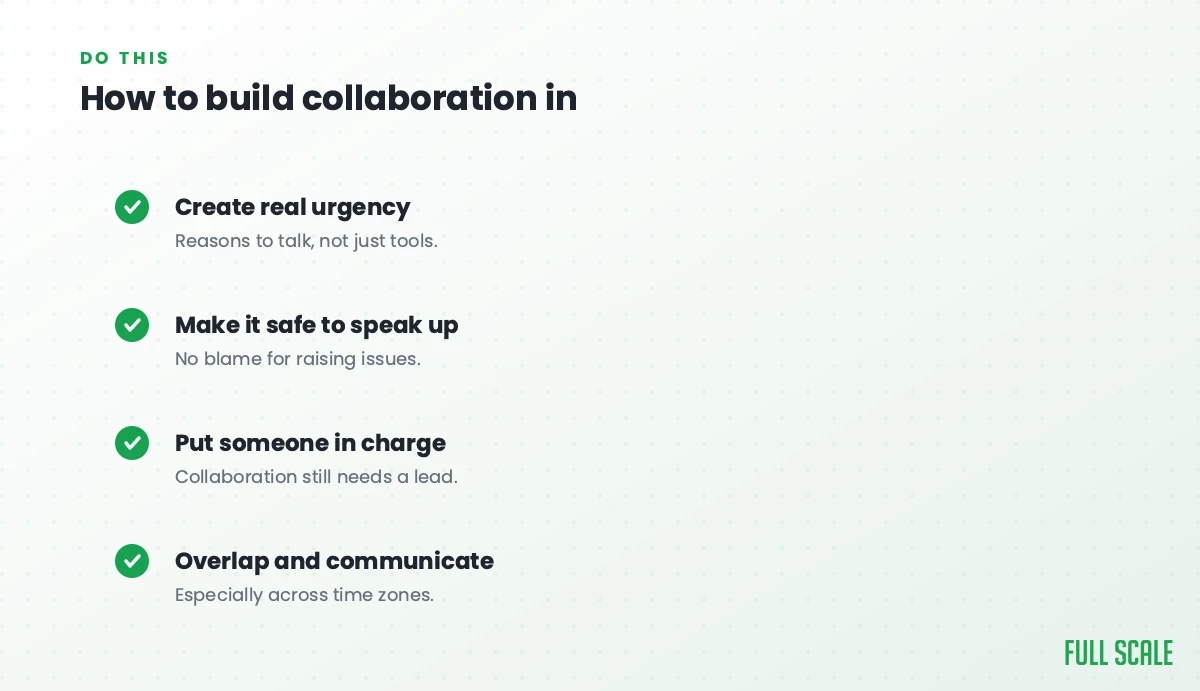
- Raise the cadence. Meet more often and keep it short, instead of rarely and long. A daily standup that surfaces a blocker beats a weekly status meeting that reports it after it’s already cost you three days.
- Get clarity right. Your team needs three kinds: product clarity, scope clarity, and technical clarity. Miss one and people slow down while they guess. Clarity isn’t a document you write once and file away. It’s a conversation you keep having.
- Make it safe to talk. Reward the person who flags a problem early, ask your own questions in front of the team so that asking looks normal, and take hard feedback in public without flinching.
- Hire for communication first, especially if part of your team is remote or offshore. English fluency, cultural fit, and whether someone will speak up when they don’t understand matter more than the rate on their invoice.
None of that removes the need for someone in charge. You always need technical leadership in-house to set direction and make the calls. The staff augmentation model works when engineers join your team under that leadership and stay long enough to build real context, instead of vanishing at the end of a project. That long-term, integrated setup is the whole reason a company like Full Scale can drop developers into a client’s standups and code reviews and have them behave like teammates rather than contractors. It is not automatic. Hand those engineers tickets with no context, skip the standups, and treat them like a vendor anyway, and the model breaks exactly like the one it replaced. You only get integrated teammates if you actually integrate them.
Notice what’s missing from that list. There’s no new collaboration tool on it.
Buy whatever software you like. It will sit unused until your team has a reason to talk to each other and feels safe doing it. Software development collaboration was never a tooling problem. It was a communication problem the whole time.
If you’re building a distributed team and want engineers who genuinely integrate with yours, book a call and we’ll talk through what that looks like.
Frequently asked questions
What is software development collaboration?
It’s the way a team builds software together: sharing code, reviewing each other’s work, and making decisions in the open instead of in isolation. Tools support it, but the real substance is how often and how honestly people communicate.
Is collaborative software development just about using the right tools?
No. Chat apps, issue trackers, and version control are necessary, but they don’t create collaboration on their own. A team only collaborates when frequent communication is a habit and the culture makes it safe to speak up.
How do you improve collaboration in a software development team?
Raise your meeting cadence so problems get solved quickly, get product, scope, and technical clarity in front of everyone, and make it safe to ask questions and push back. Those three changes do more than any new piece of software.
What are the benefits of collaborative software development?
Better code quality and fewer bugs, faster delivery, and knowledge spread across the team instead of trapped in one person’s head. Code review and pair programming are the most dependable ways to get them.
How does collaboration work on a distributed or offshore team?
The same principles apply, but you have to protect communication deliberately. Use video calls so you can confirm people understood you, set a daily overlap window across time zones, and treat remote engineers as integrated teammates rather than a vendor you hand requirements to.
Can a team collaborate too much?
Yes. Pulling everyone into every decision creates coordination overhead and design by committee, where nothing ships because no one will make the call. Healthy collaboration still needs clear ownership: one person decides, the rest weigh in and then get back to work.