

Outsource the work. Keep the control.
Full Scale is a software development outsourcing company that gives U.S. teams full ownership of senior offshore engineers, with the hiring, payroll, benefits, and HR overhead handled for you. Our software development outsourcing services have placed 700+ engineers into SaaS, fintech, healthcare, and enterprise teams since 2018, and every developer on the bench is pre-vetted and senior, with a fully-loaded rate that starts at $35 an hour.
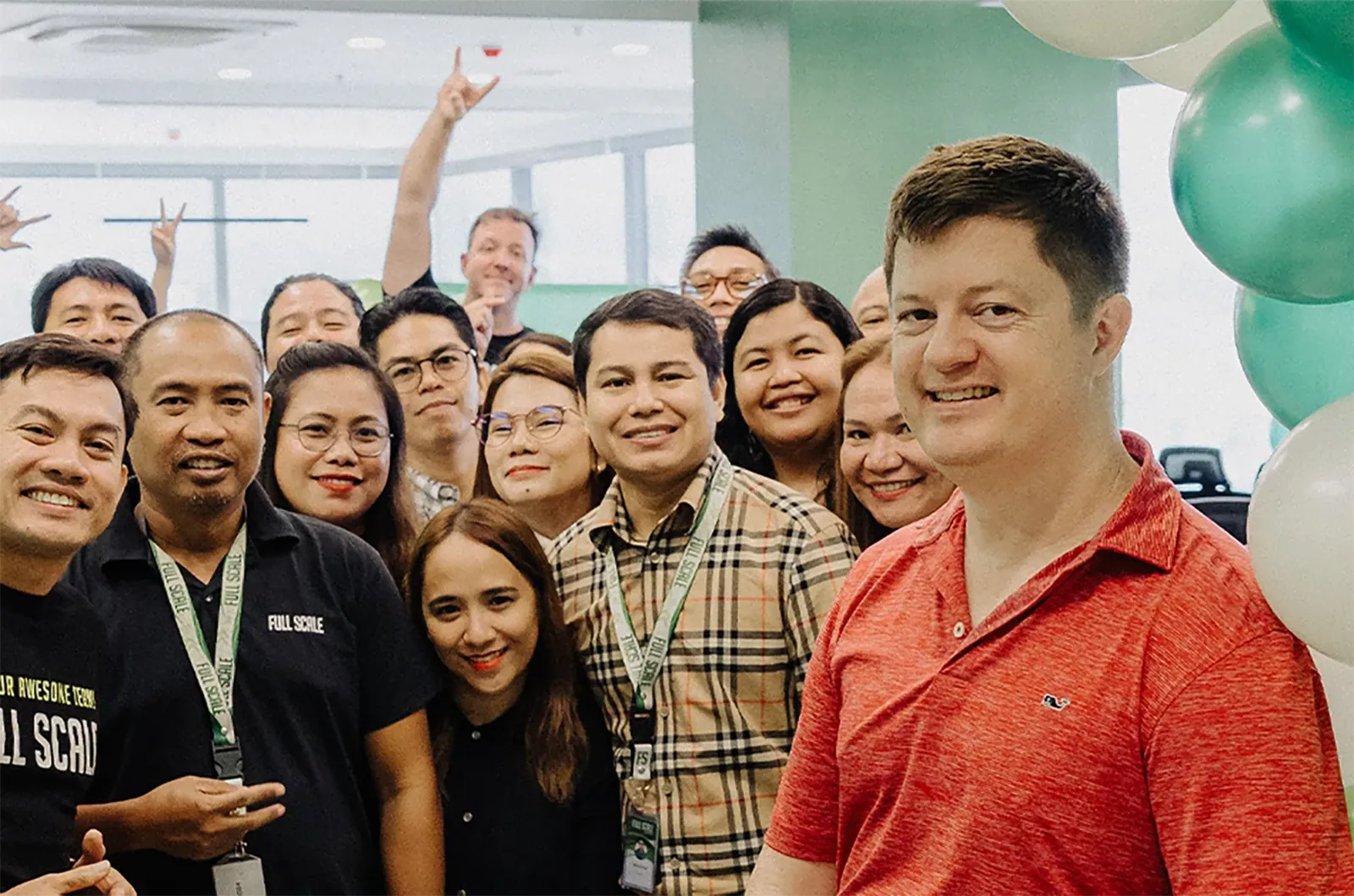
The software development outsourcing company behind 5M+ hours of shipped code across 200+ U.S. teams

Previously founded VinSolutions ($150M+ exit) and Stackify
Most companies outsource the wrong things and keep the wrong things
I've watched a lot of companies outsource software development the wrong way. They keep the recruiting, the HR, and the payroll grind in-house, then they hand the roadmap, the architecture, and the code review to an agency and call it efficiency. Six months later they own a codebase they can't read, written by engineers they never met, and the agency has them on a renewal call.
Full Scale is a software development outsourcing company built around senior Filipino engineers and the Product Driven framework. The model is the inverse of the agency playbook. You outsource the drag, the parts that don't make your product better. We handle recruiting, payroll, benefits, equipment, office space, HR, and retention. You keep the parts that determine whether the product ships: the roadmap, the architecture, the standups, the code review, the priorities, and who's on your team.
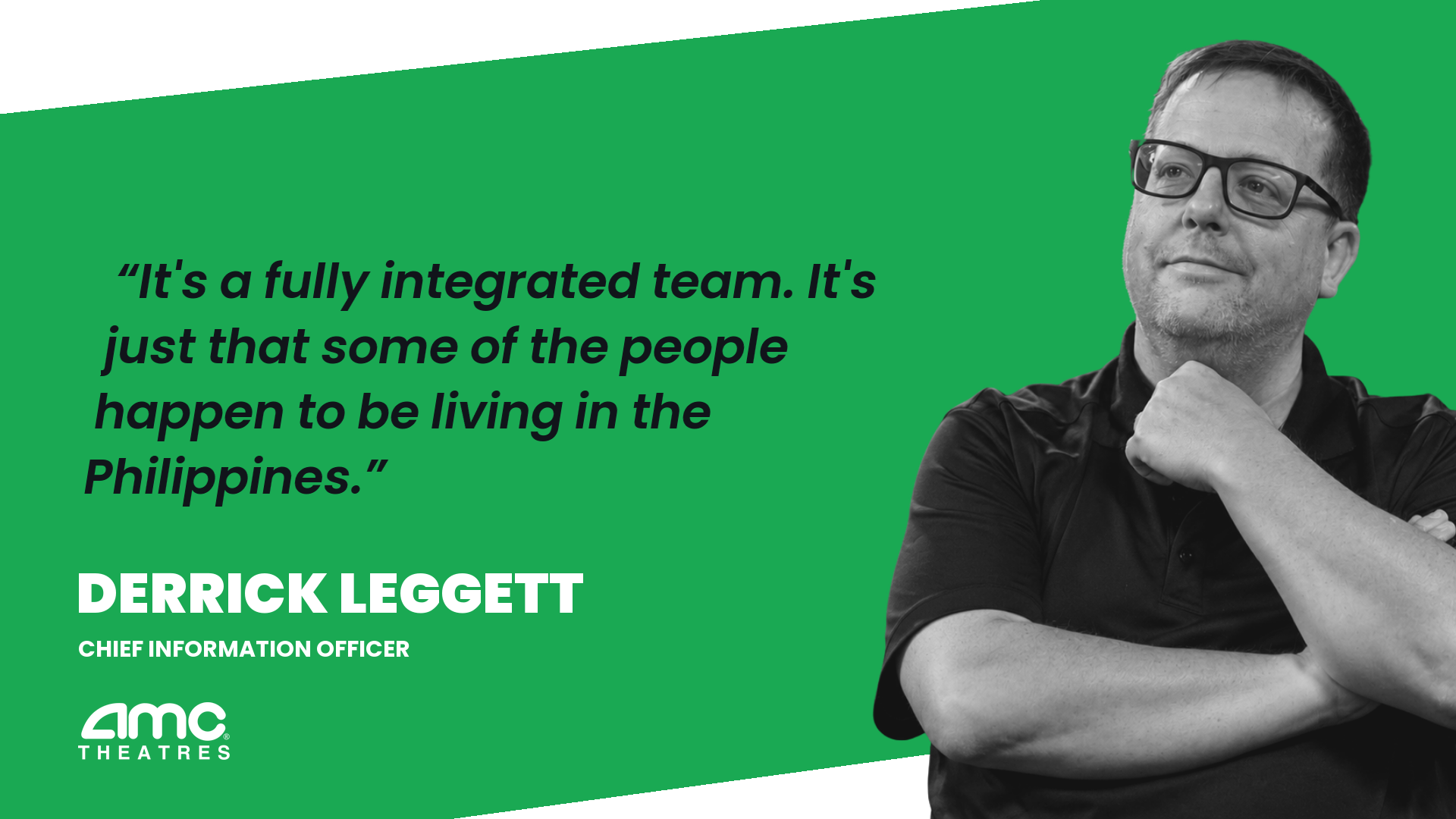
I built our first outsourced engineering team at Stackify in 2018, and the model worked because the engineers were mine, not the agency's. They sat in my Slack threads, pushed to my repo, and reported to my engineering leadership. That model sold the company. It's the same model we run for AMC Theatres, LendingStandard, and 200+ other U.S. companies today.
Outsource the work. Keep the control. That's the whole model in one line.
Software development outsourcing is hiring engineers outside your company to build software inside your company. There's a right way and a wrong way to do it.
The clean definition: software development outsourcing is when you partner with an outside company to provide some or all of the engineers building your software. The outsourcing partner handles recruiting, payroll, benefits, HR, equipment, and retention. You handle the work itself, the roadmap, and the engineering direction. When it's done right, the engineers feel like your engineers and the partner stays invisible.
The reason this topic is so confusing is that two very different models both get called "outsourcing." The first model is the agency build: you hand a vendor a project, they go away for six months, and you get back a finished deliverable you didn't watch get built. The second model is the dedicated team: you outsource the hiring and the HR overhead, but the engineers join your team long-term and report into your engineering leadership.
Most software development outsourcing companies sell the first model because it has higher margin. Full Scale sells the second because it's the model that actually works for any company building a real product. Here's how the two compare, side by side.
Project outsourcing is the right call when the work is bounded and you don't need a full-time person on it after launch. A one-time WordPress build, a payments integration, a data migration. Dedicated team outsourcing is the right call when the code outlives the contract, which is most of the time for any company building a real product. Full Scale only offers the dedicated team model, and that's a deliberate choice. We don't ship code we don't have to maintain.
What you should outsource and what you should never outsource
Outsourcing software development goes wrong when companies give up the wrong things. The fix is a clean line between what to outsource and what to keep. Outsource the drag. Keep the leverage. The drag is the overhead nobody enjoys and nobody competes on. The leverage is the work that determines whether the product is any good.
Keep these in-house. Always.
Hand off the drag. All of it.
Outsource the work. Keep the control. That's the model Full Scale is built around, and it's why our engagements last for years instead of one bad contract.
Engineers trained on AI and Product Driven principles
The reason most outsourcing software development engagements stall is that the engineer placed on your team thinks like a contractor, not a product owner. They wait for tickets, write what they're told, and disappear when the sprint ends without leaving anything behind for the team.
Our engineers are trained to do the opposite. They're hired and developed inside a Product Driven framework, and they use modern AI tooling as part of their daily workflow. That combination is rare, and it's the difference between an outsourced developer who acts like your engineer and one who acts like a vendor's resource.
Product Driven engineering
Engineers placed through our software development outsourcing services are trained on the five pillars from Matt's book: Vision, Focus, Clarity, Ownership, and Courage. The result is developers who push back on bad product decisions, ask whether a ticket should exist before writing it, and own the outcome of what ships. They join your team as real engineers, not as order takers waiting for the next handoff.
Read Product Driven, the bookAI as a thinking partner
Every engineer on our bench works with GitHub Copilot, Claude, and Cursor every day. They use AI to explore options, scaffold the boring parts, generate test suites, and review their own pull requests before a human ever sees them. Judgment stays with the engineer, the grunt work moves to the machine.
Outsourcing software development works when the engineer on your team thinks like a product owner from week one. We hire and train for that, and the AI tooling is what makes it scale. Engineers who can think AND use AI well are rare, and that combination is what makes the difference inside a long-term outsourced engagement.

Outsourced engineers, starting at $35 an hour
That rate is fully loaded: it covers a senior engineer working full-time on your project, with payroll, benefits, HR, and equipment all handled by us. The same role hired locally in the U.S. costs $150K to $195K a year, and that's before recruiter fees, benefits overhead, and the three-month ramp. The math is what drives most of our clients to call, but the model is what keeps them here.
- Full-time engineer assigned exclusively to your project
- Pre-vetted by senior engineering reviewers on our side
- Works your hours, your tools, your codebase
- Payroll, HR, equipment, and benefits handled by us
- U.S.-based customer success manager you can escalate to
- Two-week money-back guarantee if it isn't a fit
Full Scale has made the Inc. 5000 five years in a row and is Great Place to Work certified. We've been running software development outsourcing services for U.S. companies since 2018, so the operator-level details of payroll, retention, and replacement are already worked out. Pricing is the easiest reason to call, but the model is the reason clients stay.
The horror stories aren't about offshore talent. They're about agency models built around the agency, not the client.
The way most outsourcing software development companies are structured creates predictable failure modes. The engineers aren't the problem. The contract structure, the staffing rotation, and the incentive to upsell maintenance are the problem. These are the six patterns we built our model to avoid, and the questions to ask any outsourcing partner before you sign a contract.
The rate-card game
The agency baits you with a junior rate, sells you a junior developer, and the work that ships is junior work. Six months in, you're paying for senior and shipping for intern. The fix: vet seniority yourself in the interview round. Full Scale sends real engineers with real project history to your interview, and you pass on anyone who isn't ready.
The mid-project handoff
Your kickoff team is the agency's A-team. By week four they've rotated off to the next sale and your project gets the bench. You discover this in standup, when a new face shows up and asks for the brief. The fix: the engineers you interview are the engineers you keep, full-time, for the life of the engagement, with no silent swaps onto your account.
The we'll-fix-it-in-maintenance close
The vendor lowballs the build to win the bid, then prices the back end of the contract assuming you'll need them for maintenance you didn't agree to. By the time the missing features surface, you're past the point of switching. The fix: flat-rate per-engineer monthly pricing with no maintenance back-end. You pay for the engineer, not for the project.
The agency churn loop
Most offshore agencies run 30-50% annual turnover. The engineer who learned your codebase in month one is gone by month nine. The next engineer rebuilds context from a wiki nobody updated. The fix: 93%+ annual retention. Engineers get competitive pay, real career paths, and a customer success manager who fights for them when something gets weird with a client.
The language gap dressed up as a time-zone gap
When you can't fully understand the engineer's English, you can't push back on a bad architecture call, you can't critique a sloppy PR, and you stop reviewing the code because every review takes 40 minutes. The fix: every Full Scale engineer is fluent in English and works U.S. business hours. The whole point of outsourcing software development is to extend your team, not to add a translation layer.
The unowned codebase
The vendor owns the repo, the tests, the deployment pipeline, the secrets, and the database backups. The day you decide to leave, you start over. The fix: you own everything. The repo lives in your GitHub org, the CI/CD runs on your accounts, and on day one of every engagement the engineers are pushing into infrastructure you control. If we disappeared tomorrow, you'd keep shipping.
Three ways to outsource software development with Full Scale
Most clients start by outsourcing one engineer and grow into a full team. Every model below puts full-time developers on your standups, working your hours, shipping code against your roadmap. These aren't freelancers, they aren't shared between clients, and they aren't sitting at a project shop on the side. We don't do project-based outsourcing at all, because that's the model that creates the horror stories. The alternative is straightforward: dedicated software developers embedded in your team for the long haul.
Single dedicated developer
You outsource one full-time engineer who works exclusively on your project and embeds with your team.
- Full-time engineer assigned only to your project
- Works your hours, your tools, your codebase
- Joins your standups, reports to your tech lead
- We handle payroll, HR, equipment, and retention
- Two-week money-back guarantee
Dedicated outsourced team
You outsource a full pod of engineers and we run it as a unit embedded with your product.
- Full pod sized to your roadmap (typically tech lead + engineers + QA)
- Embedded with your product and design teams
- Customer success manager runs the offshore-employer side
- We handle payroll, HR, equipment, and retention across the pod
- Scale up or down by a head with 30 days notice
Hybrid team outsourcing
We run your U.S. team and a Full Scale pod together as one engineering org.
- U.S. leads pair with Full Scale engineers during the first 60 days
- One shared definition of done across both sides
- Time-zone overlap designed for your working window
- Quarterly performance reviews with your engineering management
- Same employment and IP protection as the other engagement models
What's the best country to outsource software development?
Four regions handle most U.S. software development outsourcing today. Each one has real trade-offs, and the right answer depends on what you're optimizing for: cost, English fluency, time-zone overlap, or talent depth. Here's an honest breakdown of the options before we tell you why Full Scale picked the Philippines.
Philippines
Why we hire hereNative English fluency, U.S.-style engineering education, and engineers who work U.S. business hours by design. The math works without quality compromise. Full Scale hires exclusively from the Philippines because the combination of these four variables is hard to find anywhere else.
India
Lowest rateThe largest outsourcing market and the cheapest hourly rate. The trade-offs are well-documented: quality varies widely across the talent pool, communication friction is real when accents are heavy, and the 10-12 hour time difference means most work happens asynchronously. Works for some buyers, not others.
Eastern Europe
Closest to East CoastPoland, Ukraine, Romania, and Hungary all have strong technical talent and good English. The working window overlaps East Coast U.S. for about half the day, which is fine for most engagements. Rates have climbed significantly since 2020. Geopolitical risk in some markets is now a real consideration.
Latin America
Closest to West CoastMexico, Argentina, Brazil, and Colombia all offer full time-zone overlap with U.S. business hours, which is the strongest case for the region. Rates have risen sharply as Silicon Valley companies have built out LatAm teams. Quality varies more by country than the regional average suggests.
We hire exclusively from Cebu and Manila because the Philippines is the only market that lets us deliver senior engineers with native-level English, U.S.-style technical training, and same-day collaboration with U.S. teams, at a rate that still makes outsourcing worth doing. We've watched plenty of clients try multi-country bench strategies and end up consolidating onto one market anyway. We just skip the detour.
How an outsourced software development team actually starts
Our bench of 350+ engineers is already built and vetted through our four-stage process, so we're matching from a pool that's ready instead of running a 3-6 week recruitment cycle from cold. Every step below is real, and every step has a named owner on our side.
Discovery call
30 minutes with our team. We learn your stack, your roadmap, the seniority level you need, and the kind of work the outsourced engineer will be doing in the first 90 days. There's no sales pitch on the call, just a working conversation about what you need.
Engineer match
We pull 1-3 pre-vetted engineers from the bench whose skills, seniority, and prior project experience line up with what you described. You see their full profile and their actual project history before you ever talk to them.
Technical interview
You interview the candidates the way you would interview any senior hire: live coding, system design, and the gotchas that matter for your stack. Pass on anyone you don't believe in, and we keep looking. You're outsourcing the recruiting work, not the hiring decision.
Contract & onboarding
Sign once. We handle every contract, payroll, equipment, and HR detail in the Philippines, so you don't have an offshore entity to manage. The MSA includes IP assignment, NDA terms, and background verification on the outsourced engineer.
First commit
Your developer joins your standups, gets repo access on your GitHub org, and ships code in their first week. We pair them with a U.S. engineer on your team for the first 60 days so context isn't trapped in one person's head.
Full Scale vs. other software development outsourcing companies and the in-house alternative.
Every outsourcing path has trade-offs. The rows below are the ones that actually matter when you're trying to outsource without giving up control of your product. Here's how a Full Scale engagement compares against the alternatives most teams consider first.
| Feature | Full Scale | Freelancer / Upwork | Traditional outsourcing agency | U.S. recruiter / FTE hire |
|---|---|---|---|---|
| You own the repo and CI/CD on day one | ||||
| You interview every engineer yourself | ||||
| Time to first commit | 7 days | 1-3 days | 3-6 weeks | 6-12 weeks |
| Dedicated full-time, not shared between clients | ||||
| Engineer reports to your engineering leadership | ||||
| Long-term retention | 93%+ | low | 30-50% | varies |
| Two-week money-back guarantee | ||||
| Payroll, HR, equipment, IP handled by partner | ||||
| U.S.-based customer success manager | n/a | |||
| Typical fully-loaded cost vs U.S. | ~40-50% | varies | ~50-65% | 100% |
Real software engineers, named and vetted
A sample of the software engineers on our team. These are real Full Scale developers working remotely from across the Philippines, and you'll meet candidates like them during your interview round.

A senior software developer with 10 years of experience across ASP.NET, C#, and .NET.

A software developer building with React, Vue.js, and JavaScript.

A software developer who ships production work with React, CSS, and JavaScript.

A senior software developer with 12 years of experience across Android, Android Java, and iOS.

A software developer who ships production work with JavaScript, TypeScript, and C#.

A software developer who ships production work with React, Bootstrap, and JavaScript.
The numbers behind a software development outsourcing company that actually works
From the U.S. teams who outsourced with us and stayed
The team at Full Scale brought our vision to life with their impeccable development skills. They helped us navigate technical requirements with ease, resulting in a robust platform that our users trust.
Full Scale's developers were instrumental in revolutionizing our health management systems. Their ability to seamlessly integrate advanced features and data security has set a standard for our software solutions.

Deeper guides on how to outsource software development
Nearshore vs offshore
When each model wins, from a CEO who has run both.
Outsourcing vs offshoring
The distinction most CTOs get wrong, and why it matters.
What offshore development really costs
The real numbers behind offshore rates and total cost.
The ROI of offshore development
The math behind 50-70% development cost reductions.
Offshore development best practices
How to avoid the common ways offshore engagements go wrong.
Offshore due diligence checklist
What to vet before you sign with an offshore partner.
Everything you wanted to know about outsourcing software development
Ready to outsource without losing control?
30-minute discovery call with our team. We'll learn what you're building, walk you through who's on the bench right now, and you'll meet candidates within a week. You own the engineer, you own the codebase, you own the roadmap. We handle the rest.