
7 Tips to Create Compelling Content That Resonates with Your Target Audience

In this article
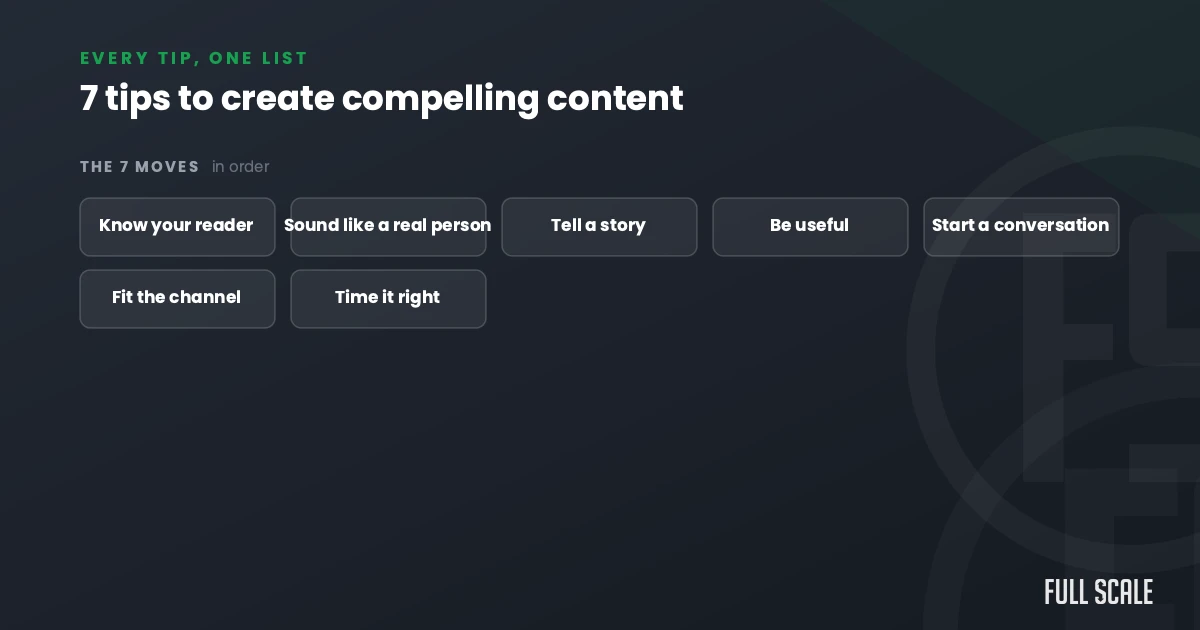
- 1. Know who you are talking to, and what each piece is for
- 2. Be honest and sound like a real person
- 3. Tell a story, not just a list of points
- 4. Usefulness is what keeps people coming back
- 5. The best content starts a conversation
- 6. Fit the content to the channel
- 7. Timing decides how far a piece travels
- The part most people skip
- Frequently asked questions
I talk to a lot of startup founders who are scared of marketing and social media. They love to build things, and the idea of putting themselves out there makes them freeze. My advice never changes. Just be excited about what you are building, and go show it to people. Ironically, a lot of marketing today is building things too: the software behind modern marketing has quietly become an engineering job.
That sounds too simple, but it is the whole secret. Excitement is contagious. When you are genuinely excited about the problem you are solving, other people catch it, and you start finding the ones who care about that problem as much as you do. You do not need to be a marketer. You need to be excited and willing to show your work.
I have written a weekly Product Driven newsletter for years, recorded hundreds of podcast conversations, and wrote a book on engineering leadership. A lot of what I made early on got ignored. The pieces that landed were not the ones with the cleverest wording. They were the ones that said something true to the right person at the right time. These seven tips are what I have learned about getting there. They work for a blog post, an email, a video, or a social post. The channel changes, but the fundamentals don’t.
Quick Answer: Creating compelling content for a target audience comes down to knowing exactly who you're writing for, sounding like a real person instead of a marketer, telling a story instead of a list of facts, and being genuinely useful. The founders who build a real audience aren't the most talented writers. They're the ones who picked one specific reader, stayed honest, and kept showing up. Full Scale's founder Matt Watson built a newsletter, podcast, and book this way, one reader in mind at a time.
1. Know who you are talking to, and what each piece is for
You cannot write something that resonates with a person you have not pictured. Before I write anything, I have one specific reader in mind. For my newsletter, it is an engineering leader who is stretched thin and short on time. Every line has to earn a place in front of that person.
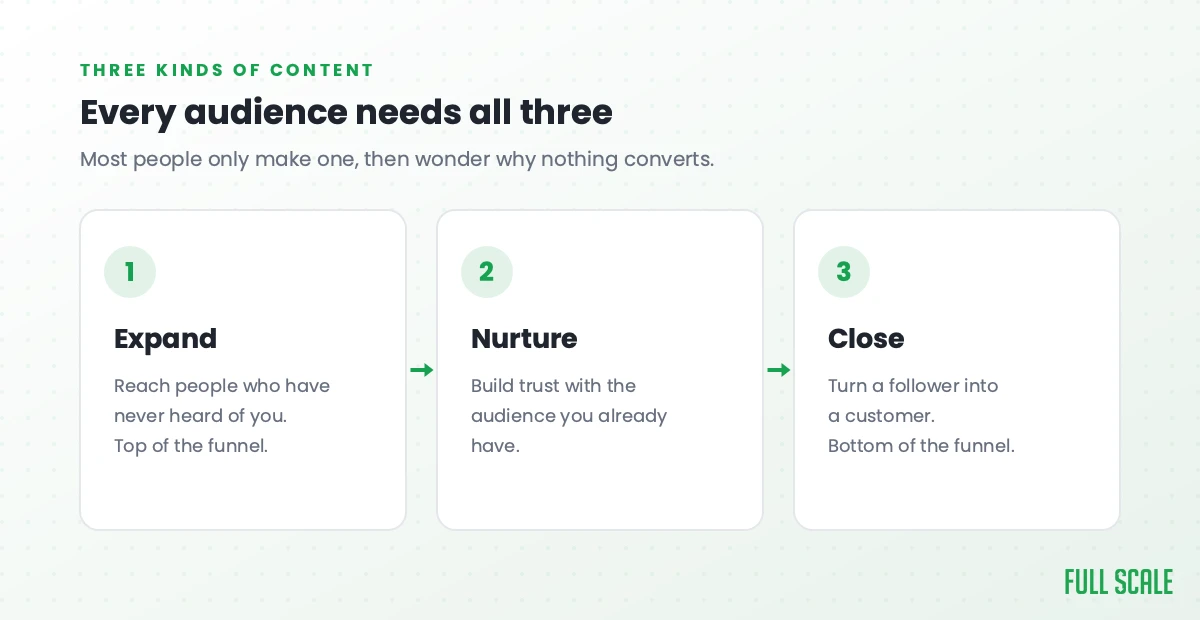
Knowing your audience also means knowing what each piece of content is for. Some of it has to expand your audience and reach people who have never heard of you. Some of it nurtures the followers you already have. And some of it has to close, turning a reader into a customer. Most people only make one kind, usually the middle kind, and then wonder why nothing converts. You need all three, and you need to know which one you are making before you hit publish.
When you write for everyone, you connect with no one.
2. Be honest and sound like a real person
People can smell marketing language from a mile away, and they tune it out. The content that connects sounds like one person talking to another. It admits what went wrong. It shares the messy version, not just the polished result.
Some of my best-performing posts were about mistakes I made running a company. They worked because they were real. There is a catch worth naming: the loudest, most clickable content is often the least honest. Outrage and cheap hooks grab attention fast, but they spend trust instead of building it. I aim for the kind of attention that comes back next week, not the kind you buy once.
3. Tell a story, not just a list of points
We are wired for stories. A fact tells someone what is true, but a story makes them feel why it matters. That feeling is what they remember a week later.
You do not need a dramatic plot. A short story can be one customer who was stuck, what they tried, and how it turned out. It can be a decision you got wrong and what it cost you. The opening line carries most of the weight, so start with a specific moment instead of a general claim. “We almost lost a major client over a missed deadline” pulls a reader in. “Deadlines are important” does not.
4. Usefulness is what keeps people coming back
The fastest way to keep an audience is to help them. Teach them how to do something, save them time, or help them avoid a mistake you already made. When your content leaves people better off, they keep showing up, and they start to trust your judgment on bigger things.
A few formats that earn their keep:
- A clear how-to that solves one real problem from start to finish.
- A breakdown of how you think about a decision your audience also faces.
- An honest take on a trend, including what is overhyped and what is real.
The goal is simple. Someone finishes reading and thinks, that was worth my time. Do that often enough and you become the source they check first. I’ve paid for SEO content strategy help before when I didn’t have the bandwidth to plan it myself, and the lift was consistency, not talent. It kept the “useful” pieces showing up on a schedule instead of whenever inspiration hit.
5. The best content starts a conversation
Content is not a broadcast. The pieces that grow an audience start conversations. Ask a real question, take a position people can push back on, and leave room for someone to add their own experience.
And when people reply, reply back. I read and answer the comments and messages I get, because that is where I learn what my audience actually cares about. The next good piece almost always comes from a conversation the last one started.
6. Fit the content to the channel
The same idea should not look the same everywhere. A long email and a short social post ask for different things. A LinkedIn post that opens with a strong first line works on LinkedIn. Paste it into a blog and it falls flat. Each place has its own rhythm, and people show up to each one for a different reason.
This is where repurposing pays off. I take one core idea and shape it for each place. The newsletter gets the full argument with the reasoning spelled out. The podcast version adds the back-and-forth and the tangents that text cuts. The LinkedIn post keeps only the single line that made me want to write the thing in the first place. If you’re a founder who wants to push that same idea into video, ai video generation tools can turn it into a quick clip for social without hiring a production crew. Same idea, packaged for how each audience likes to read or listen, so you write it once and reach people in more places.
7. Timing decides how far a piece travels
Content lands harder when it connects to what your audience is already thinking about. When a topic is on everyone’s mind, a clear and honest take on it travels far, because people are searching for a way to make sense of it and you can be the one who helps.
Here is the rule I use. React to the moment only when you have a take other people don’t. The rest of the time, build the evergreen pieces that answer a question people ask over and over, year after year. Chasing every trend is exhausting and forgettable. The durable work is what keeps paying off long after the moment passes.
The part most people skip
Compelling content is not a trick you pull once. It is a habit. You publish, you watch what connects, and you adjust. I pay more attention to replies and direct messages than to likes, because a reply means something actually landed. The piece people quote back to me weeks later tells me more than any view count. Those are the signals worth chasing.
The creators who build a real audience are not the most talented ones. They are the ones who kept showing up and kept paying attention to their readers. So if you are a founder sitting on something you are proud of, stop overthinking the marketing part. Be excited about it, and go tell people. Stay true to your own voice, keep helping them, and the attention follows.
Frequently asked questions
How do I create content for my target customer?
Start by picturing one specific reader, not a broad demographic, and write every piece for that person. Know what each piece of content is for, whether it's meant to reach new people, nurture the audience you already have, or turn a reader into a customer, because content that tries to do all three at once usually does none of them well. Then make it genuinely useful: teach something, save the reader time, or help them avoid a mistake.
What makes content compelling?
Content is compelling when it sounds like one honest person talking to another instead of a marketing pitch, and when it tells a story instead of listing facts. A fact tells someone what is true, but a story makes them feel why it matters, which is what people actually remember. The content that connects also admits what went wrong instead of only showing the polished result.
How often should I publish content for my target audience?
React to a trending moment only when you have a take other people don't have, and spend the rest of your time on evergreen pieces that answer a question your audience asks over and over. Consistency matters more than frequency. The durable, useful pieces keep paying off long after a trend passes, while chasing every news cycle is exhausting and gets forgotten within a week.
Full Scale helps founders build their software so they always have something worth getting excited about. If you need a team of engineers to help you ship faster, let’s talk.