
Why Do Companies Outsource Software Development? A CEO’s Take

In this article
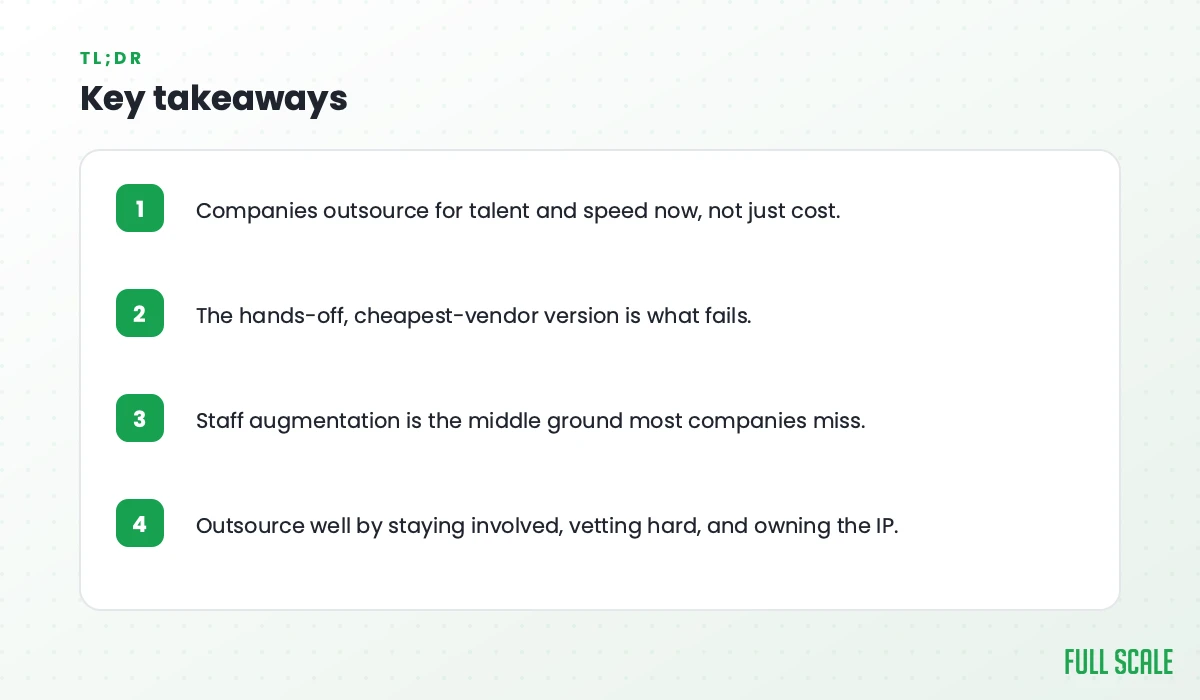
- The short answer
- The reason companies outsource has changed
- Why companies outsource software development: the real reasons
- What companies get wrong about outsourcing
- Staff augmentation: the middle ground most companies choose now
- When outsourcing makes sense, and when it doesn’t
- How to outsource software development well
- Outsource your build with Full Scale
- Frequently asked questions
Companies outsource software development to get specialized engineering talent faster than they can hire it, to scale teams up and down without long-term overhead, and to ship products sooner, controlling cost along the way. For a growing number of companies, cost savings is no longer even the top reason. It’s about access to talent and speed. Before any of that, though, every founder hits the more basic question of whether you should outsource developers or hire in-house. It is also why banning outsourcing would backfire on the US economy instead of protecting it.
I’ve been on every side of this. I built and sold VinSolutions, the #1 CRM in the automotive industry. I’ve hired engineers in the U.S., watched great candidates take other offers, and felt the pain of a roadmap waiting on seats I couldn’t fill. Today I run Full Scale, where we’ve helped more than 200 tech companies build software teams with over 300 full-time engineers in the Philippines. So when I answer “why do companies outsource software development,” I’m not reading it off a survey. I’ve lived it. I also pulled everything I know about it into a full guide to software outsourcing.
Here’s the honest version.
Quick Answer: Companies outsource software development to get specialized engineering talent faster than they could hire it in-house, to scale a team up or down without permanent headcount, and to control cost while they ship. Cost used to be the top reason; it's now the price of entry, with talent access and speed ranking higher in recent industry surveys. Most companies today do this through staff augmentation, adding vetted outside engineers to their own team rather than handing an entire project to a vendor, which is the model Full Scale builds around in the Philippines.
The short answer
Most companies outsource software development for some mix of these reasons:
- Talent access: the engineers they need are scarce, expensive, or both, and a global talent pool fixes that.
- Speed: outsourcing partners can staff a team in days or weeks instead of the months an in-house hire takes.
- Cost control: not just “cheaper,” but predictable, with no recruiting, benefits, or idle-bench overhead.
- Flexibility: scale up for a build, scale down when it’s shipped, without layoffs.
- Focus: internal teams stay on the core product while a partner handles the rest.
What’s changed is the order. Cost used to sit at the top of that list. It doesn’t anymore. And how companies outsource has shifted too: most now use staff augmentation (adding vetted engineers to their own team) rather than handing off entire projects to a vendor. More on that below. It is a big part of why outsourced IT services in the Philippines hold up as well as they do now.
The reason companies outsource has changed
If you read older articles on this topic, they’ll tell you outsourcing is about cutting costs, full stop. That was true for a long time. It isn’t the whole story now.
First, some scale. Outsourcing isn’t a fringe tactic, it’s how a huge share of modern software gets built. The global IT outsourcing market is projected to surpass $800 billion by 2030, according to Statista. What’s interesting isn’t just the size, though. It’s why all those companies are doing it.
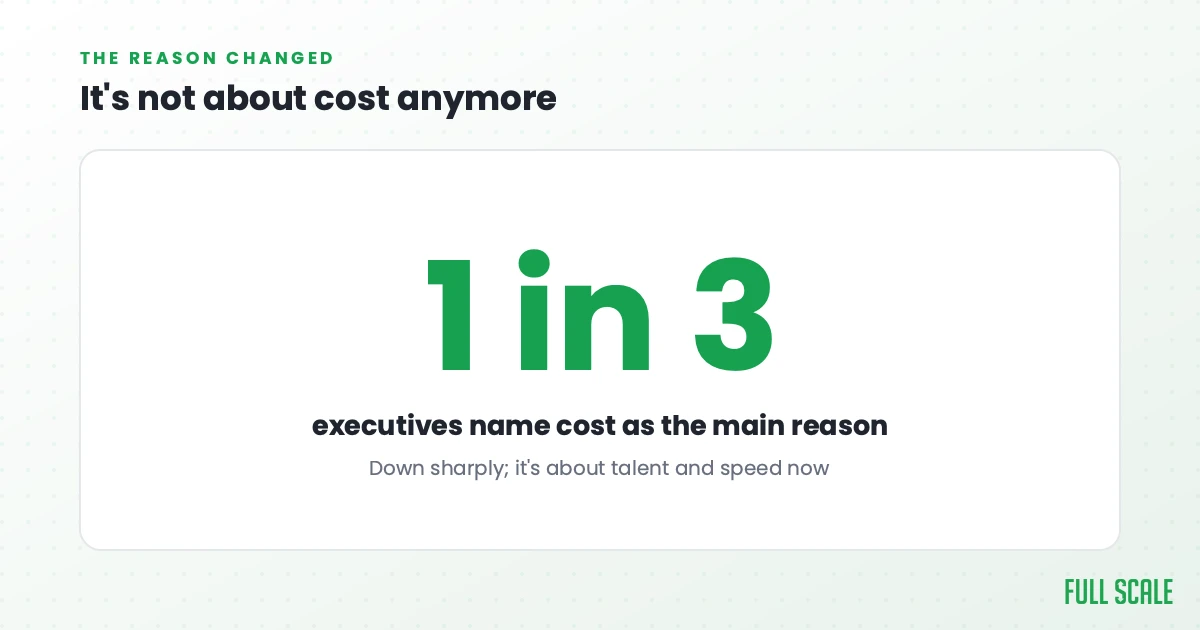
In Deloitte’s most recent Global Outsourcing Survey, only about a third of executives named cost reduction as their primary reason for outsourcing, down from roughly 70% a few years earlier. Access to talent, digital capabilities, and operational flexibility have moved to the front. And around 80% of executives said they plan to maintain or grow their outsourcing investment.
That tracks with what I see every week. Founders don’t come to me first because they want the cheapest developers. Most have already learned what can go wrong hiring developers on Upwork. They come because they can’t hire fast enough, can’t find the specific skills they need locally, or can’t justify a permanent headcount for work that has a clear finish line. Cost matters, it always will, but it’s the price of entry now, not the headline.
Why companies outsource software development: the real reasons
1. The talent they need is hard to find and harder to keep
This is the big one. There simply aren’t enough experienced software engineers to go around.
Korn Ferry’s talent crunch research projects a global shortage of more than 85 million workers by 2030, with the tech sector short roughly 4.3 million people, an estimated $8.5 trillion in unrealized revenue worldwide. In the U.S. specifically, the shortage of high-skill tech workers could cost the economy billions in lost output. And this isn’t only a forecast. In ManpowerGroup’s 2026 global talent shortage survey of more than 39,000 employers, the information and technology sector reported the worst talent shortage of any industry, with AI and engineering skills the hardest to find.
I felt this firsthand long before it was a headline. The hardest part of scaling any software company isn’t the code, it’s finding the people to write it. You can have funding, a clear roadmap, and product-market fit, and still stall for six months because you can’t hire a senior backend engineer in your zip code. Outsourcing flips that. Instead of competing for a handful of local candidates, you tap a global talent pool and get access to skills (a specific framework, a niche specialty, a senior architect) that may not exist near your office at all. It can be as specific as a single framework, which is why my rundown of the top PHP frameworks spends as much time on hiring as on features.
2. Speed: teams in days, not months
A typical senior engineering hire in the U.S. takes months from job posting to first commit: sourcing, interviewing, offer, notice period, onboarding. For a startup with a roadmap to hit, that’s an eternity. That wait alone explains why startups offshore their software projects before they ever run the cost math.
A good outsourcing partner has vetted engineers ready to start. At Full Scale we routinely put developers on a client’s team in days rather than months, because the recruiting, vetting, and HR work is already done. When you’re racing a competitor or a funding milestone, that compression is often worth more than the hourly rate. Knowing what to look for in a software development outsourcing company is what separates that from a shop that just bills hours.
3. Cost control: predictable, not just cheap
Let’s be clear-eyed about money, because it still matters.
A senior software developer in the U.S. costs well over $150,000 a year once you add benefits, payroll taxes, equipment, software, and management overhead. The Bureau of Labor Statistics pegs the median software developer’s base salary at about $133,000, and benefits and overhead push the fully loaded cost well past that, often $100 to $180 an hour. Building software in-house regularly runs past $150,000 per project before you count maintenance and rework. Cost is only half the story, because a cheap hire can leave you with offshore developers your team will not want to work with.
Offshore changes the math. Experienced engineers in regions like the Philippines typically cost 50% to 70% less than comparable U.S. talent, with no recruiting fees, no benefits administration, and no severance exposure. But the part people miss is predictability. You pay for the capacity you use. You don’t carry a bench between projects, eat the cost of a bad hire, or pay six months of salary to discover a role isn’t working. For most of the founders I talk to, predictable cost beats merely cheap cost. If you want the full math, here’s what your in-house team is really costing you.
4. Flexibility to scale up and down
Software work is lumpy. You need eight engineers for a six-month build and three to maintain it afterward. Hiring for the peak means layoffs at the trough; hiring for the trough means missing the deadline.
Outsourcing lets you flex. Add specialists for a release, scale back when it ships, spin up a new pod for a new initiative, without the human cost and reputational damage of hiring and firing. In a market where budgets and priorities shift quarter to quarter, that optionality is a genuine strategic asset.
5. Letting your team focus on what actually matters
I wrote a whole book, Product Driven, about engineering teams that stay busy without building what matters. One of the quiet causes is spreading your best people too thin: your senior engineers end up babysitting commodity work instead of solving the hard, differentiating problems only they can solve.
Outsourcing the right work frees your core team to stay on the core product. Hand off the well-defined, the supporting, and the maintenance work to a partner, and your in-house experts can concentrate on the architecture, the customer-facing features, and the decisions that actually move the business.
6. Modern capabilities, including AI, without rebuilding your team
The skills companies need are a moving target. Two years ago it was mobile and cloud; now everyone wants to ship AI features. In Stack Overflow’s 2025 developer survey, 84% of developers said they’re using or planning to use AI tools, up from 76% a year earlier. Building that expertise in-house from scratch is slow and expensive.
A capable outsourcing partner already has people who’ve done it. A growing share of outsourcing engagements now include AI and automation components, and that’s no accident: it’s often faster to bring in a team that already knows the territory than to retrain your own. Outsourcing has quietly become the way many companies access new technology, not just extra hands.
What companies get wrong about outsourcing
Outsourcing has a bad reputation in some circles, and it’s earned in plenty of cases. I’ve seen the horror stories: the disappearing contractor, the code nobody can maintain, the team that nods on every call and ships the wrong thing. So let me be honest about where it goes sideways.
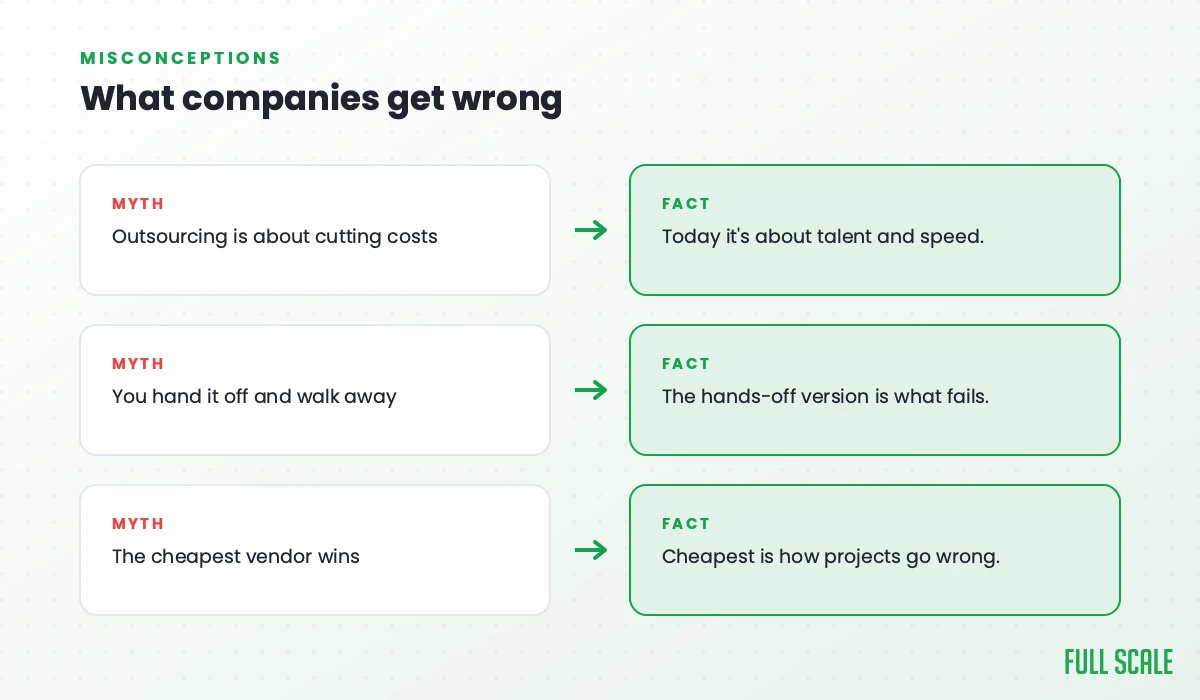
The classic mistake is treating outsourcing as throwing a spec over a wall to a vendor in another time zone and hoping a finished product comes back. That “project outsourcing” model is where most failures live, and it's the real problem with outsourcing more often than the country ever is. There’s no shared context, no real ownership, and no integration with the people who understand your product.
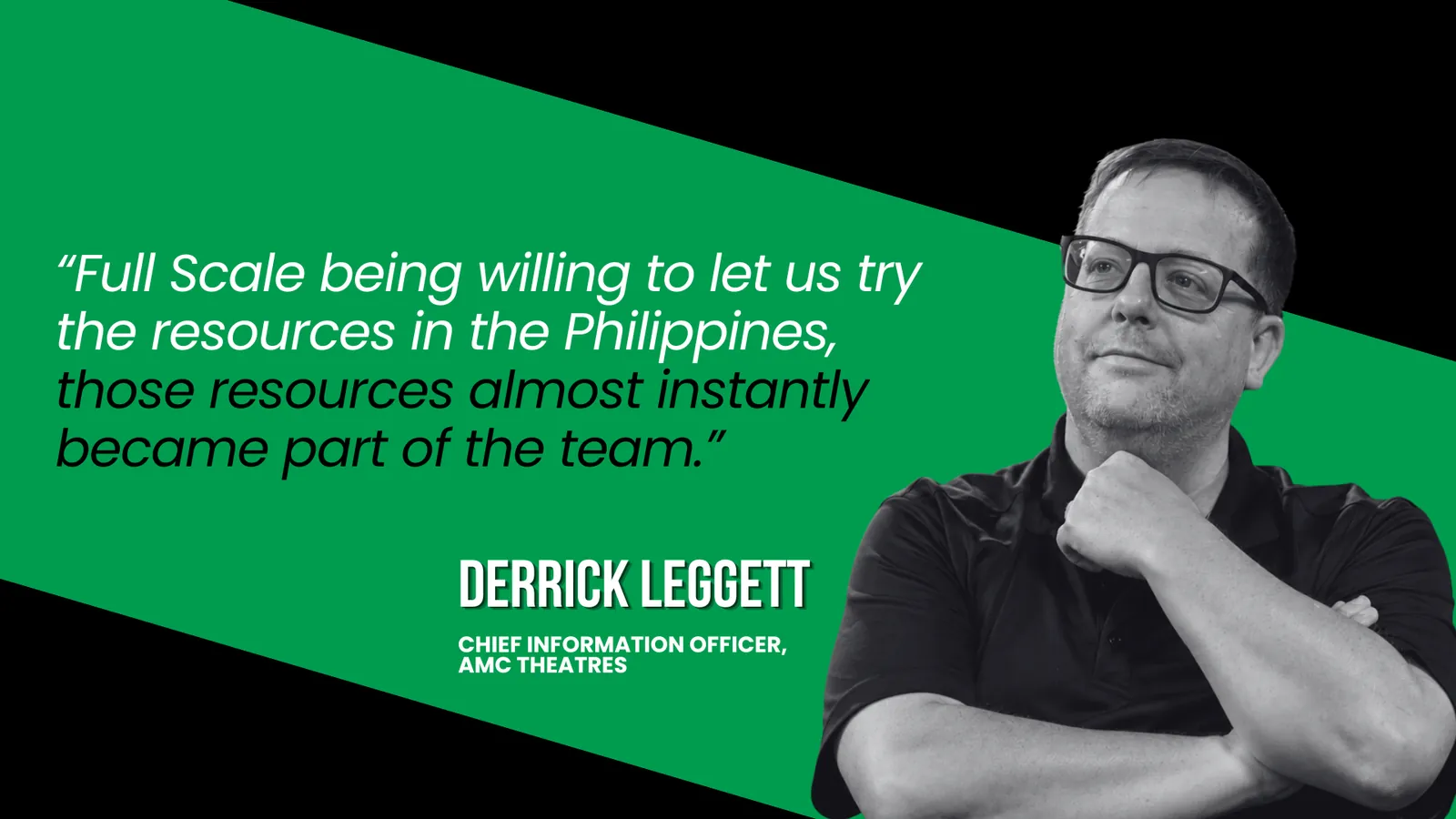
What actually works looks more like an extension of your own team. The model that’s replaced traditional outsourcing for serious companies is the integrated, dedicated team: engineers who work your hours where it counts, sit in your stand-ups, use your tools, and stick around long enough to build real context. When Derrick Leggett, the CIO of AMC Theatres, scaled his engineering org with us, it worked precisely because the offshore engineers were treated as one team, not a separate vendor. That’s the difference between outsourcing that fails and outsourcing that compounds.
So when people ask whether outsourcing is “a dying concept,” my answer is: the old transactional version is fading. The integrated-team version is growing fast.
Staff augmentation: the middle ground most companies choose now
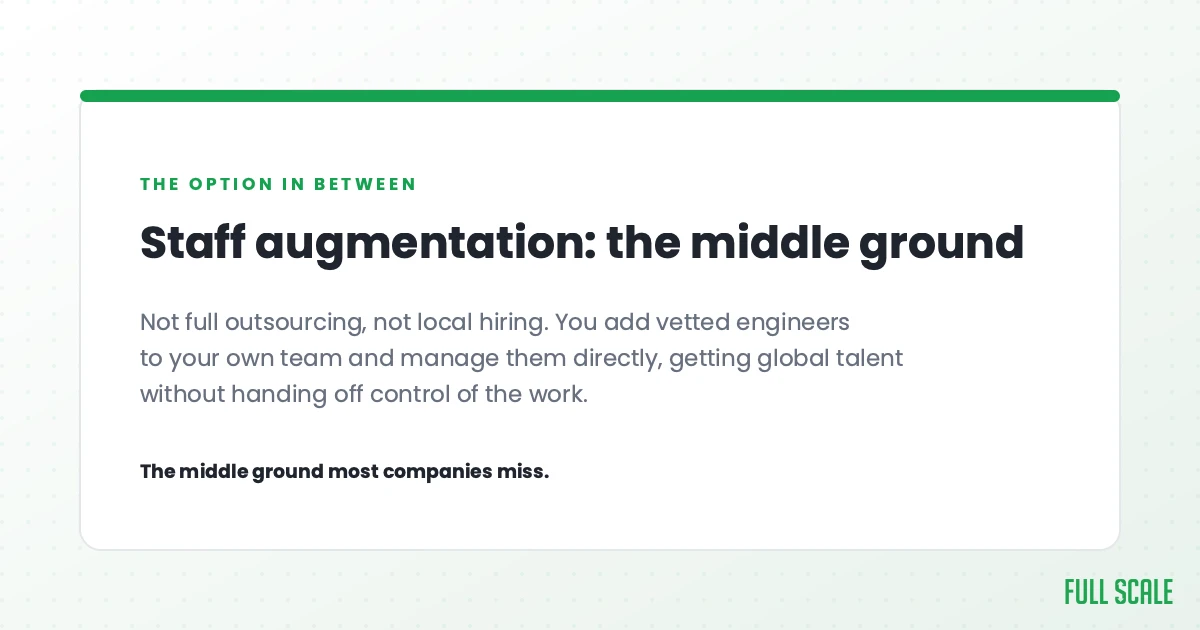
When people hear “outsourcing,” they picture handing an entire project to an outside firm and waiting for a finished product. That’s one model, project-based outsourcing, and for most companies it’s not the right one. The approach I see winning today sits in the middle: staff augmentation.
The idea is simple. Instead of outsourcing a project, you outsource the hiring. You bring vetted engineers onto your own team, working under your direction, in your codebase, in your stand-ups, without the cost, time, and overhead of recruiting and employing them yourself. You keep ownership of the product, the architecture, and the roadmap. Your partner handles sourcing, vetting, payroll, and retention.
That’s why most of the companies I work with choose it over traditional outsourcing:
- You keep control. Your team sets priorities and makes the technical calls, with no black-box vendor deciding how your product gets built.
- You still get the speed and the savings. You’re tapping the same global talent pool at the same lower, predictable cost. You’ve just changed who manages the hiring, not who runs the work.
- You sidestep the classic failure mode. There’s no spec thrown over a wall. The engineers are part of your team, so context and accountability stay where they belong.
- It scales cleanly. Add a developer or a whole pod, then dial it back when a release ships, with no renegotiating a project contract every time your needs change.
This is essentially what we do at Full Scale. We’re not a project shop; we build dedicated, augmented teams, engineers in the Philippines who become part of your company rather than a vendor you hand work to. For most growing software companies, that middle ground beats both hiring everyone locally and outsourcing the whole thing to a third party.
When outsourcing makes sense, and when it doesn’t
I’d rather you make a good decision than just say yes, so here’s the balanced view.
Outsourcing is a strong fit when you need to scale quickly, you can’t find specific skills locally, you have well-scoped work or a clear roadmap, you want to control burn while you grow, or you need to free your senior people from non-core work.
Be more cautious when the work is your single most sensitive competitive secret, when requirements are so vague that nobody could define “done,” or when you have no one internally who can provide technical direction. A great partner amplifies clear thinking; it can’t replace it. If you don’t yet know what you want built, fix that first.
The companies that get the most from outsourcing treat their partner like a long-term teammate, communicate constantly, and stay involved in direction. The ones that get burned treat it like a vending machine.
How to outsource software development well
A few hard-won principles:
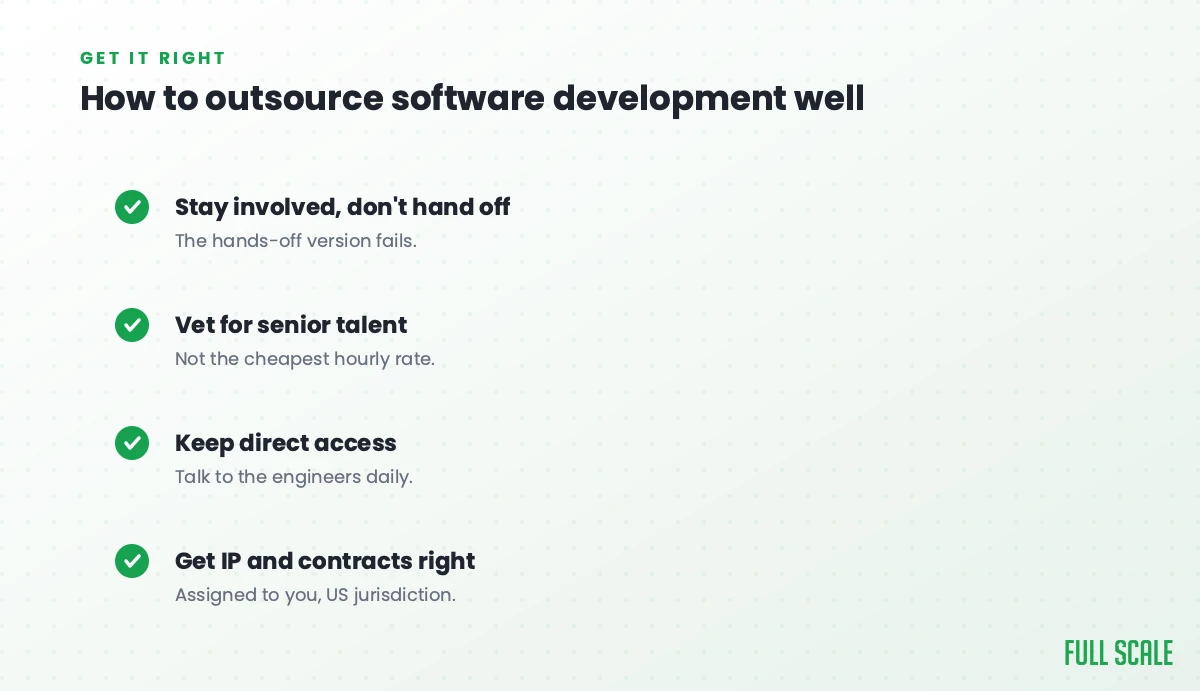
- Pick the right model. Staff augmentation, adding vetted engineers to your existing team, gives you far more control than handing off a whole project. For most companies, it’s the safer starting point.
- Vet for seniority and communication, not just rate. The cheapest developer is rarely the cheapest outcome. Buying on price alone is what I call cheapshoring, and it’s how most offshore horror stories start. Look for engineers who push back, ask good questions, and write maintainable code.
- Choose a location that overlaps your hours and culture. This is a big reason we built Full Scale in the Philippines: strong English, a large pool of skilled developers, and a work culture that integrates smoothly with U.S. teams.
- Integrate, don’t isolate. Same tools, same rituals, same standards. Treat your offshore engineers like the teammates they are.
- Start small and prove it. Begin with a contained project or one or two engineers, get the working relationship right, then scale.
Outsource your build with Full Scale
If you’re scaling a software team and feeling the talent crunch, this is exactly what we do.
Full Scale gives you immediate team expansion: we handle recruiting, vetting, HR, and onboarding so you can add senior engineers in days, not months. With more than 300 full-time developers, we provide dedicated engagement, so your project gets people who are genuinely part of your team.
Why companies build with us in the Philippines:
- Deep, specialized talent pool: find senior developers and niche skills that are scarce and expensive to hire in the U.S.
- Lower, predictable cost: access experienced engineers at a fraction of U.S. fully loaded cost, with no recruiting or benefits overhead.
- Flexible arrangements: scale your team up or down without long-term contracts or layoffs.
- Integrated teams: our developers are trained to plug into your tools, your hours, and your culture as one team.
Outsource your build to the Philippines →
Frequently asked questions
Why do companies outsource software development?
To access specialized engineering talent quickly, scale teams flexibly, ship products faster, and control costs. In 2026, talent access and speed have overtaken pure cost savings as the leading reasons.
Why do companies outsource IT services in general?
The same logic applies beyond development: a shortage of skilled IT workers, the speed of standing up a ready team, predictable costs, and the freedom to let internal staff focus on core priorities rather than maintenance and support. In practice, that tech talent shortage is mostly a US problem, since most developers work elsewhere.
Is software development outsourcing a dying concept?
No, but it’s changing. The old “throw a project over the wall to a vendor” model is fading. The fast-growing model is the integrated, dedicated offshore team that works as an extension of your in-house staff.
What’s the difference between outsourcing and staff augmentation?
Traditional outsourcing hands an entire project to an external firm that manages it for you. Staff augmentation adds vetted external engineers to your own team, under your direction and in your codebase. Most software companies now prefer augmentation because it keeps control and product ownership in-house while still delivering the talent access, speed, and cost savings of outsourcing. It’s the middle ground between hiring everyone locally and outsourcing everything.
Is it actually cheaper to outsource?
Usually, yes. Offshore engineers often cost 50% to 70% less than comparable U.S. talent, and you avoid recruiting fees, benefits, and bench costs. But the bigger value for many companies is predictable cost and faster access to talent, not just the lower rate.
Is outsourcing illegal in the U.S.?
No. Outsourcing and hiring offshore software teams is completely legal. Companies just need to follow normal contracting, tax, and data-security practices, and a reputable partner will help you do that.
What’s the difference between onshore, nearshore, and offshore outsourcing?
Onshore is in your own country (highest cost, easiest collaboration), nearshore is a nearby country in a similar time zone, and offshore is farther away (typically lowest cost, largest talent pool). The right choice depends on your budget, the skills you need, and how much real-time overlap your work requires.