Every Technical Founder Needs a Startup Mentor — Here’s What Mine Taught Me

In this article
- The job keeps changing under your feet
- Why a technical founder struggles more, not less
- The second jump nobody warns you about: founder to CEO
- What a startup mentor actually is, and how it differs from an advisor or coach
- How to actually find one
- The lesson every mentor eventually forces on you
- You don’t outgrow this
- Frequently asked questions
When you’re an engineer, every problem looks like something you can build your way out of. That instinct is exactly why so many technical founders need a startup mentor and don’t know it yet. The hardest problems you’ll face as a founder are not engineering problems, and you can’t refactor your way through them. A non-technical founder has the flip side of the same problem, and the guide for non-technical founders covers exactly the decisions they cannot evaluate themselves.
I’ve started four companies. I co-founded VinSolutions and sold it. I built Stackify. I run Full Scale now, and I’ve written a whole field guide to software development for startups off the back of it. And I can tell you that almost every painful lesson I learned the slow, expensive way was a lesson someone who’d done it before could have handed me in a twenty-minute conversation.
That’s what a mentor is. Not a coach with a framework. Not a guru. Someone who has already made the exact jump you’re standing in front of, who can tell you what’s on the other side.
Quick answer: A technical founder’s real challenge isn’t the code. It’s a series of role changes nobody trained you for: engineer to founder, then founder to CEO. Each one is a job you’ve never done. A startup mentor who has already made that jump is the fastest, cheapest way through it, and you never actually outgrow needing one.
The job keeps changing under your feet
Most technical founders think the company is the thing they’re building. It isn’t. The thing you’re building is a new version of yourself, over and over.
You start as the person who writes the code. Becoming a founder throws a stack of new jobs at you at once: selling the thing the code does, hiring people, managing money. Then the company grows and the job changes again, and you become the person who builds the team instead of building the product. Nobody hands you a manual when the job changes.
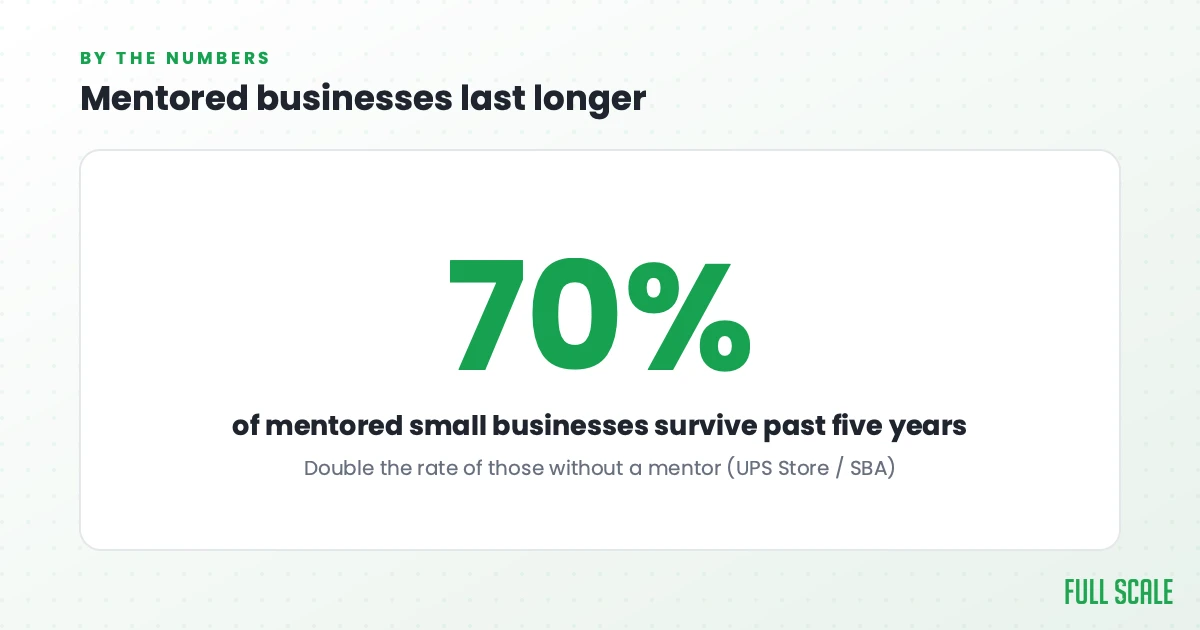
A survey by The UPS Store, cited by the U.S. Small Business Administration, found that 70% of small businesses with a mentor survived past five years. That’s double the survival rate of businesses without one. In the same survey, 88% of owners who had a mentor said it was invaluable. The reason isn’t magic. It’s that someone in your corner has already paid for the mistake you’re about to make.
The hard part for engineers is admitting the next job is a job at all. We’re used to being the smartest technical person in the room. The skills that got you here actively work against you in the seat you’re moving into.
Why a technical founder struggles more, not less
You’d think being technical would make founding a company easier. In a lot of ways it makes it harder, because you have a comfortable place to hide.
When I’m writing code, I’m like a dog with a bone. That’s all I can think about, day and night. It’s like building an IKEA desk or putting together a Lego set. Until I finish, I can’t think about anything else. The trouble is that with software the desk never gets finished. There’s always one more feature, one more bug, one more refactor. So when the scary work shows up, the work of finding customers and asking for money, it’s very easy to tell yourself you’ll get to it right after you ship this next thing.
I lived this at Stackify. I founded it in 2012 as a CTO and an engineer, not a salesperson. Learning to sell was brutal. I hired salespeople, tried a dozen marketing tactics, and slowly figured out that “build it and they will come” is the fantasy that kills more startups than bad code ever will. Most tech startups fail, and plenty of them fail with a perfectly good product that nobody ever heard of.
I talked about this with James Green on the Product Driven podcast. James is a general partner and co-founder at DQ Ventures, and he put it bluntly: unless you’re building the next viral app, about 90% of your job as a founder is creating a value proposition and finding people who want it. In other words, selling.
A good mentor would have told me that on day one. Mine eventually did, and it reframed the whole thing.
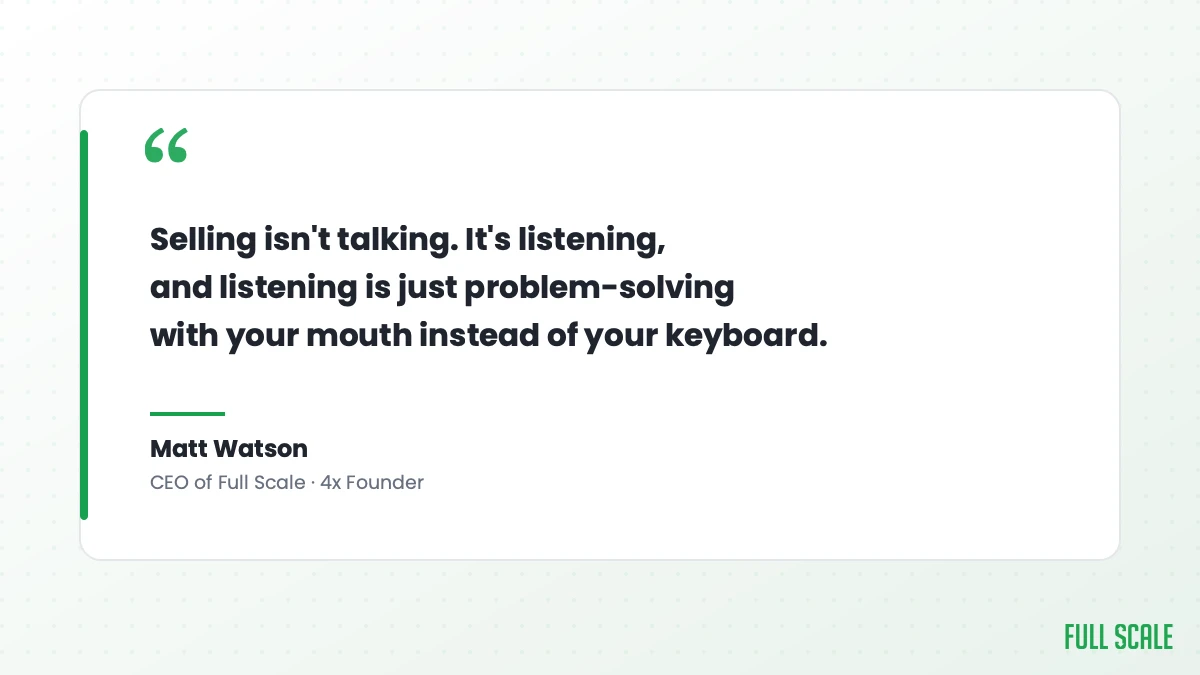
Selling isn’t talking. It’s listening, and listening is just problem-solving with your mouth instead of your keyboard. When a customer tells you what’s broken in their world, that’s the same dopamine hit as a hard bug. You’re not betraying your engineer brain. You’re pointing it at a different problem.
The second jump nobody warns you about: founder to CEO
The jump from engineer to founder isn’t the last one. The bigger one is founder to CEO, and the startup blogs skip it.
The first time I became the CEO of a tech company, it was every bit as big a change as going from engineer to founder. (I’ve written a whole piece on how the CEO and CTO jobs differ, because most technical founders underestimate the gap.) New problems I’d never solved, and no one above me to ask. The people who keep a mentor through that transition move faster than the people who decide they’ve got it from here.
I wrote a whole newsletter on why great engineers make poor CTOs, because I’ve watched it happen so many times. Great engineers love building things. Great CTOs love building teams that build great things. Those are not the same person, and promoting your best coder into the role on the assumption that they are is one of the most common, most expensive mistakes I see.
I learned my own version of this at VinSolutions. I was the CTO. I had the vision. I could see where the product needed to go. But everything kept breaking around me. People were overwhelmed, timelines slipped, and I carried it like it was all on me. What the company actually needed was a VP of Engineering, someone who loved operations and process and managing people.
That wasn’t me. I forced it anyway, and it drained me every single day.
The lesson a good mentor delivers early: leadership isn’t being good at everything. It’s owning your strengths, naming your gaps out loud, and building a team around the parts you’re bad at. It took me years to see that on my own. Someone who’d been there could have saved me the burnout.
What a startup mentor actually is, and how it differs from an advisor or coach
Let’s be plain about the word, because the internet muddies it.
A startup mentor is someone with real operating experience who guides you without a contract and without getting paid. They’re not on your cap table. They don’t bill you. They help because someone once helped them, or because they like watching builders win. That informality is the point. A mentor can tell you the truth without worrying about how it affects their invoice or their equity.
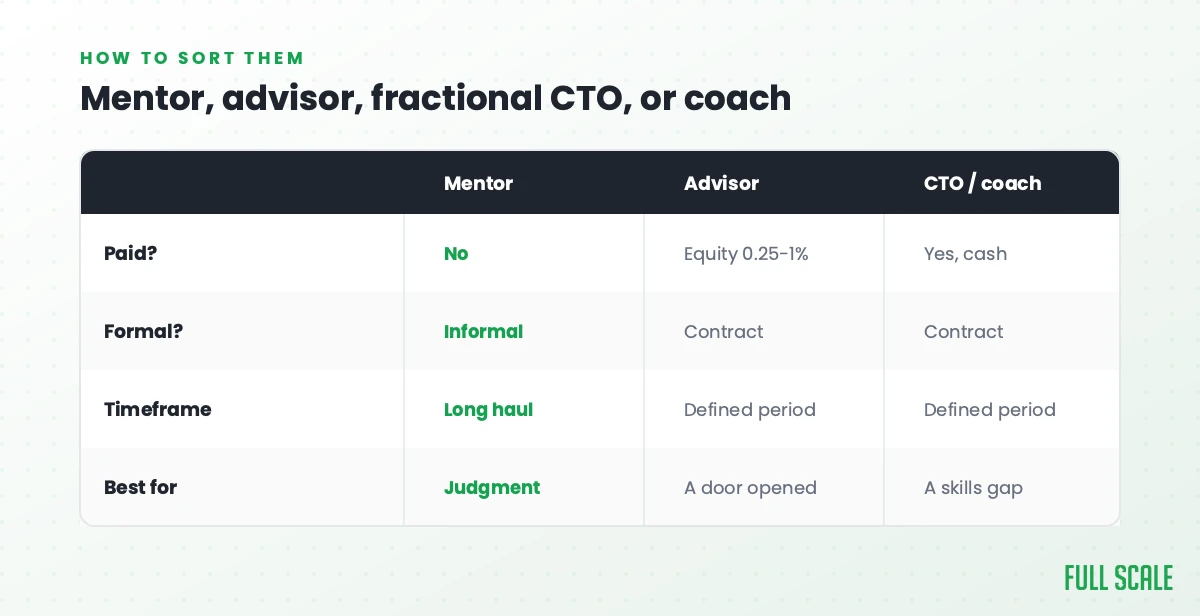
That’s also what separates a mentor from the other people who’ll offer to help. Founders mix these up constantly, and picking the wrong one wastes money or time you don’t have. Here’s how I sort them.
- A mentor is unpaid and informal, in it for the long haul across the life of your company. Best for judgment, perspective, and the “I’ve made this exact mistake” conversation.
- An advisor is formal and compensated, almost always with equity. Advisors typically take somewhere between 0.25% and 1% each, and they sign on for a defined period to help with a specific challenge. Best when you need a name, a network, or deep domain access and you’re willing to pay for it in ownership.
- A fractional CTO is a paid contractor filling a real skills gap, usually for a non-technical founder. As a technical founder you rarely need one, with one exception: once you’ve moved fully into the CEO seat and stopped being the CTO, a fractional CTO can hold that role until you hire for it.
- A coach is paid to work on you, not your business. Some are excellent. Many sell a framework. Be honest about whether you need new skills or just someone who’s done it before.
My take, after collecting a few of each over the years: a technical founder’s highest-value relationship is almost always a mentor, not an advisor. You don’t have a knowledge problem that a paid expert solves. You have an experience problem, and experience is exactly what a mentor gives away for free. Save the equity for when you genuinely need a door opened.
How to actually find one
The advice to “find a mentor” is useless without a method, so here’s mine.
Look for people one step ahead of you, not ten. The founder who sold their company last year remembers the texture of your exact problem far better than the billionaire who did it in 1998. Proximity beats prestige.
A few places they actually hang out:
- Accelerators. A good startup accelerator is structured mentorship with a deadline. You trade a little equity for a concentrated dose of people who’ve done it.
- Peer groups. Other founders at your stage aren’t mentors exactly, but a room of people fighting the same fight is the next best thing, and a few of them will pull ahead and become mentors.
- Podcasts and communities. This is half of why I host one. Founders reach out after an episode, and some of those turn into real relationships.
- Your own network, two hops out. The best mentor I ever found came through someone I already knew. Ask the people you trust who helped them.
When you’re vetting someone, the only question that matters is whether they’ve actually done the thing you’re trying to do, not advised on it or read about it. A mentor who’s lived your specific jump is worth ten who can quote a book at you.
Here’s the honest catch, though. A mentor’s advice is their map, not yours, and the wrong one will steer you confidently into a wall they happened to drive around. The defense is the same two filters: pick someone one step ahead instead of ten, so the terrain still matches, and pick someone who did the thing rather than studied it. Then take what they give you as data, not gospel.
One more thing, because it’s the part nobody tells you. A mentor’s time is the scarce resource, so don’t waste it. Come to them with a specific decision you’re stuck on, not a vague “can I pick your brain.” Tell them what you already tried. The founders who get the most out of a mentor are the ones who make it easy to help them.
The lesson every mentor eventually forces on you
If you keep a mentor long enough, you’ll get the same hard conversation I did. At some point you have to stop doing everything yourself.
For a technical founder, the highest-stakes version of that is your engineering team. You can write the first version alone. You cannot write the tenth version alone, and the decision of when and how to build a team is the most expensive call you’ll make. Hire too early and you burn the runway. Hire too slow and you become the bottleneck for your own company.
This is where a lot of founders make the mistake I’ve named cheapshoring: grabbing the cheapest developers they can find and hoping it works out. It almost never does. The right move is to bring on people who work directly for you, long term, who care about your product the way you do. That’s the whole idea behind staff augmentation, and it’s the model we built Full Scale around, precisely because I’d felt the pain of getting team-building wrong myself.
A mentor is the person who tells you it’s time, before the wheels come off. (Mine told me roughly six months before I was ready to hear it, which is about the right amount of early.)
You don’t outgrow this
I’m a four-time founder with an exit behind me, and I still seek out people who’ve done things I haven’t. The need never goes away. It just changes shape, the same way the job does.
If you take one thing from this: stop treating a startup mentor as a nice-to-have you’ll get around to. It’s the cheapest insurance you’ll ever buy against the mistakes that are coming, and they are coming, because the job is about to change under your feet again.
That’s the same idea I built my book Product Driven around. The founders who win aren’t the ones who know everything. They’re the ones who keep learning faster than the problems can pile up. A mentor is how you do that.
And if the lesson you’re hitting right now is the one about building an engineering team you can’t yet do alone, that’s a conversation we have every day. Talk to Full Scale about building your team.
Frequently asked questions
Do startups really need a mentor?
You can succeed without one, but you’ll pay for the lessons in time and money instead. A survey by The UPS Store, cited by the SBA, found that 70% of mentored small businesses survived past five years, double the rate of those without a mentor. For a technical founder facing business problems you were never trained for, a mentor is the cheapest way to shorten that learning curve.
What’s the difference between a startup mentor and an advisor?
A mentor is unpaid and informal, in it for the long haul, and gives you judgment and perspective for free. An advisor is formal and compensated, almost always with equity (typically 0.25% to 1%), and signs on for a defined period to help with a specific challenge like a key hire, a fundraise, or access to their network. Most technical founders need a mentor first and an advisor only when they need a specific door opened.
How do I find a startup mentor?
Look for people one step ahead of you, not ten, because the texture of their experience still matches yours. The best places to find them are accelerators, founder peer groups, podcasts and communities, and your own network two hops out. When you vet someone, the only question that matters is whether they’ve actually done the thing you’re trying to do.
Should a technical founder get a mentor or a fractional CTO?
A mentor, in almost every case. As a technical founder you already have the engineering skills a fractional CTO would bring, so what you’re missing is experience with the business side, which is exactly what a mentor provides. A fractional CTO only earns its cost once you’ve moved fully into the CEO seat and no longer function as the CTO yourself.